Feeds:
Posts
Comments

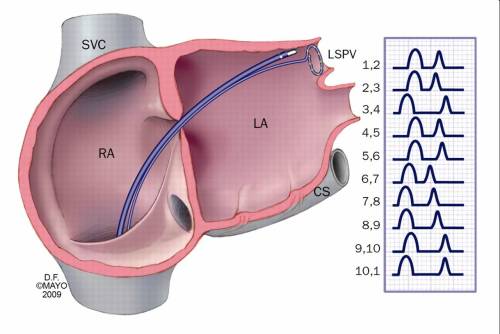
This is a real life experience of  a patient who underwent a electrophysiology study and   ablation   procedure for atrial fibrillation  .The blog describes  how the procedure became a nightmare .Written in a  most  readable fashion .  Interventional cardiologists need  not get hurt by this  narration  instead  they should  do a  reality check on the dangers  of  the some  of the  complex  procedures !

Adventures in Cardiology

Click over the  image to  read the real  time experience of   Pulmonary vein  ablation

Image courtesy Mayo clinic

The message from the above story  :

  • Atrial fibrillation is  one of the  relatively  benign  cardiac arrhythmia , that  can be treated  with   simple and effective  drugs . Now we have strong evidence to say rate control is equally , if not more effective than the rhythm control  modalities .
  • The RF  ablation  , which aims at rhythm control  is a too complex a procedure with  lots of expertise  technology  .
  • This should be  reserved  as a last resort  in an occasional patient who had exhausted all other  options .
  • Patients should  realise ,  the consent forms they sign  before any new and innovative  procedure is always  incomplete and  he may be the first person to experience  a new complication  hitherto unreported .
  • A cath lab is run by a team ,  you can’t  expect  the chief doctor to be on your  side always.   Many of the procedures  are  done by either experienced or inexperienced  fellows . That’s  only the  way medicine  can be practiced !
  • So beware all patients , many times, modern medicine is nothing but  experiments on live humans  !


A  good collection of resources dedicated to cardiology

http://www.touchcardiology.com/articles/primordial-prevention-cardiovascular-disease-the-role-blood-pressure

  • Skeletal muscle relaxants – Available
  • Smooth muscle relaxants -Available
  • Cardiac muscle relaxants -Not available !

Cardiac failure is the number one killer of mankind.  So far we have believed the major function of the heart is to contract . Relaxation was thought to be a passive process  .Now we know,   for myocardium to relax properly the calcium which was  pumped in to acto myosin complex, has to be taken back into the  sarcoplasmic reticulum during diastole  .This is mediated by SERCA 2 , Phospholamban  the active  calcium uptaking kinase.Clinical diastolic dysfunction as a concept has been disputed for too long that has delayed our knowledge  gap .

Myocardial relaxation is much more complex than  we think !

We have given too much importance to calcium kinetics and diastolic dysfunction .While impaired relaxation and diastolic dysfunction are used interchangably by both researchers and clinicians  resting myocardial stiffness is an important parameter that has been overlooked .

The myocardium is made up of not only myocytes  , in fact it has more non myocytic components than myocytes themself. Myocytes constitute only 33 % of cardiac mass . The interstitial cells, fibroblasts  the extracellular matrix (This is in fact a vague terminology in use !) It is nothing but  sheets of tissues made up of collagen criss crossing the myocardial planes.  The type 1 collagen is as powerful as stainless steel . Type 3 collagen is little more flexible. The issue here is , how to flex these rigid collagens without compromising it’s contractile role. One can realise , how  ignorant   it would be be ,  if we thought altering calcium kinetics within the myocardium is the ultimate answer to tackle diastolic dysfunction .

So our aim is to reduce  the resting stiffness of  cardiac muscle in pathological states like SHT/LVH/CAD etc  . . .

How to do augment myocardial relaxation ?

Altering calcium kinetics within the cell is one option. But as we have discussed  much of the stiffness comes from cells which do not have calcium at all  (Fibroblasts) or from life less molecules like collagen etc

The proliferation of interstitial cells and fibroblasts  make the myocardium stiff.So drugs which inhibit these reactive events may help.ACE inhibitors, ACE receptor blockers, anti aldosterone (Spirinolactone) are vigorously tried by respective patent holders to bring in another indication for these drugs namely positive  lusiotropic agents .But the crux of the issue and the fact of the matter is we have not made any break through in finding a positive lusiotropic drug. (Milrinone was shownto have some promise !)

We need to try new concepts instead of  trying the existing band of drugs .

The following are some  of the options

Collagen  – The interstitial collagen may be modified.The so called MMP matrix metalloprotinase which lyse collagen cross linkages can make the myocardium agile and fit.Tissue inhibitors of MMP has a role.

One should remember we can not afford to play the dangerous game of manipulating  myocardial structural protein frames . If  the myocardium becomes too flabby it will forget it’s  primary job  that is contraction

Final message

There are thousands of  articles in cardiology literature that cry fowl over diastole and few  hundred of them   devoted to quantify diastolic dysfunction by various imaging technique .

It is unfortunate  there is no single drug or intervention that has a meaningful impact  on this entity. We look forward for cardiac scientists to divert the resources to find an answer to this problem instead of simply  documenting the presence of it .

Common sense has taught us the most effective  method that can reverse established diastolic dysfunction is  by simple , regular exercise .Exercise  not only make the skeletal muscles  agile & fit it does the same to cardiac muscle too !

What are the fundamental  difference between randomised  studies and observational studies ?

New discoveries come from shrewed  observations made in bedside or labside  while ,  randomised studies evaluate these discoveries for it’s effectiveness or futileness  .

Let us realise ,  RCTs   primarily  never  contribute to  generation of  original  concepts or discoveries  ! .It is a  statistical tool to assess an observation .

Click below to reach the excellent knowledge  source on above  the issue .

PLoS Medicine: Observational Research, Randomised Trials, and Two Views of Medical Science

The fact that  observational studies are done with open eyes &  mind ,  it is  obvious it  demands  intense conceptualization and thinking .
Blinded studies  are  mechanical studies . It is pure statistical research . It requires  no thinking  , medical  mind , in fact one can do it with eyes closed as it is a strict protocol driven  , even a  non medical men  can do a  medical research , while it needs a  alert mind to do a observational study .

Observational studies , especialy  when done retrospectively  has  zero bias  as the case selection and  the potential intervention are completed even before the research question  is raised. In fact many of the  greatest medical breakthrough comes from retrospective analysis. Of course this has to be proved prospectively  preferably in a randomised fashion.

So , we the medical professionals ,  shall  do great observational  research with open eyes and mind and let the  the statisiticins do the outcome analysis blind folded .

If the core medical professionals are bothered more about  randomised blinded  studies ,which is  meant only for evaluation purposes , the  future of intellectual  medical research is  going to be in jeopardy!

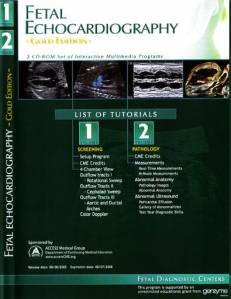
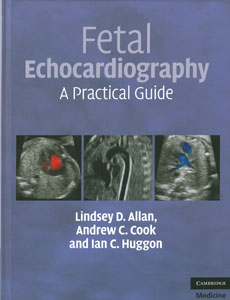
Fetal echocardiography is an important imaging modality for screening fetuses with congenital heart disease.Not all cardiologists are familiar with this imaging . Obstetricians are also not well versed in these techniques.So, finally,  it is left to few specialised radiologists to do this job. The issue here is  they are less  in number and the need for the experise is huge.  Further , the fetal cardiac hemodynamics and anatomy  are too complex to comprehend for a non cardiologist . So it is argued every clinical cardiologist to get trained in the basics of fetal echocardiography.

There are dedicated institutes and people who do this mode of imaging.

One such place is http://www.fetal.com

See for yourself the excellent information and knowledge resource in this site.

http://www.fetal.com/FetalEcho/04%20Standard.html

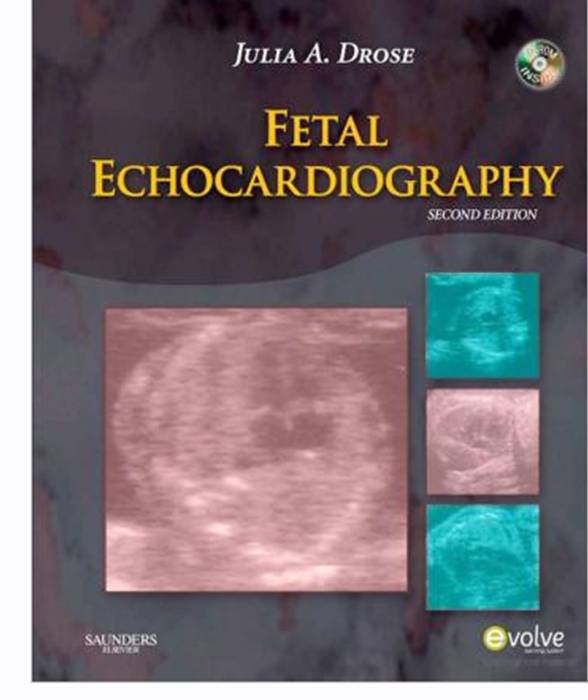
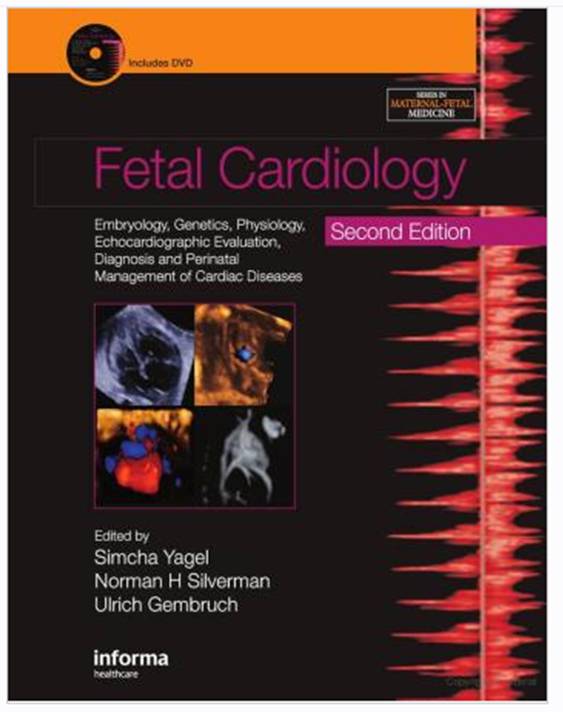
Other .popular books on fetal echocardiography

Julia A Drose

Simcha yagal

Juri W. Wladimiroff, G. Pilu

Lindsey Allan

Coronary artery disease is the major determinant of human  health and longevity  in this  modern era! Obstruction of a coronary artery either sudden or gradual  forms the basis of  CAD .

When a free flowing  river stumbles upon an  obstruction , it does not die , it finds it’s way to the sea. Similarly , God is kind enough to provide  alternate channels for blood flow to heart at times of crisis .Contrary to the perception , collaterals develop not only in chronic occlusions but also in acute occlusions.

A person who dies due to a primary VF few minutes after an acute occlusion is in all probability experiences his fate  ! While those who survive are protected by the immediate recruitment of collaterals and this prevents the   remote myocardium  from triggering a VF.

In chronic CAD, the collaterals are much more effective. Now we have evidence with OAT and COURAGE *trials for this. Some times , the LAD is fully supported by the RCA the flow is better than a graft.

*These trials showed us opening occluded coronary arteries routinely do not confer additional benefits.

Coronary collateral circulation is most poorly understood phenomenon in cardiology. But it comes as helping hand whenever required  only for those humans who deserve it !  God has kept the secrets of coronary  collateral circulation with himself !

A excellent article on natural by pass from circulation patient pages.

http://circ.ahajournals.org/cgi/content/full/116/11/e340

Link to related you tube video

http://www.youtube.com/watch?v=qQfUttiDgE8


Cardiac rhythm disorder remains  as a  fascinating  clinical cardiac  problem  to  the physicians for many decades. The joy of decoding cardiac arrhythmias and categorizing into supra ventricular , junctional, ventricular tachycardias is unique ,  even as  many of these patients are struggling for life !

Initially the tachycardias were labeled with reference to their origin .Later as we recognised the locating the  origin is not an easy exercise , we introduced a practical classification  : Narrow and wide qrs tachycardia  emphasizing the fact that , both SVT & VT  can be either narrow or wide !

Traditionally there is much more  confusion in labeling the  narrow qrs tachycardias than the wide  qrs tachycardia.

Is the term junctional tachycardia still relevant ?

To answer this question we need to know what exactly we mean by the term Junction.

  • Is it a particular anatomical spot  called AV node ?
  • Is it a diffuse area in the vicinity of AV node ?
  • Is the early part of the his bundle included in the junction ?
  • Or  Is it formed by  the entire rim  of both  AV groove formed by the fibroskeleton  that form a electrical  barrier between atrium and ventricle ?

Answer:

The answer to the above question is very simple “we don’t know yet !”

The nearest fact is , for the electrophysiologist,  AV junction refers to the electrical  junction box of  that connects the specialised wires coming down from the atria and from there it connects  to the specialised his purkinje fibres of the ventricle .

Is AV node  anatomically distinct structure?

No .It is not. It is a collection of different conducting cells with varying properties.The term AV node need to be abandoned by the cardiology community for the simple reason there is no such entity.

In fact the AV junctional cells are are now called as pure atrial,atrial approach CELS ,  junctional approach cells, junctional cells,transitional cells,  ventricular approach cells.These cells interdigitate with each other , and has unique cell to cell communication.The cells that are above the AV junction share atrial electrical properties while the cells that touch the his purkinje  acquire some of the properties of specialized ventricular conducting properties.

What is the function of AV junction ?

One should realize  it is the AV junction does a  a very unique job of great importance  for human   survival ! Even though SA node is the pacemaker of the heart , the AV junction does the extraordinary it receives the impulse and delays it for about 200 millisecond and then hand over it to the ventricle.

The rules that govern the  nature is so fascinating  , this delay is vital for the venous return to enter the ventricle from atrium other wise , the ventricle is under filled and cardiac output falls.The bulk of the PR interval is contributed by the AVconduction delay (also called as AH interval )

What is the clinical relevance of this new found physiology of AV junction ?

It is to be understood the electrical properties of the AV junction is determined by neural innervation the ionic currents.Much of AV junction is under the dominant control of vagal fibres, while the ventricles get more innervation from sympathetic neurones. There is considerable overlap in the AV junction area.

The classical dual nodal physiology of AVNRT is nothing but longitudinal physiological splitting of AV junction  .Strands of slow conducting cells and fast conducting cells are arranged in such a way to create a reentrant circuit.The atrial approaches in the posterior aspect contain mainly slow pathway. and anterior aspect near his contain the fast pathway.

Some times  clusters of AV junctional cells are scattered around the upper septal area giving a slow conducting properties to ventricle.These cells can be site for reentrant septal or fascicular VT.

The overlap of  these AV junctional cells explains the verapamil sensitivity of some of the VTs  arising in the vicinity.

What are the tachycardias that can be termed  as junctional tachycardias ?(JT)

By logic and realism  any tachycardia that originates in the AV junction either by reentry or ectopic activity shall be called as JT

By tradition , we have been illogical.

AVNRT is never referred to as JT  in spite of the fact that,   it is initiated by a pathological reentry right  in the middle of AV junctional tissue.

So currently we are authorised to call only few arrhythmias as true junctional tachycardia  .

  • Non paroxysmal junctional tachycardia( NPJT)
  • Incessant junctional tachycardia
  • Permanent  junctional reciprocating  tachycardia(PJRT)
  • Accelerated junctional  rhythm

NPJT

This occurs in following situations

  • Digoxin toxicity(Classical description)
  • Post operative hearts
  • Occasionally during acute MIR
  • It may be observed during AV nodal ablation in EP LAB

NPJT is an automatic tachycardia .arising focally from AV junctional tissue . Ideal terminology should be focal junctional tachycardia(FJT) .The rate is between 70 -140. Accelerated junctional rhythm can be termed as a benign form of JT.DC shock has no role.

Incessant junctional  tachycardia

This was first described in infants .Thought to be congenital in origin.Now adult forms also recognised.Very malignant arrhythmiaRate is between 150-300. AV dissociation is the norm.May mimic atypical atrial flutter or ectopic atrial tachycardia .High risk for tachycardic cardiomyopathy. Amiodarone may be effective.Surprisingly ,verapamil may worsen it .There is a overlap between adult postoperative NPJT and Incessant JT.DC shock is not effective may worsen . RF ablation rarely effective.

Permanent form of junctional tachycardia

It is not clear what the  term permanent denotes ! May be because   these tachycardias occur with fixed anatomical substrates.In fact this can be called as a type of AVRT. But the difference is the retrograde ventricular circuit does not travel in any free wall but within the septal his bundle   . PJRT,  infact  may be labeled as AHRT -Atrio hisian  recipocrating tacycardia

It is a reciprocating tachycardia with antegrade condction through AV node and retrograde through a slow conducting accessory pathway in posteroseptal location.

The rate is between 90-150. Mimics long RP tachycardia like AT or fast slow AVNRT.Some believe , In fact a fast slow AVNRT can be  nothing but a variant of PJRT.

DC shock may be effective only to recur again.RF ablation is very effective .

Final  message

Junctional tachycardias are a unique group of narrow qrs  tachycardias  with differet mechanisms.It is diagnosed in specific clinical settings. They are generally difficult to treat,as the mechanism is often ectopic in nature (Except PJRT).Accelerated junctional rhythm can be termed as a benign form of JT. AVNRT need not be confused with JT , even though it may considered as a junctional reentrant tachycardia.


Reference

Rosen Circulation 1973
Role of d dimer in acute aortic syndromes

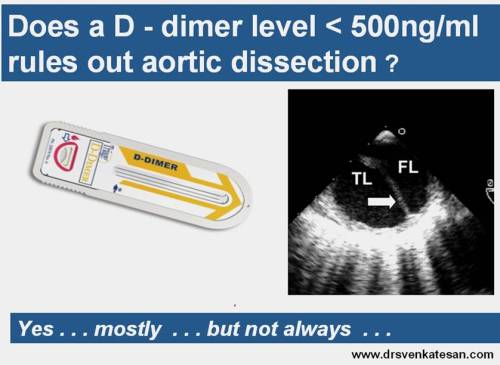
D -Dimer is a marker of  intravascular fibrinolysis .It is a degradation product of fibrinogen. A level more than 500ng/ml is significant.In acute aortic dissection this level is reported to be more than 2000ng/ml.

The beauty of this molecule is it is elevated in three important chest pain emergencies.

  • Acute myocardial infarction
  • Pulmonary embolism
  • And now aortic dissection.

The issue is not simple , as we know any intravascular coagulation and lysis can elevate this molecule.In patients with chronic CAD as like a chronic thrombotic lesions within the coronary arteries can also elevate d dimer.

Similarly , in portal, cortical, deep venous thrombosis all result in elevated D dimer.

So , such a non specific test  , how can be  useful in the diagnosis of aortic dissection ?

Yes, you are right ,

D Dimer helps us  not in diagnosing aortic dissection but  helps us in ruling out a possible dissection

D-Dimer levels <500 has a negative predictive value of 98% .

What is the bio- chemical  dynamics of  D dimer in dissection ?

D dimer in aortic dissection is mainly secreted within the false lumen. For d dimer to secrete into  systemic circulation  the clotted area should be exposed to a adequately flushed systemic blood at a good perfusion pressure.The contact area between the clot and fresh blood  is of critical importance.

d dimer aortic dissection false lumen

So ,  even though it has been reported d dimer has near 100% negative predictive value . . . is there a chance a dissections might occur with normal  d dimer levels ?

Yes, very well possible with due credits to published data

  • A dissection without thrombus(Rare . . . but still possible !)
  • A clot confined to false lumen with entry or exit points sealed.
  • A dissection without a exit point.
  • Intramural hematoma with no communication with aorta

Infrequently asked questions

  1. Time window ? Dimers are mainly useful in  patients who report before 24h after the onset of chestpain.
  2. How long it takes for the dimers to  get excreted ?
  3. Can coronary dissections in STEMI elevate dimer ?

Final message

D dimer is  mainly useful in  “not making a diagnosing” aortic dissection.

If  dimer levels are strongly  positive and  clinically the patient  has  has no evidence for acute MI or acute pulmonary embolism  and continues to have chest/back/atypically located pain  suspect aortic dissection , and order for further imaging like TEE,MRI, MDCT etc.

* Do not forget the role of routine , simple bedside transthoracic and suprasternal echocardiogram.It can diagnose dissection correctly in good number of patients.

** Never oder for costly thoracic imaging whenever d dimer is elevated.

*** When you send the sample for dimer make sure to mention  the clinical likelyhood of dissection .If it is very high the lab has every reason to reject the sample and suggest you to go ahead with thoracic images.

This is because ,  it could be costly miss . . . if you depend on dimer to diagnose a dissection

Imagine this scenerio , while your patient has a absent left radial pulse due to dissection and you are waiting for the lab report to arrive !

Never use it for diagnosing aortic dissection.

Thorax is a rigid bony box with a fixed space.The intra thoracic organs are snugly arranged within the cavity.The two lungs on either side with the heart in the middle fill the major volume of the mediastinum .In physiological conditions the volume of mediastinum remain almost constant , except for the respiratory swings.

heart lungs pulmonary function test dyspnea cardiomegaly ct ratio

It is to be noted the two major organs inside the thorax has a distinct behavioral pattern. Lung a very pressure sensitive structure tend to collapse whenever confronted with external pressure .This is evident in all cases of large pleural effusion (Note :The heart collapses only in a fraction of patients with large pericardial effusion -ie tamponade) . Similarly in any mediastinal syndromes , first the lung function is affected , logics then dictate , the low pressure venous system to get compressed resulting in SVC /IVC syndrome.Finally the right heart chambers may get interfered with .This is due the dynamic intracardiac pressures that resists any compression from exterior.

So, it is obvious , lung function is affected with raised intrathoracic volume or pressure .The increase in intrathoracic volume can be due to any thing .

cardiomegaly massive dyspnea mechanism lvedp

The volume of heart in cardiac failure can increase very significantly .For a fraction raise of CT ratio there is many fold raise in it’s volume.A CT ratio of 75% can cause a huge ” housing & accommodation ” problem for the lungs on either side . As we have discussed , the lung is passive organ has absolutely no other option but to bow down like a touch me not plant . The lung , reduces it’s ventilatory function impairing the already poor exercise capacity .The terminal respiratory units collapse significantly. This collapse is not visible in x rays as there is no intrinsic obstruction within the airways as happens in lung pathology.

The course of events in progressive cardiomegaly is often silent and heart successfully encroaches the the human breathing space until the heart failure is corrected and normal heart size is restored. Complete reversal of heart size may not be possible always !

A new unrecognized mechanism for cardiac dyspnea ?

Yes,the mechanism of cardiac dyspnea always been centered around elevated LVEDP , lung congestion etc and the resultant stimulation of lung receptors.

Now we realise a reduction in the lung ventilatory capacity may also contribute significantly in every patient with cardiac failure and cardiomegaly.

When a person with single pnemonectomy lead a comfortable life what is the big issue of heart compressing few respiratory segments of a patient ?

It is true a single normally functioning lungs is sufficient for living but what we are dealing here is patients with compromised cardiac function.Recruitment or non recruitment of even few respiratory bronchooles may have a bearing on patients symptoms and exercise capacity.

Final message

Cardiomegaly is not an inert consequence of cardiac failure. It can have important functional impact on the pulmonary ventilatory and perfusion capacity .It should be emphasised this mechanical encroachment on the lung space is over and above the hemodynamic effects on pulmonary capillary circulation .

Youngsters should recognise this fact as this offers one more explanation for cardiac dyspnea. This is not often discussed in the clinical classes.

Reference

http://10.1067/mhj.2000.110282

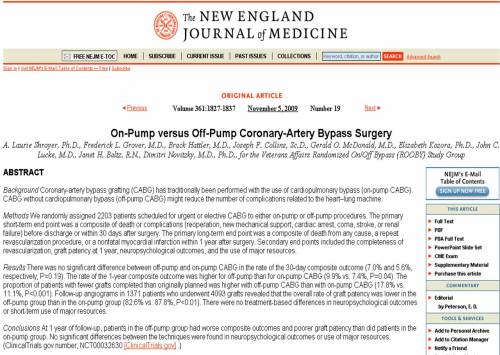
The NEJM’s breaks the  hidden truths about cardiopulmonary bypass in a beating  heart. The irony in medical science is   ,  trend setting  land mark articles usually arrive  very late . . .   to disappoint  all those  patients who  got the wrong treatment ! Off pump by pass is definitely one among them . . .

The major reason for off pump CABG’s s poor showing is

  • The surgeon’s  conflict   in defining   what is successful CABG  .The success of CABG   is   in    relief of symptoms & providing good bypass graft  with long term patency   .It is not in  less  thoracic trauma or in  a quick hospital discharge  !
  • The second major reason is denial of  the fact  that off pump CABG is indeed inferior  and hence no course correction was attempted  ! ( And  now that it   has become a hard  evidence   we expect some changes  . It  required almost 10 years for our cardiology community to  recognise this .)
  • Lesion access and  difficulty in mobilizing LIMA .Many times the the point of anastomoses is preselected by the accessibility and technical issues rather than lesion guided approach .This often happens than we imagine , and this could be a very bad advertisement for off  pump CABG

cabg on pump vs off pump beatin heart

Click on the link to NEJM abstract  ROOBY study

http://content.nejm.org/cgi/content/short/361/19/1827