Feeds:
Posts
Comments

Posts Tagged ‘acs’

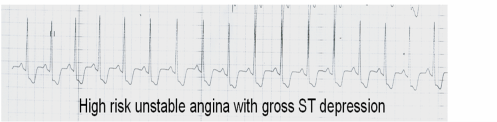
Non ST elevation Myocardial infarction  (NSTEMI) is a major mode of presentation of acute coronary syndrome.

Patients present with clinical unstable angina and  elevated cardiac enzymes or troponin.

ECG features can be any of the following.

1.ST depression (70-80%)

2.T wave inversion(10-20%)

3.Both ST depression and T wave inversion

4Post MI NSTEMI  -ECG changes variable ( Ironically ,even a residual  ST elevation may be present)

5.Normal ECG.

                                     Bulk of the NSTEMI belong to ST depression group.NSTEMI with purely T wave inversion is less common but occurs mainly in perioperative settings, pre existing CAD.NSTEMI with normal ECG is very rare  but can occur.

Read Full Post »

During acute  ischemia the most immediate requirement for the heart is

A.Blood

B.Oxygen

C.Glucose

D.High energy ATPs

E.Free fatty acid

Answer : A  will be considered  by most , as  correct answer .  A can provide B to E . But it is also a fact heart can survive without  A.  

Myocardium requires energy first  ! it does not in fact bother about from where it is coming at the time of crises.It may be right if you restore the coronary blood flow all other components (B-E) are made available to the heart .

The heart can survive off  the coronary circulation with only chemical support during cardiac surgery and also a during  heart transplantation  explanted  donor heart survives on a ice box during transit and till it is transplanted into the recipient heart

But ironically we spend much of our energy and efforts in restoring blood flow.One need to spare a thought about the quality of blood also . This is especially important  in the setting of ischmia  where a  metabolic centric approach will add further benefit.

Energy based approach to ischemia : Is it relevent ?

Heart is a fascinating  mechano biological organ  pumping   millions of  gallons of blood  .Fuel for this is self generated  on a continuous basis  from the circulation blood .So  the key to human survival is the coronary blood flow that supplies the fuel and nutrients to the heart. When this key supply line is under threat  during  acute coronary syndrome cardiologist have  the only option of restoring the compromised blood supply by any means . But during chronic ischemia there is  no  urgency. There has always been an option of enriching the  blood with energisers like ATPs,  glucose,  hemoglobin etc .Providing energy support to the failing heart has never captured the imagination of cardiac physicians until recently.Still most are skeptical about  the concept of biochemical ischemia.

Click to download full PPT presentation

Metabolic manipulation of  CAD( Will be available shortly)

Read Full Post »

                             Glucose is the molecule of life   ,burnt every second inside the body at the energy store house called mitochondria. Heart , the most active organ in the body  gets  bulk  of it’s energy supply  from fatty acids,  glucose and a little from keto acids. Under anerobic conditions this energy substrates shifts towards glucose .

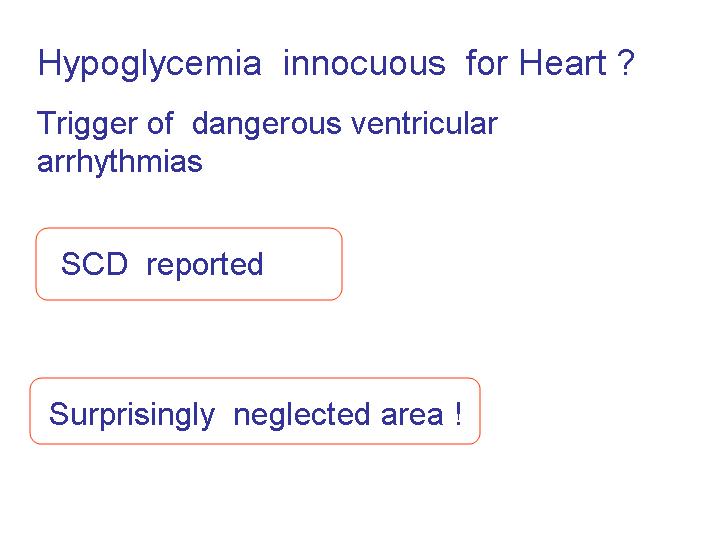
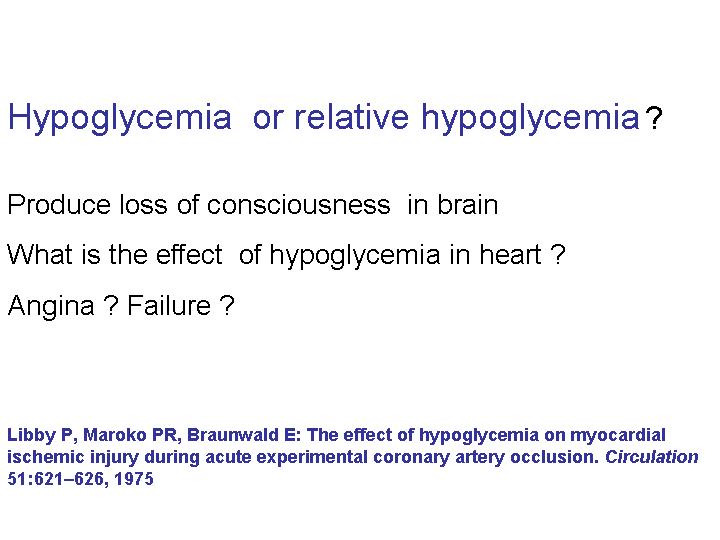
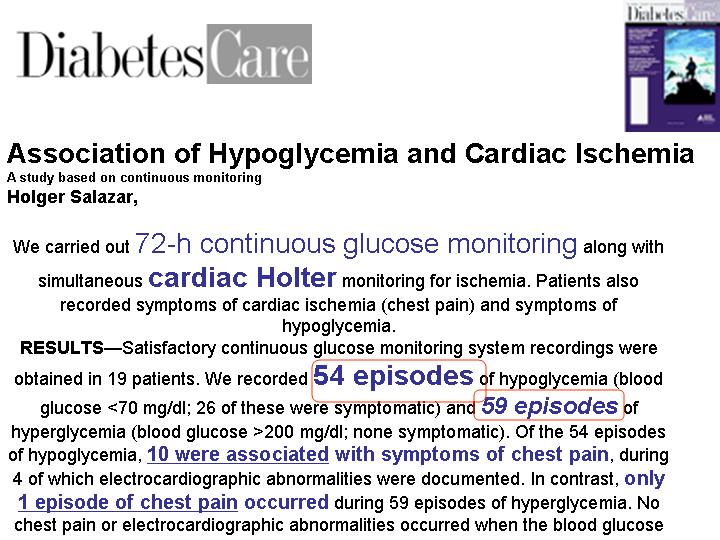
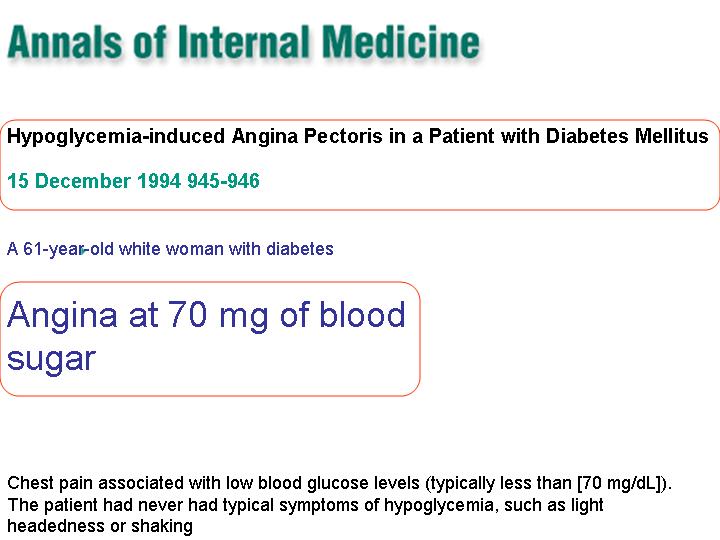
                             We are  rarely inclined to think  that heart  can ever suffer from hypoglycemia ! But hypoglycemia can have distinct direct and indirect effects on heart.  In fact indirect effects due to activation of adrenergic activation is more obvious.An episode of hypoglycemia can precipitate an arrhythmia . Glucose potassium insulin infusion


Final message

Hypoglycemia , can be a trigger of ACS .This aspect is poorly recognised and studied.

Read Full Post »

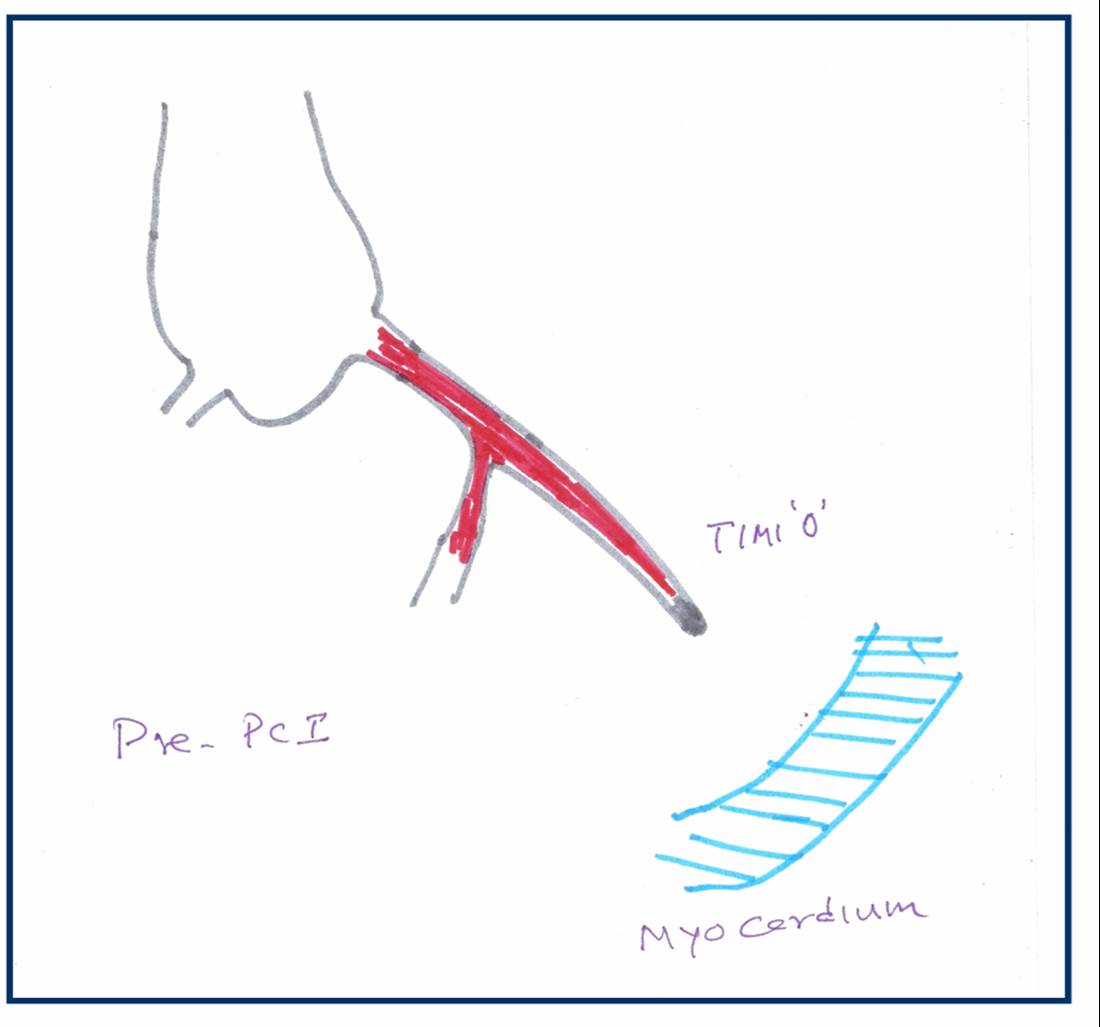
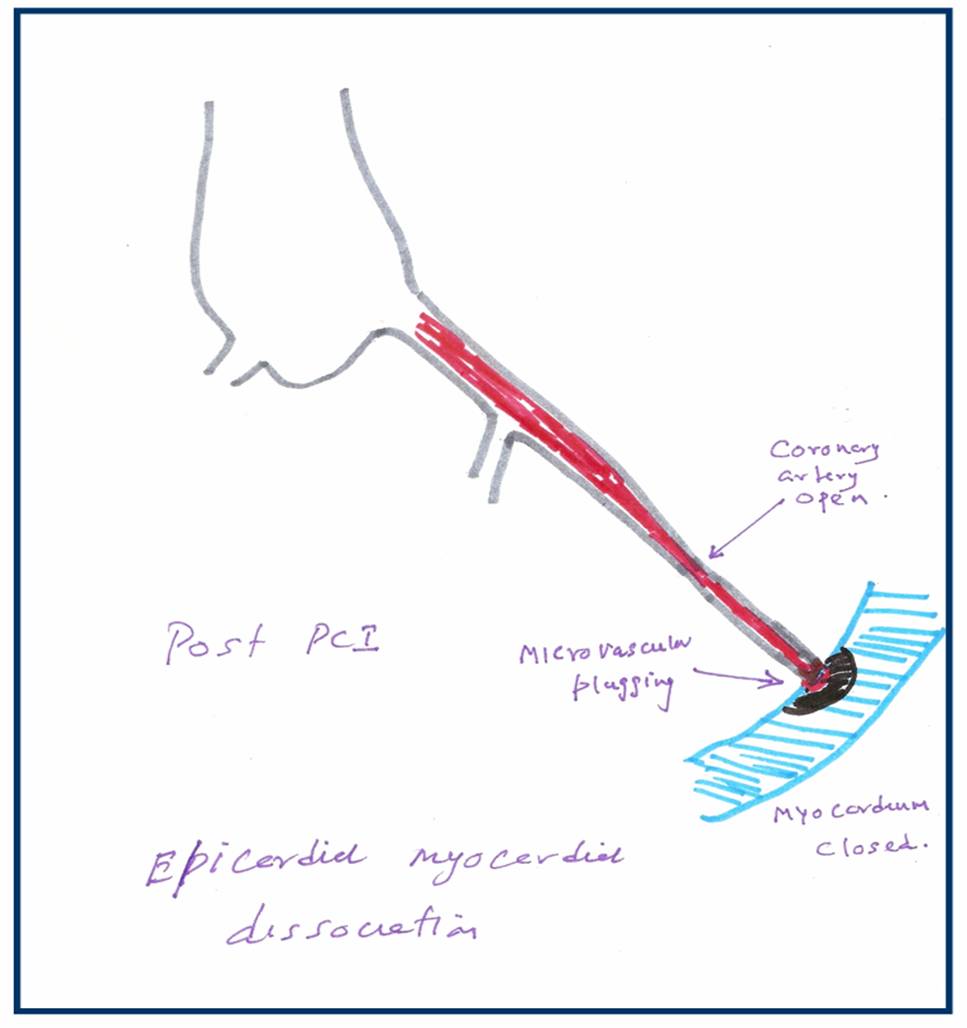
No reflow is the terminology used primarily in cath labs where, even  after a successful opening and stenting  of a coronary artery the coronary blood flow is not  restored to myocardium . The point to be emphazised here is blood do cross  successfully the site of  the obstruction but fails to enter the muscle segment  to which the coronary artery is supplying. So the paradoxical situation of artery  being open but the  myocardium is closed to receive  blood flow  happens . This is termed as no -reflow.  Actually it is a  misnomer , and  ideally it should be called “no flow” because  normal distal flow  does not  occur (After PCI)  in the first instance  to get interrupted  later on  and be labeled as  no re-flow.  .The only positive effect of PCI in these situation is blood flow would have improved by few centimeters ie till it reaches  but falls short of myocardium . In fact no reflow , can be termed as  glorified and concealed  terminology  for  PCI failure . It needs urgent action . No reflow is also called as myocardial epicardial dissociation.

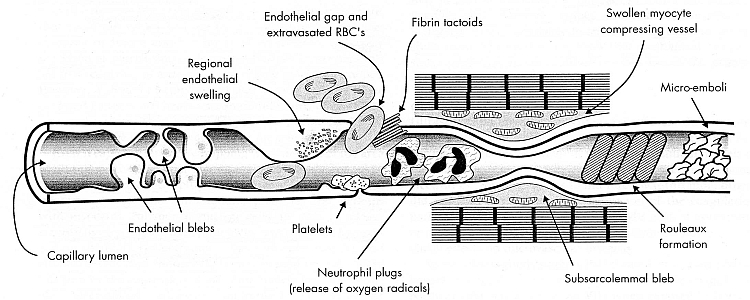
Mechanism of no reflow.

Curious case of open coronary artery and closed myocardium !

Coronary  microvascular plugging  is mainly  due to thrombus and atheromatous debri , myocardial  edema , microvascular spasm may also contribute.

Where can it occur ?

  • First described in cath lab, especially following primary angioplasty.
  • It can very  well happen following thrombolysis in STEMI.
  • Can occur in venous grafts.

How do you recognise no reflow?

In cath lab it will be self evident from the check angiogram. Some times it is less obvious and may  require, myocardial  blush score, TIMI frame  count, contrast echocardiography, PET scan etc. In post MI a very simple method to recognise this entity could be the observation of persistent ST elevation in ECG .

Treatment.

Extremely difficult. Almost every coronary vasodilator has been tried.(Nitrates, nicorandil, calcium blockers, etc).Success is less than 30%.  High pressure flushing with saline inside the coronary artery is advocated by some.Others believe it’s dangerous to do it. So prevention is the key. Avoid doing PCI in complex, thrombotic lesions. Use thrombus suction device like export catheter(Medtronic). Distal protective devices are double edged devices , useful only in experienced hands.

Unanswered question

What is the size of the particle (thrombotic and atheromatous  debri)  the   coronary microcirculation safely handle and push it into the coronary venous circulation and the coronary sinus for disposal ?

If we can lyse the thrombus into micro particles by some mechanism and make it traverse the coronary circulation this complication of microvascular  plugging can be treated and prevented .

What is the final message ?

  • No reflow is relatively common condition during emergency PCI done for ACS patients
  • More common in complex thrombotic lesions.
  • Can also  occur in STEMI
  • Treatment is often vexing . In fact the treatment of this condition is so difficult , it can be termed  almost synonymously with “Failed PCI” if flow is not restored.
  • Successful treatment of no- reflow  means not momentry restoration of  myocardial flow  by mechanical and pharmacological modalities ,but to maintain sustained myocardial   perfusion. This we realise, as patients who have had a no reflow during  a PCI, do not perform as well in the follow up  .
  • So prevention is the key.

Read Full Post »

Differential response of thrombolysis between left and right coronary system

  • Thrombolysis is the specific treatment for acute myocardial infarction. ( Privileged few , get primary PCI))
  • Failed thrombolysis occurs in significant number of patients ( 30-40%).
  • Persistent ST elevation  120 minutes after thrombolysis is best indicator of failed thrombolysis.
  • It has been a consistent observation  failed  thromolysis  is more frequent in anterior   or LAD myocardial infarction.

In a simple study we have documented  patients  with inferior MI  rarely had persistent ST elevation and thrombolysis  was   successful in vast majority  of  patients  ( Except in few patients associated lateral MI)


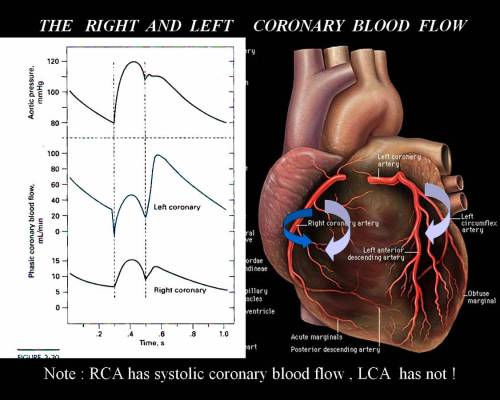
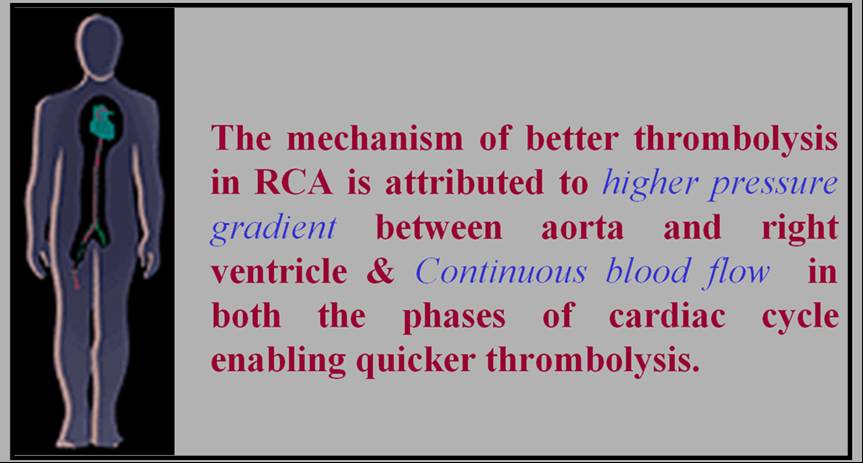
The mechanism of better thrombolysis in right coronary artery  is simple.The success of thrombolysis , apart from early time window , is directly correlated with pressure head  and the duration of contact between the thrombolytic agent and the thrombus. In right coronary circulation the  blood flow is continuous ,  occurs  both in systole and diastole that facilitates the maximum delivery of the thrombolytic agent . Further there is a favorable  pressure gradient  across RV myocardium  as the transmural occluding pressure across RV is considerably less then LV myocardium.

This paper was presented in the  “Annual cardiological society of India scientific sessions”

at Chennai, Tamil Nadu.India December 2000

Click to down load PPT full presentation

Read Full Post »

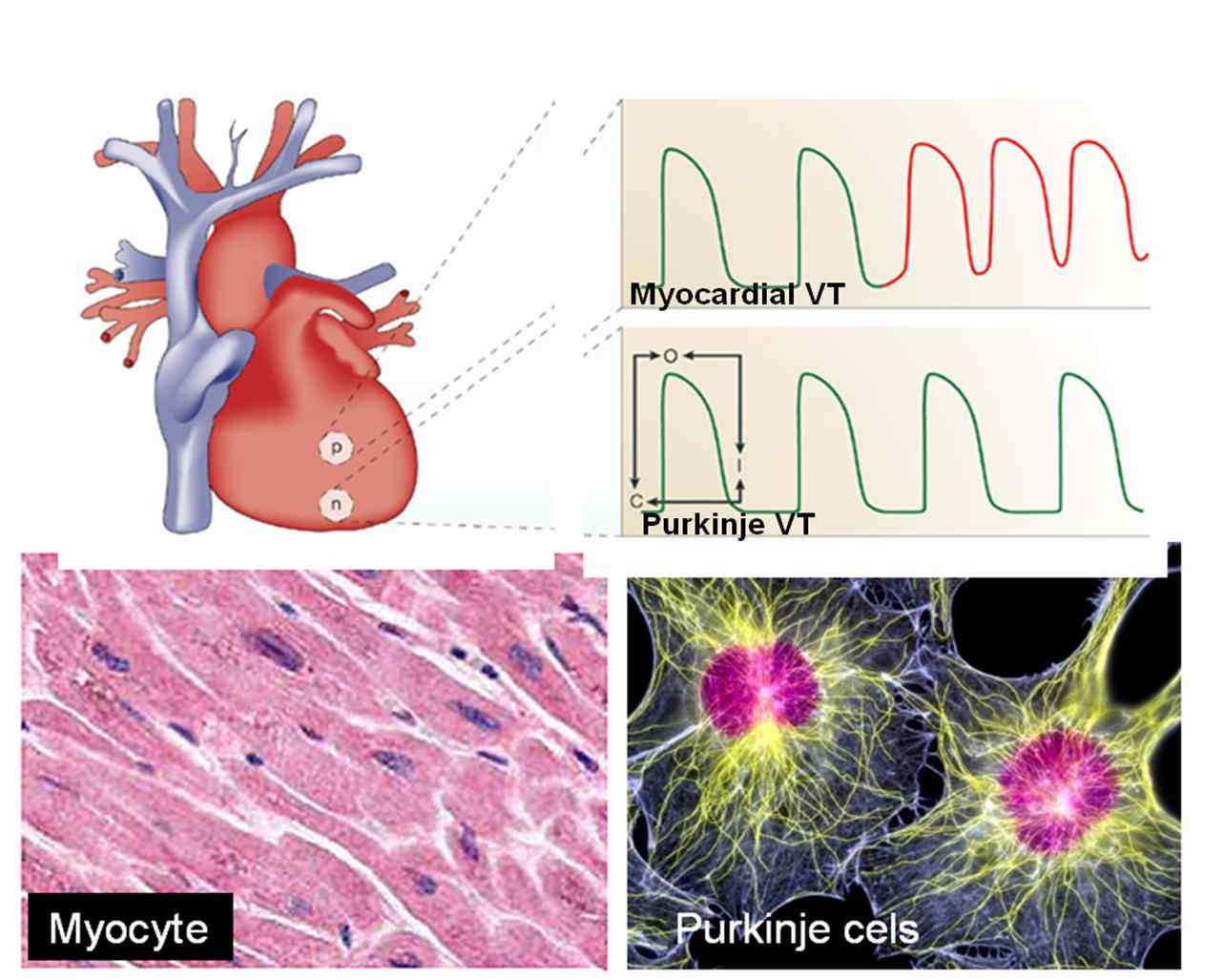
The cell of origin of ventricular tachycardia is rarely discussed at bedside. It is still in research labs !

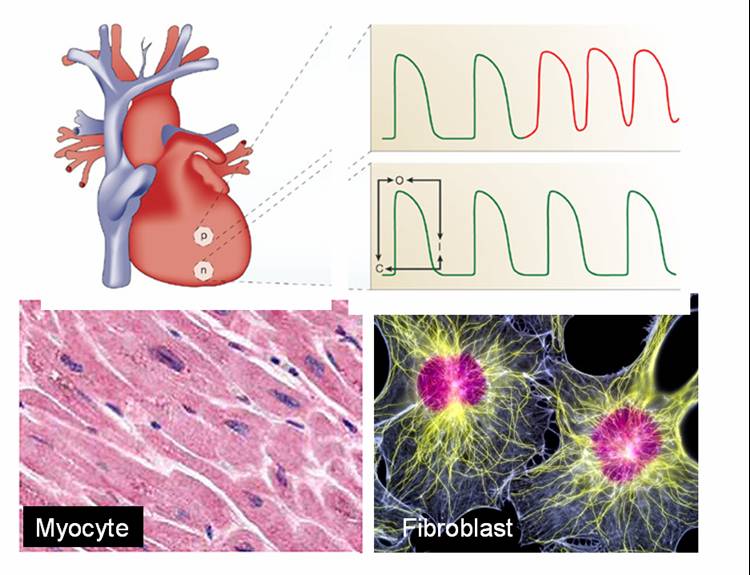
                                    Ventricles are not made up off entirely myocytes. Apart from myocytes it contains specialised  purkinje cells , fibrocytes, interstitial cells and  some times primitive mesenchymal cells. Ventricular tachycardia can arise either in purkinje cells, the myocytes  or even the fibrocytes. The myocyte  VT  classically occur during ACS or post infarct VTs.They are  more often hemodynamically unstable and quickly degenerate into ventricular fibrillation. Myocardial VT is likely to be pulseless and require DC cardiversion frequently. Purkinje VTs are relatively less unstable. If VT arise proximally in the septum near the distal his, or in bundle branches (BBR) the VT is more stable.They  are likely to respond to be medical management.

What is the therapeutic implication of knowing  myocardial VT ?

                               In fact  ,simply knowing the cell of origin of VT is not suffice .The ionic currents inside the cell that trigger and sustain the VT is more important. There are few ionic circuits responsible for VT. Sodium , Intra cellular calcium, potassium , beta receptor mediated calcium current.If we know the individual ionic culpirit we can block that specifically  . Now we have multi purpose ion blockers  like amiodarone which acts like a broad spectrum antibiotic and terminates a VT.

                              So as of now there is no real purpose of breaking our head  in locating the cell  of origin  and the ions responsible for VT  at  the bed side ,( Researchers will do that for us !).  We have only few  antiarrhythmic drugs available in our crash cart  .Our job is to choose the optimal  drug  which will fit in for our patient. In electro physiology labs, radio frequency ablation is done .This is  nothing but shooting down the abnormal electrical  focus (Cluster of cells or a samll segment of myocardium).  In future,  a single abnormal  cell could be selectively neutralised with cell based therapy assisted by  nanopore robots !

Read Full Post »

Chest pain is one  of the commonest presenting symptom  in any  hospital both as  an emergency  or non emergency. Reaching an accurate diagnosis is very important. The main  purpose of evaluation of chest pain is to recognise it as cardiac or non cardiac origin . Cardiac chest pain almost always means ischemic chest pain . That is called angina. (Of course there are few important causes for non ischemic cardiac chest pain which Will be discussed later).

Standard features of typical angina.

Chest pain which falls short of typical features are called atypical chest pain . Some recommend at least three typical features to label it as angina.
After the clinical examination patients  should be categorised in one of the following .

  • Typical angina
  • Atypical chest pain
  • Non cardiac chest pain** Non cardiac chest pain is not a diagnosis. Any physician (or a specialist)  should take some effort to localise it. (Muscle, nerve , pleura , anxiety  etc) . But  generally once these patients are ruled out of cardiac pain  they become less special and are simply referred back to their  family physician, only to return back  with  another cardiac  pseudo-emergency  in a different hospital .

    Why we are diagnosing atypical chest pain liberally ?

    Currently   more number of  patients as well as  the physicians  are   aware of the looming epidemic of CAD. The other major reason is the  lack of application of mind during  foirst clinical appraisal  and examination. Many of the patients with non cardiac chest pain  (Muscle, nerve , pleura )  are termed as atypical chest pain. Though some of the popular texts use atypical  chest pain  and non cardiac chest pain interchangeably , it is not  correct to do so. For example don’t ever label a  patient with chest pain with chest wall tenderness as atypical chest pain and order a cardiac work up .It  is a poor model to  emulate , that consumes time and resources!.Instead they should be diagnosed a confident non cardiac chest pain and dealt properly.

Once a patient is diagnosed  atypical chest pain what’s next ?

They should get a  complete physical examination,ECG, and  undergo exercise stress test.   In the  screening of CAD , angina can be termed a hard sign,  atypical chest pain is a soft sign,  resting ECG is surprisingly  a soft sign again (unless you record it during chest pain). Exercise stress testing is  the ideal  investigation in evaluation of  chestpain.( 70-80% accuracy). This can be improved upon by Thallium, SPECT, stress echo etc. As of now coronary angiogram is considered the ultimate gold standard (Not pure gold !) to rule out  CAD.

It is also worthwhile to remember non anginal  chest pain can also be an emergency and life threatening

  • Pulmonary embolism
  • Pneumothorax
  • Thoracic tumors
  • Aortic aneurysm (Dissection and non dissection)  The list is not  exclusive

Final message

What do we really mean by  atypical chest pain ?

In reality we don’t mean any thing !

When a  cardiac  physician is confused or rather , unable to  rule out angina , at the same time he is not confident of calling it as non cardiac chest pain,  he has the luxury of using this terminology . It is obvious  this terminology  should  minimally  be used.  Once diagnosed  these patients  can’t carry on with this tag  for long. They should be reinvestigated , (Right from history  and clinical ex) .They should either enter the cardiac work up  protocol  or  a non cardiac source for pain should be fixed  immediately.

Read Full Post »

This is a 15-year-old post about LVH, written in 2008. Few of my colleagues, now agree with this, still hesitate to oblige in the open, suggesting it is too good to be true! Re-posting it for your own assessment. Surprised, why cardiology community didn’t consider this observation worthy to pursue.

Advantages of Left ventricular hypertrophy (LVH)

Left ventricular hypertrophy is one of the most common clinical cardiac entity.It is recognised either by ECG or echocardiography.LVH has a unique place in cardiology as it can imply a  grossly pathological state or  a marker of healthy heart as in physiological hypertrophy in athletes.

Logic would suggest, in this era of  stem cells and  nano medicine ,  every muscle fibre in ventricle is worth in gold !. So when the nature provides an  extra reserve of myocardium in the form of LVH one should welcome it , if otherwise not harmful.

Is LVH due to systemic hypertension benign ?

Not really, LVH has been shown to be an independent cardiac risk factor. (The famous Framingham study)Further LVH can result in diastolic dysfunction and the risk of cardiac failure increases.

But in spite of these observations, an  astute clinician with considerable experience will appreciate , patients with LVH fare better during an acute coronary syndrome !

This has been a consistent clinical observation . (Shall we call it as class C . ACC /AHA evidence ? )

Is LVH  an asset during ACS ?

  • A hypertrophied heart takes ischemic injury very easy , it doesn’t really hurt much . Another possibility is that in  LVH myocytes are relatively resistant to hypoxia .
  • Patients with LVH rarely show  significant wall motion defect following an STEMI.This is probably because the full thickness transmural necrosis is almost never possible even if extensive MI occurs.
  • This is also reflected in ECG  as these patients   rarely develop q waves in  following STEMI .
  • Persistent ST elevation and failed thrombolysis is very uncommon in pateints with LVH.
  • LVH provides  a relative immunity against development of cardiogenic shock . It requires 40% of LV mass destruction to produce cardiogenic shock.This can rarely happen in LVH. In a  long term analysis we have found none of the patient with LVH developed cardiogenic shock following STEMI.
  • LVH patients  are also protected against development of free wall rupture.

 Concluding message

                   “Lack of published evidence is the weakest evidence to dismiss a true myth”

LVH , either pathological or physiological, has a hitherto unreported beneficial effect.It acts as a myocardial reserve and helps limit the impact of STEMI.


Read Full Post »

              Intra coronary thrombosis is the sine qua non of acute coronary syndrome ( Both STEMI and NSTEMI.) But thrombolysis is the specific therapy in STEMI and is contraindicated in NSTEMI/UA.
Why is this apparent paradox ? What is basic differnce between UA and AMI ?
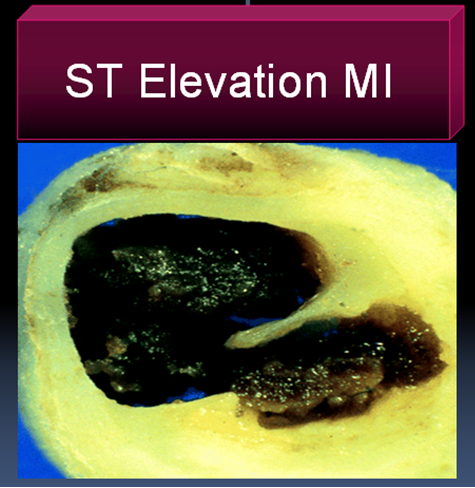
In STEMI there is a sudden & total occlusion of a coronary artery usually by a thrombus with or without a plaque .The immediate aim is to open up the blood vessel . Every minute is important as myocardium undergoes  a continuous process ischemic necrosis. So thrombolysis (or more specifically fibrinolysis should be attempted immediately) .The other option is primary angioplasty,  which will not be discussed here.

The thrombus in STEMI  is RBC &  fibrin rich and often called a red clot. Number of fibrinolytic agents like streptokinase, Tissue palsminogen activator,(TPA) Reteplace, Tenekteplace etc have been tested and  form the cornerstone of STEMI management.The untoward effect of stroke  during  thrombolysis  is well recognised , but usully the risk benefit ratio favors thrombolyis in most situations except in very elderly and previous history of stroke or bleeding disorder.
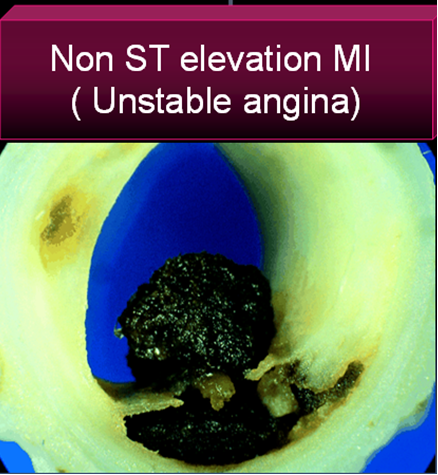
Unstable angina is a  close companion of STEMI . Many times it precedes STEMI often called preinfarction angina. During this phase blood flow in the coronary artery  becomes sluggish gradually,and patients develop  angina at rest .But unlike STEMI there is never a total occlusion and myocardium  is viable but ischemic,  and emergency salvaging of myocardium is not a therapeutic aim but prevention of MI becomes an aim. It is a paradox of sorts ,  even though thrombus is present in  UA ,  It has been learnt by experience thrombolytic agents are not useful in preventing an MI .


Why  thrombolysis is not useful in UA ?

1.In unstable angina  mechanical obstruction in the form of plaque fissure/rupture is more common than completely occluding thrombus. So lysis becomes less important.

2. Even if the thrombus is present , it is often intra plaque  or intra lesional and the  luminal  projection of thrombus is reduced  and hence thromolytic agents have limited area to act.

3.Further in UA/NSTEMI since it is a slow and gradual occlusion (Unlike sudden & total occlusion in STEMI) the platelets  get marginalised and trapped within the plaque .Hence in UA  thrombus is predominantly  white  . Often, a central platelet core  is  seen over which fibrin clot may also be  formed.

4.All available  thrombolytic agents act basically as a fibrinolytic agents,  and   so it finds   difficult to lyse the platelet rich clot.There is also a small risk of these agents lysing the fibrin cap and exposing underlying platelet  core and trigger a fresh thrombus.This has been documented in many trials( TIMI 3b to be specific) So if we thrombolyse in UA , there could be a risk of recurrent ACS episodes in the post thrombolytic phase.

5. UA is a semi emergency where  there is no race against time to salvage myocardium .Administering a  stroke prone thrombolytic agent tilts the risk benefit ratio against it.

6. Among UA, there is a significant group of secondary /perioperative UA   due to increased demand situations. Here there is absolutely no role for any thromolytic agents,  the  simple reason is , there is  no thrombus to get lysed. 

7.Many of the UA patient have multivessel CAD and might require surgical revascualarisation directly .


So fibrinolytic  agents are contraindicated in UA so what is the next step ?

The emergence of  intensive and aggressive platelet-lytic agents.

A combination of aspirin, clopidogrel, heparin, glycoprotien 2b 3a antagonist formed the major therapeutic protocol in these patients.Even though these are called antiplalet agents some of them  like 2b/3a antagonist eptifibatide, tirofiban, and many times even heparin has a potential to dissolve a thrombus. So technically one can call these agents  as thrombolytic agents.

What are the unresolved issues

                                       Even though clinical trials have convincingly shown thrombolytic agents  have no use in UA .There is a nagging belief  THAT  there could  be group of patients  with UA , still might benefit from thrombolysis as total occlusions have been documented  in some cases with UA.This is  especially true in peri-infarction unstable angina (Pre & post) as there is a fluctuation  between total and subtotal occlusions ) .But bed side recognition of this population is very difficult.

Many would consider this issue as redundant now,  since  most of  these patients  are taken up for emergency revascularisations

Read Full Post »

There are numerous complex grading for bifurcation lesions available.

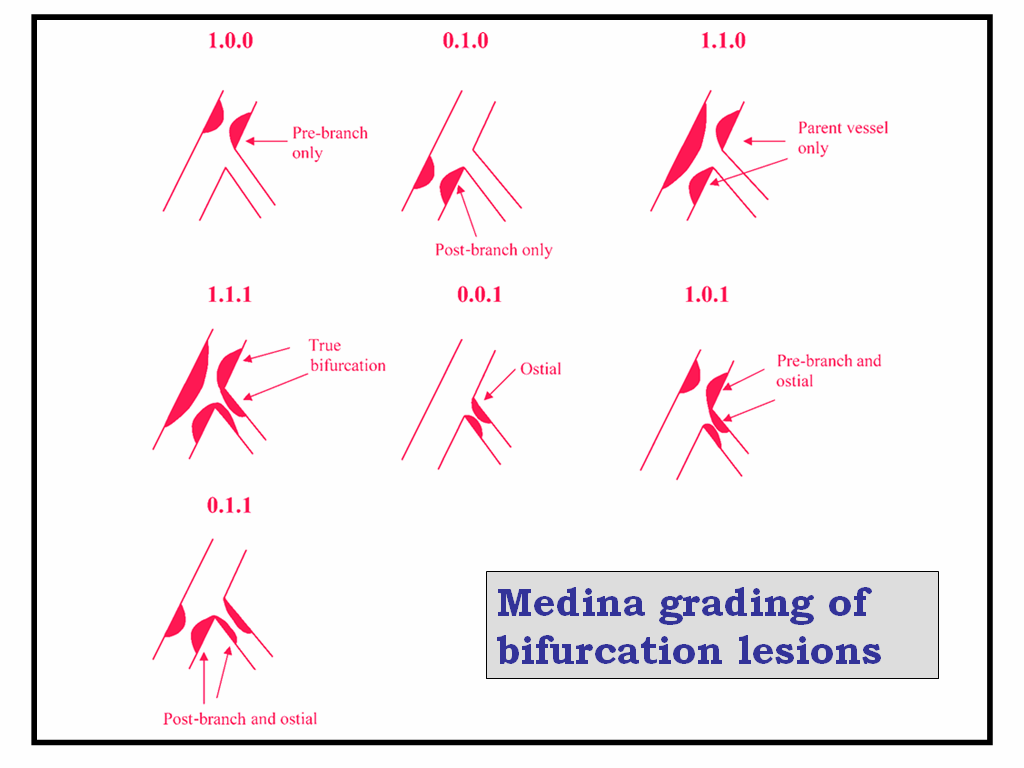
The one proposed by Medina is simple and most useful.

In this grading three segments

  • Proximal main vessel
  • Distal main vessel
  • Branch vessel

Are given a code 0, and 1 if  lesion is present or absent .

This grading gives simple and fast method to label a bifurcatiuon lesion and to asssess the response to PCI. The only issue here is the individual  lesions are not graded , for example branch vessel ostium just involved about 20 % is not addressed . Further TIMI flow in these vessels may also be incorporated

How medina grading can be used to assess effectiveness of

angioplasty  ?

A patient with 1.1.1  after the treatment should revert back to 0.0.0.  if converted into 0.0.(.5) may indicate a residual side branch lesion  .5 shall indicate 50% residual lesion, .3 , 30% etc


What is the best management strategy for bifurcation lesions?

The topic has been discussed extensively for over a decade in various forums.

Though the lesions and intervention techniques  appear complex the basic concept is simple.

Following is the 8 point algorithm

1. Assess the bifurcation lesion accurately.

2. Apply the general rule and ask the first question whether PCI is neccessary at all ? if decided for PCI

3. Stent the main vessel.Protect the side branch.  

4. Dilate the side branch with a balloon.(KIss or through the struts) 

5. Very rarely,  if the side vessel is more significant and large  stent it and balloon the main vessel.

6. Use drug eluting stents with caution .

7. Resist the temptation of using two stents unless the situation demands and is absolutely required.

8. Never attempt to do bifurcation angioplasty during ACS as apart of primary angioplasty.( Unless you’re extremely competent, even then aim of primary PCI is to salvage myocarium quickly , not to provide TIMI 3 flow in non IRA vessel.)

Dr.S.Venkatesan.Madras medical college.Chennai.

Read Full Post »

« Newer Posts - Older Posts »