Feeds:
Posts
Comments

Posts Tagged ‘atherosclerosis’

One of my colleagues was joking ,nowadays patients force us to read or even educate us . I completely concurred with him.


Doctor, do you have any investigation to know how much is the plaque burden in my coronary artery?

Yes. Sure , we have many modalities, right from CT calcium , OCT, IVUS, NIR, etc.

How would I know , which one of them is high risk and vulnerable ? I recently read in Forbes Sunday health supplement, It says ,it is better to know the thickness of the cap covering the plaque. It further says, about the risks of having a thin cap .(TCFA-Thin cap fibro atheroma.) Can you prescribe some tests to find out the thickness of these caps doctor ?

There you go, into the perils of hyper- education of modern society. So, you want me to teach you the molecular biology of Atherosclerosis ,right ?


Yes, now cardiologists and basic scientists are armed with unprecedented tools of intra-coronary imaging, like OCT, IVUS, NIR spectroscopy, etc. to decode the histological, biochemical, pathological secrets within the atherosclerotic plaques. Atherosclerosis is not a worrisome issue as long as it is contained deep within the vessel wall and doesn’t encroach the lumen. However, plaques, which are close to the lumen, are more prone to empty its contents into the lumen by a fissure or rupture triggering an event. In that sense, you have a reason to worry about TCA. Itis very much logical to expect the cap hat covers the plaque to protects and reduce the risk of its rupture.

This was a very attractive concept and we were able to analyse it with intracoronary optical coherence light-based imaging. For some time we really felt TCFA is really a marker of vulnerability. Now, we realize the concept of TCFA, has a thin layer of truth intertwined in a thick layer of myth .(Lee KY, Chang K. Understanding Vulnerable Plaques: Current Status and Future Directions. Korean Circ J. 2019 Dec;49(12):1115-1122. doi: 10.4070/kcj.2019.0211. )

In physiological state ,it is amazing to note, how a single layer of endothelial cell is able to withstand a lifetime of vascular stress. A plaque is covered by a thin cap that includes a endothelium (In tact in many plaque) While this layer is good enough to protect exudation of its content irrespective of the nature of lacquer content. A contrasting corollary is , a much thicker Aorta dissects without even a plaque if the pressure injury is more. TCFA are stressed from both abluminal and luminal aspect. Does it balance these forces ?

TCFA are defined as fibrous caps with less than 65 microns . The importance of this thickness is being questioned for two reasons now.
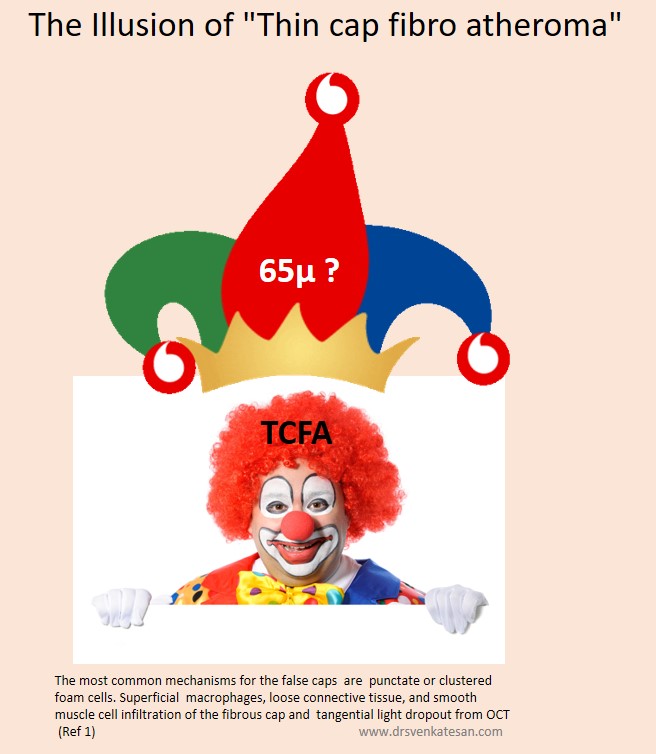
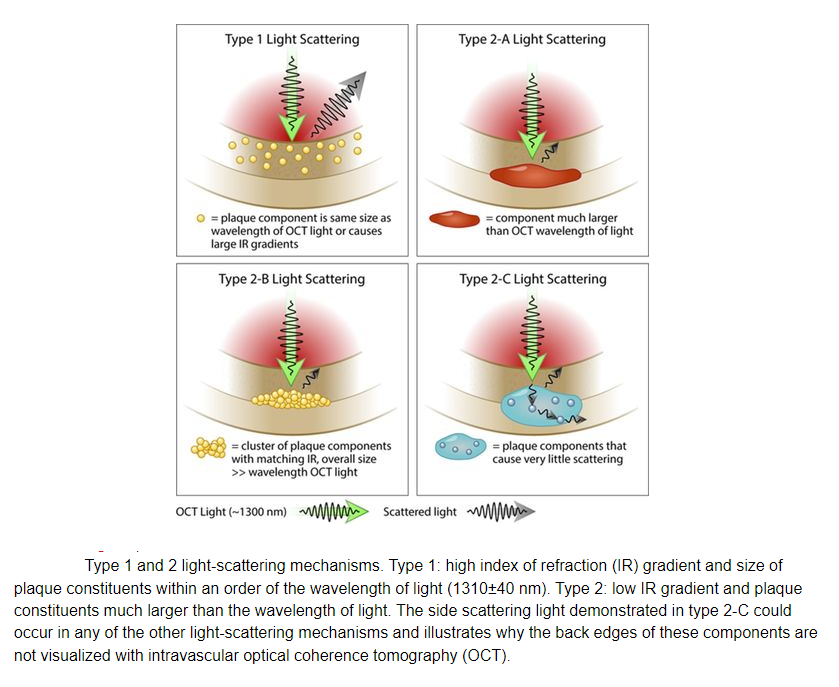
1,Technoloigical limitations of measuring cap thickness : False positive thin caps , false positive thick caps are equally common.
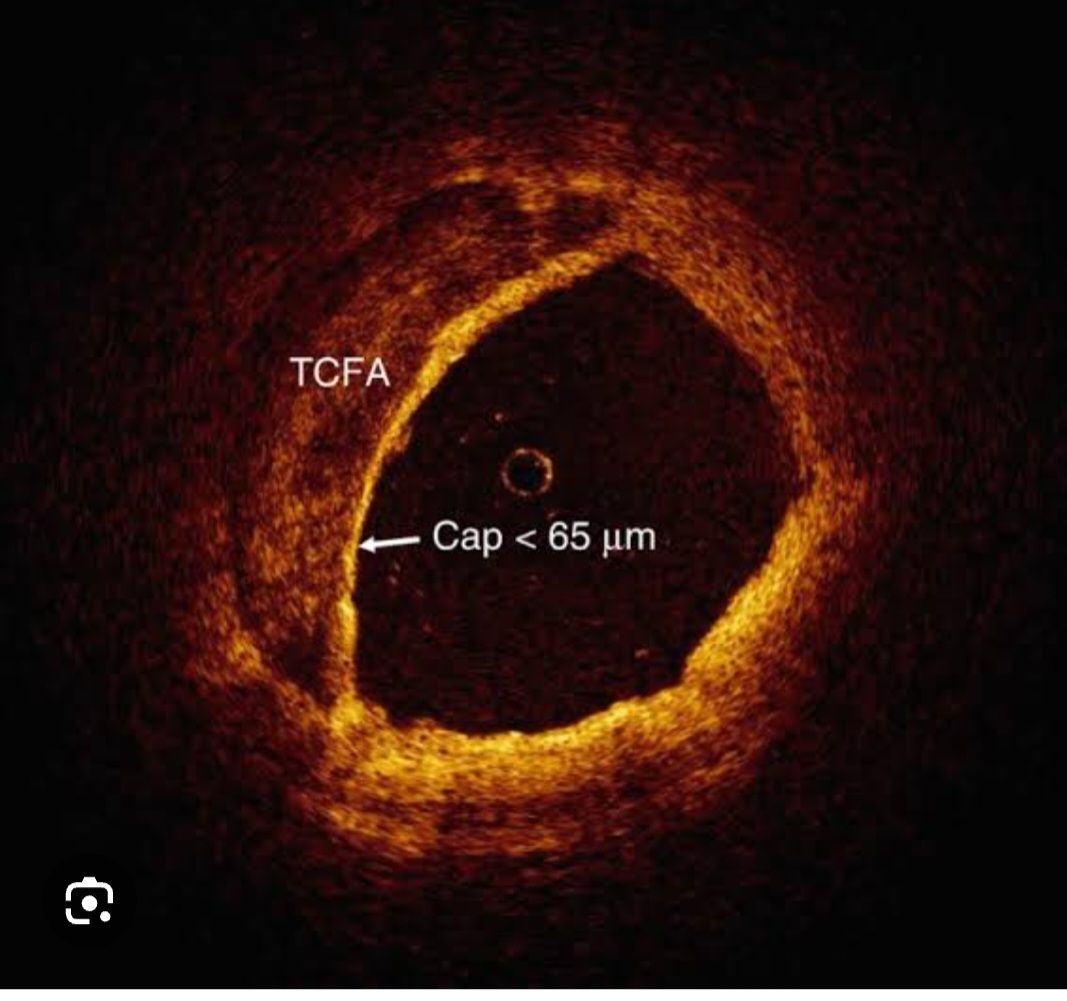
Factors influencing cap thickness

1.Superficial macrophages, ,

2.Loose connective tissue,

3.Punctate foam cells, and

4.Smooth muscle cell infiltration of the fibrous cap

5.Tangential light dropout(Ref 2)
2.The second one is a more fundamental flaw in our understanding. TCFC, after all could be just as innocent as any other plaque. This is based on the observation many of the thin capped plaques remain indolent while thick capped become a culprit . Cap thickness is just one of potential parameter of vulnerability, but many others known and unknown factors and forces operate on the plaque and make this TCFA simply irrelevant.

Some queries for advanced readers

What are the chances of a Thick cap fibro atheroma (ThCFA) getting ruptured ?

65 micron is not God prescribed cut off point . A simple adrenaline surge and eccentric plaque shoulder can be destabilized. A sudden shearing stress of intracoronary hypertensive spike can crack a 650 micron cap. On the contrary, even if the cap is thin , but the content it holds are non-necrotic , rupture is rare event and vice versa.

What are biological events that follow the rupture ?

Not every rupture leads to an ACS. The highly armed anti-coagulant and anti fibrinolytic system has enough resources to clear of the contents.(Unless it is over-whelmed ,which can be called as an act of God or a response to our past deeds)

Relationship between CT calcium score and TCFA

It is highly plausible, high calcium in plaques indicate, most caps are thickened and hardened. Though calcium score is a popular estimate of plaque burden, it is still a weak link to our ignorance and knowledge towards prevention of cardiac events.

Does TCFA prone for more coronary erosion ?

Though logic would suggest so, it appears , there is no meaningful relationship between them.

Does statins increase Thickness of TCFA ?

Yes. They are claimed in many studies. This is important, all patients need to take Statin to stabiles the plaque overall (Takarada wt al. Atherosclerosis. 2009 Feb;202(2):491-7.) More recently PCSK blockers Alirocumab was shown to increase TCFA at lesion levels study by NIRS (PACMAN-AMI study)

Final message

Coming to the question raised by the patient . My frank reply would be

“Never worry my dear patient total plaque burden or calcium scores. I would say, even the fear-mongering with blood levels of lipid sub-fraction, is an exaggerated state of pathological health consciousness. Life is short .We have better things to accomplish. The least we can bother in our life, is how to increase the thickness TCFA. Even if we find the total numbers of TCFA, what are we going to do with that info? My guess is ,the propensity of TCFA to damage your heart is 1000-fold less than the anxiety (associated with it) eroding some other innocuous plaque .

The chances of plaque misbehavior is as unpredictable as, the probability of a scale 4 Richter quake striking and shaking the basement of your house. So, instead of worrying about these TCFAs, concentrate on your work, about your lifestyle, stress, eating habits, and stop reading too much from all these health supplements. After all, please remember much greater men like Abraham Lincoln and Mahatma Gandhi lived a stellar life , in the grand old era when no one knew what was cholesterol and lipids.”

Reference
1.van Soest G, Regar E, Goderie TP, Gonzalo N, Koljenović S, van Leenders GJ, Serruys PW, van der Steen AF.Pitfalls in plaque characterization by OCT: image artifacts in native coronary arteries. JACC Cardiovasc Imaging. 2011; 4:810–813.

2.Phipps JE, Hoyt T, Vela D, Wang T, Michalek JE, Buja LM, Jang IK, Milner TE, Feldman MD. Diagnosis of Thin-Capped Fibroatheromas in Intravascular Optical Coherence Tomography Images: Effects of Light Scattering. Circ Cardiovasc Interv. 2016 Jul;9(7):10.1161/CIRCINTERVENTIONS.115.003163 e003163. doi: 10.1161/CIRCINTERVENTIONS.115.003163. PMID: 27406987; PMCID: PMC4946571.

Read Full Post »

Atherosclerosis is an  inflammatory and degenerative disease of blood vessel.The common  belief is  (Of course , it is a fact ) it  mainly causes vascular obstruction and compromise vital organ function(heart, Brain, Kidney etc)

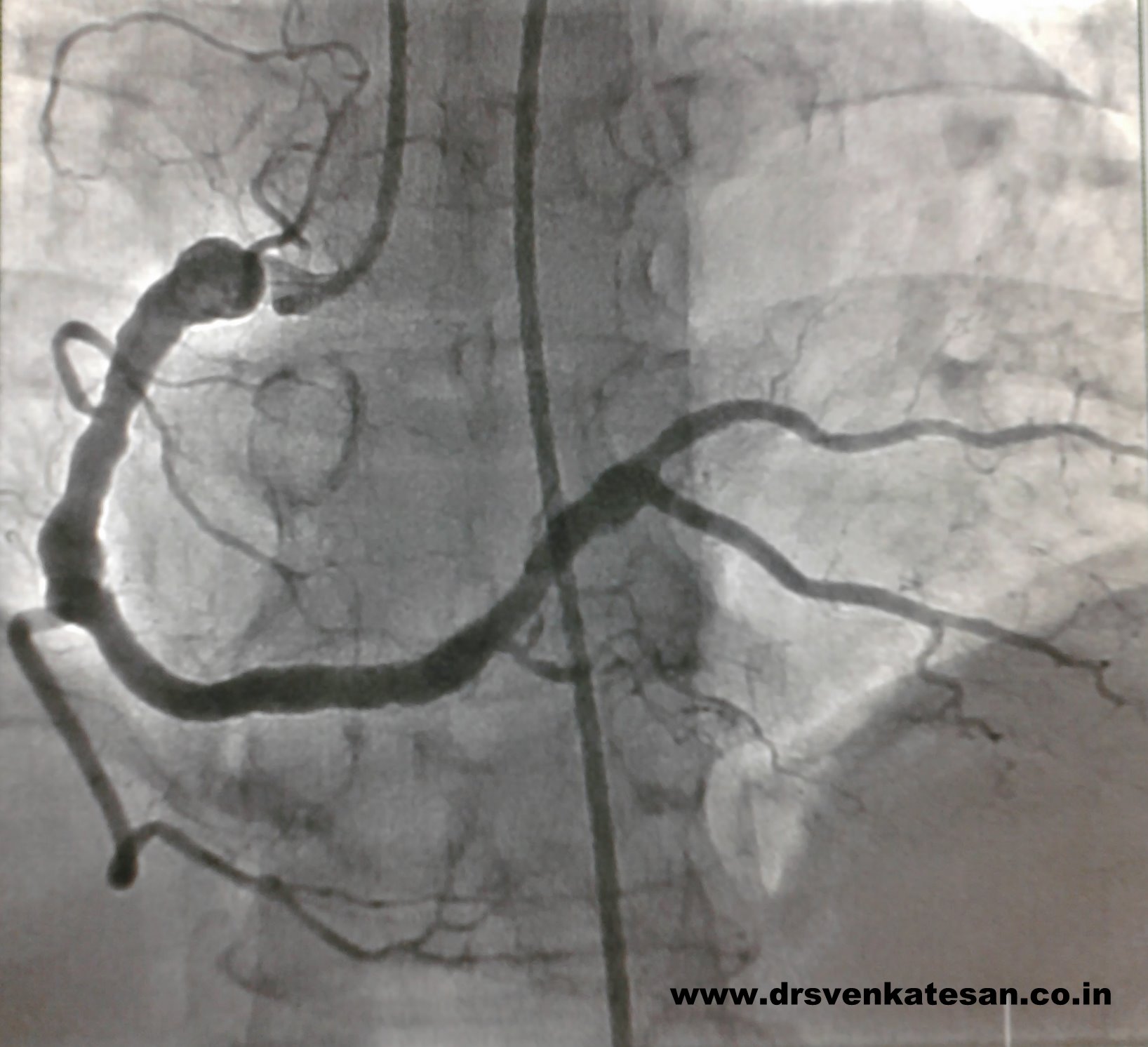
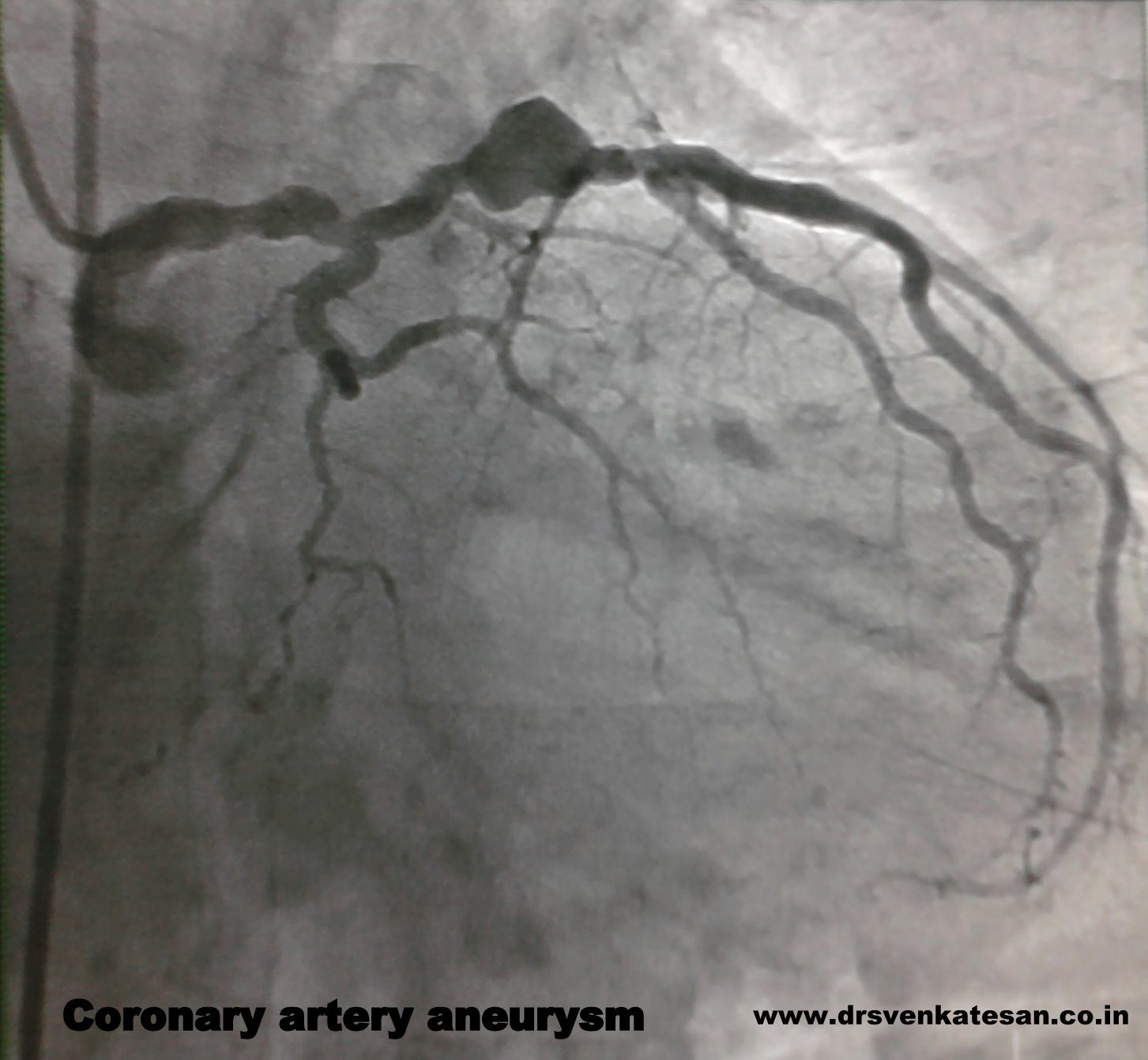
Here is a different facet of atherosclerosis , A middle aged man  surprised us with this  coronary angiogram .   Instead of obstructing the flow the  coronary vessel begins to dilate. This is due to a medial weakness .(The media for some reason begins to give way rather than proliferate to the atherogenic  stimuli.)

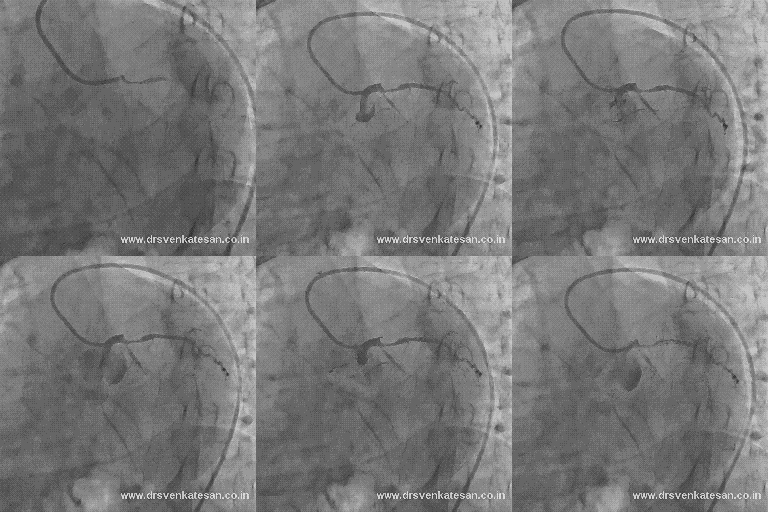
Same patient's RCA

One may wonder why he underwent CAG when obstruction is least expected in such a vessel   !  It was paradox of sorts , this man  in spite of his  wide bore coronary artery ,   was prone for coronary thrombus and one such episode landed him in our CCU . ( Please note both faces of atherosclerosis “obstructive and dilatory” can manifest in the same  vessel in different combination.)

This angiogram may be reported  as any one of the following

  • Diffuse atherosclerosis
  • Diffuse atherosclerosis with focal dilatation  and aneurysm formation
  • Coronary  ectasia

These patients should get life long  medium  intensity  (INR 2-2.5) oral  anti coagulants  for preventing coronary thrombosis.

Watch out for similar aneurysmal changes elsewhere (Renal, Cerebral, Aorta etc )

Counter point

How are so sure it is is due to atherosclerosis ?  Can it be a  congenital coronary medial weakness ?

Your guess is not my guess . . . My vote is for atherosclerosis .

Read Full Post »

Reporting a coronary  angiogram  may look like child’s play  for most cardiologists. Many do it in less than a minute. (It goes something like this  90 % LAD , 30 % ostial OM1, 50 % mid RCA etc etc ) The famous and meticulous  classification of Ellis and Ambrose proposed  two  decades ago appear largely redundant.

In this review we shall  briefly  debate an eccentric plaque or lesion .

Pathological definition

Pathologically  an eccentric lesion  will have a disease free arc  within an  atherosclerotic lesion.If we apply this criteria most of the plaques appear to be eccentric.

Angiographic definition

In simple terms  eccentricity is  said to be present when the plaque  volume is three times more on one side when compared  to opposite side .

The incidence of eccentric lesion is largely under estimated.  It can be up to 40 % of all lesions.

It has histological  as well as  hemodynamic  significance.

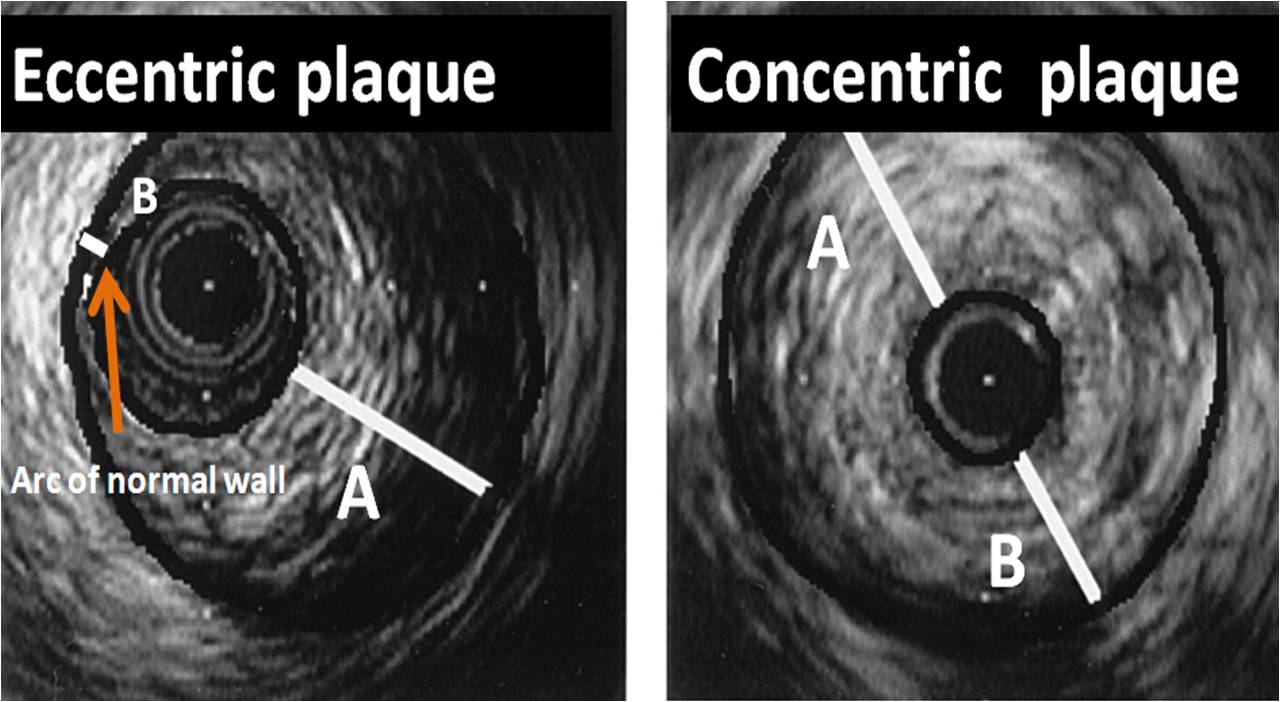
How to measure eccentricity index ?

Ratio between maximum plaque thickness and minimum plaque thickness (Including the media )

Image courtesy modified from Circulation. 1996;93:924-931

In the above figure : The eccentricity index is measured  as the ratio of the maximum  to minimum plaque plus media thicknesses. In the eccentric lesion  the maximum wall thickness measures 2.6 mm, minimum wall thickness measures 0.2 mm, and eccentricity index is calculated to be 5.2.  In the  concentric lesion  the maximum wall thickness measures 2.2 mm, minimum wall thickness measures 1.6 mm, and eccentricity index is calculated to be 1.4.

What are the associations of eccentric plaque ?

Calcification and hard plaques are more common in eccentrically placed plaques.The  most vulnerable point for plaque  rupture or disruption is  the shoulder region between normal and plaque segment.

A long eccentric lesion with over hanging plaque


Clinical implications

  • Acute recoil
  • Coronary spasm
  • Mechanical effects : Asymmetric expansion of stent
  • Drug eluting stents

An arc of normal plaque circumference predispose to acute recoil and spasm.this is logical as the normal  arc will have a fully functional  medial smooth muscle  which are prone for spasm.

Does stenting reverse  the eccentricity of plaque ?

It may not .  The drag effect of major plaque mass may either result in plaque prolapse or  asymmetric stent approximation  or even stent crushing effect.

How does the  the stents  elute in an eccentric lesion ?

Stents are not intelligent enough to  differentiate  the plaque surface and normal surface. We  also know these drugs are  toxic to  normal endothelium  and hence  are not welcome in the normal arcs of an eccentric lesion.

Since the drug secretion   is uniform throughout the circumference   it makes the   DES a perfect misfit in eccentric lesions  As  we  realise most of the lesions are pathologically eccentric one can guess the long term  consequences .

Final message

The more we think we know . . . the less  is understood .

The images we see daily in cath labs are too simplistic to make vital decisions .There are  constant innovations coming up but none seems succeed in  imparting  common sense to  majority  us.(Namely  direct plaque intervention can never succeed over a diffuse medical  disease called atherosclerosis  )

A good reference article

http://circ.ahajournals.org/cgi/content/full/93/5/924

Read Full Post »

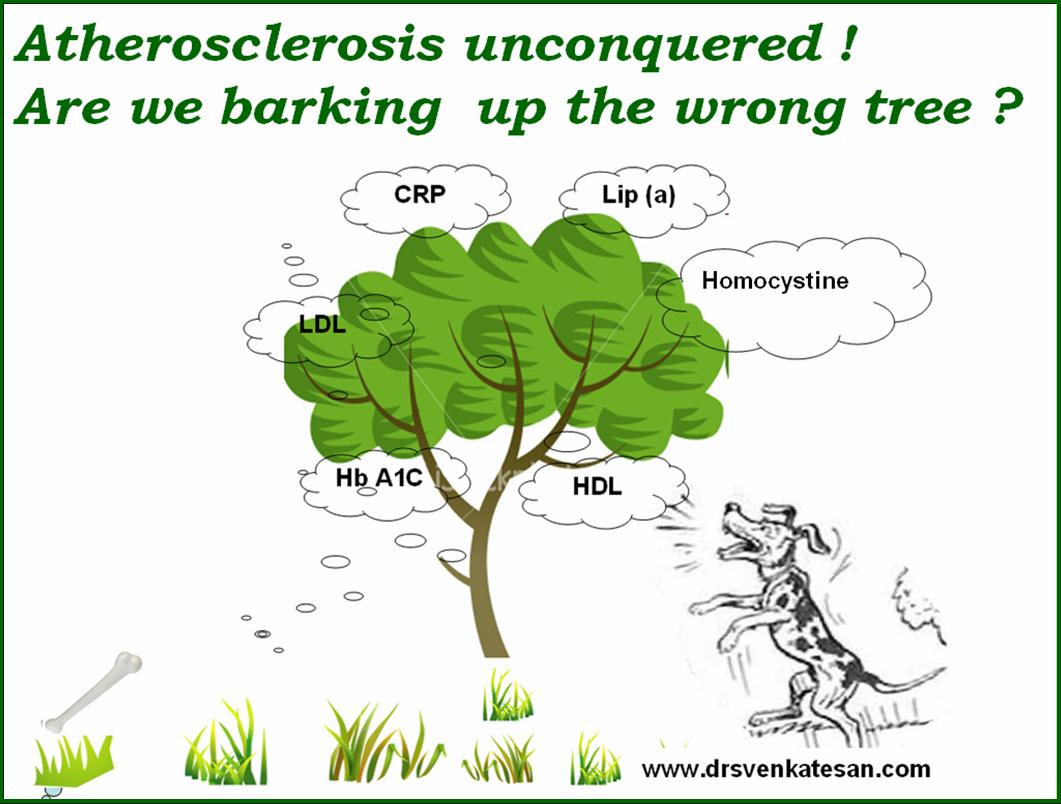
Atherosclerosis   remains the number one cause for all vascular disease of human beings. It probably  kills more  patients than all other causes put together .

Modern medicine has never conquered the disease. How  the vascular system ages and why some develop premature atherosclerosis remains largely speculative. While it is true , we have identified some major risk factor for development and progression of the atherosclerosis  , patients with out any of those risk factors do develop severe atherosclerosis !So researchers sought to look for some other risk factors . There lies the difficulty  and irony .

We always tend to the research with the affected population .When we know millions of people with the so called risk factors live comfortably , there lies an opportunity  to  analyse why they are protected against the onslaught of atherosclerosis .It is always convenient to blame it or bless it on the genetic predisposition .But we need to look beyond that .Of course  . every genetic expression has to  manifest phenotypically .

While the search for all those hidden secrets has to continue , we should also realize in pursuit of breakthrough we some times waste our energy in false targets  for too many decades !

The reality as on today is ,  there is no reliable  &  undisputed drug available to arrest atherosclerosis  (Some would love to call statin so . . . )

While  our basic science colleagues struggle  in molecular  factories and biological models in pursuit of answer against  atherosclerosis , our elite  cardiac physicians   carry on with the cosmetic touches over this   progressive disease  in  sophisticated cath labs.

Let us hope  man prevails over nature . . .

A cartoon , Just for laughs . . .

Read Full Post »

This was written originally in 2009 early days of this blog. Now, re-posting it in 2021  , wonder any one has new data on this! 

We know diabetes, smoking, hyperlidemia, hypertension are major risk factors for progressive vascular disease. They damage the vascular endothelium either directly or indirectly , by aggravating the atheroscelortic process .  Diabetes apart from affecting the medium sized arteries , also affect the microvasculature.  Smoking  has a direct effect on endothelial function .It depletes vascular nitric oxide. High levels of circulating lipids injures the sub endothelial structures and invades the media by entering macrophages .So , all these 4 risk factors either operate independently or interact with each other and result in progressive vascular    disease.

While we  believe , these risk factors do not have any bias in attacking the human vascular  tree, in the real world it is observed they have their own  behavior pattern and  have unique predilection and a deadly alliance .

For example , in  chronic smokers TAO is the commonest manifestation , thrombo angitis is far too less common to occur in the coronary arteries.

Similarly  hypertension  per se  rarely results in an acute coronary syndrome while it is  the  single  important  cause for cerebro vascular  disease. Diabetes especially in women has very strong predilection for CAD , while diabetic per se is a lesser risk for stroke. Hyperlipedimia may be the one which has fairly even risk throughout the vasculature. Similarly there is  a difference in renal and   carotid arterial involvement with reference to  the conventional  risk factors .

SHT diabetes dyslipidemia coroanry risk factor

Why this apparent difference ?

We are unlikely  to get an answer to this question in the near future .  Left to the youngsters  . . . of tomorrow !

* Note of  clarification

The source for the above chart is collected from various studies and also a huge observational data from our hospital. There could be some geographical variation , a given individual may respond differently to these risk factor depending upon his genetic predisposition and susceptibility . So the above data can be applied to general population and not to a individual.

Read Full Post »

plaque-fissure-and-coronary-dissection

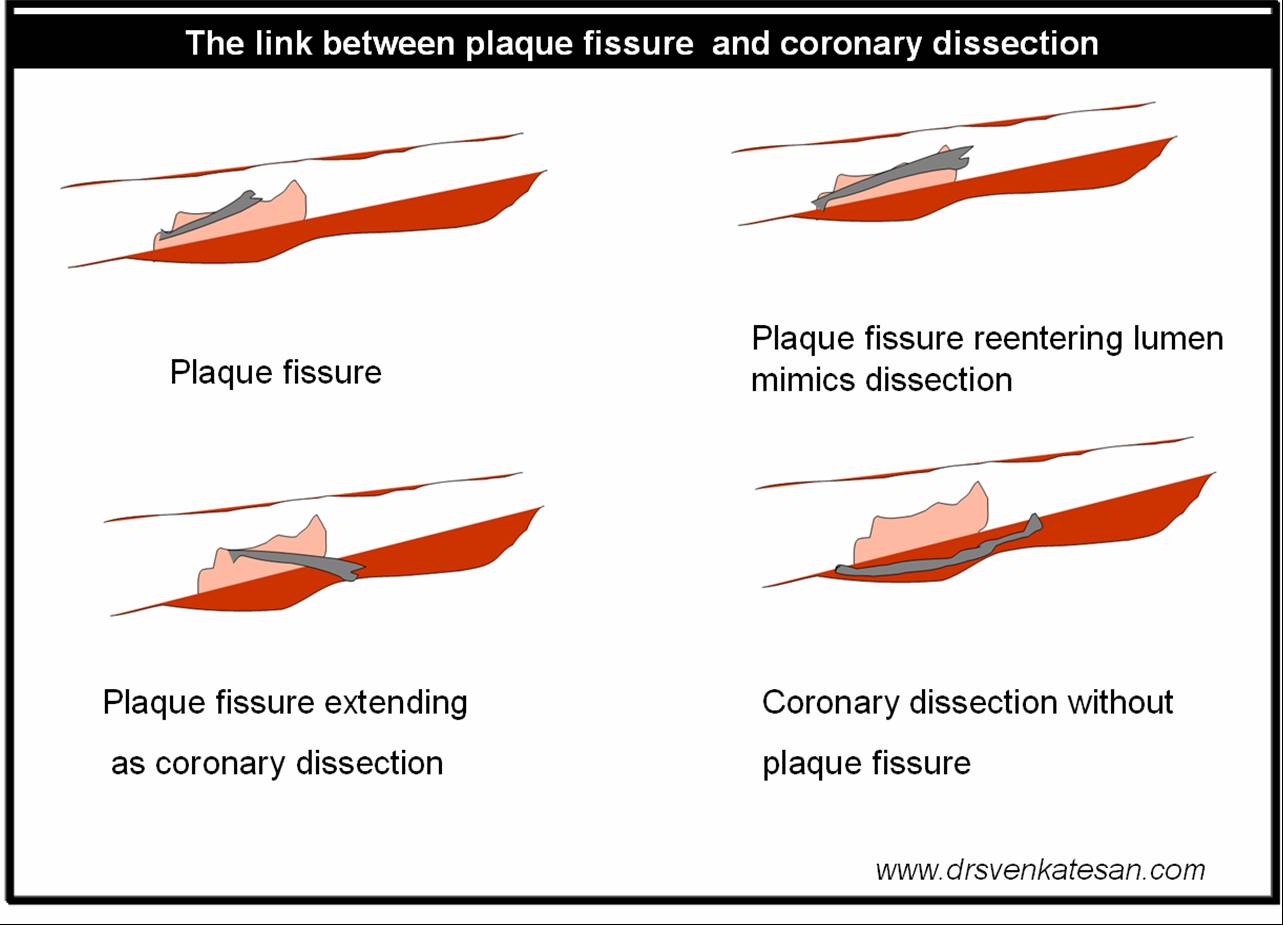
  • Plaque fissure is  the most common intra-plaque event that   precipitates  an acute coronary syndrome.
  • It is the  site of   attachment  for coronary thrombus
  • It can  either be spontaneous or PCI induced.
  • Plaque fissure can  either be  partial or complete and  may  reenter the lumen.
  • Eccentric plaques are likely  to fissure often  , as the  wall stress on the plaque shoulder region is  high  (Laplace law)
  • Angiographically  it is often difficult to differentiate  fissure from true coronary dissection.Both manifest as intraluminal filling defect.Coronary dissection  often extend beyond the length of plaque.
  • Many of the reported cases of spontaneous coronary dissection are thought to be  nothing  , but plaque fissures and their extensions.

Is plaque fissure a painful event ?

Plaques do not have neural innervation.So the plaque fissure is generally not painful.But when it extends into the media of vessel wall it can be severely painful.

Read Full Post »

Let us not forget the basics !

  • HT management has been made  easier with the availability of  many  good drugs , at the same time it has become a complex  issue with as many classification and guidelines.
  • The management of HT has evolved over the decades. Now we have realised  HT  is not a simple number game . Reducing the blood pressure to target levels is not  sufficient and is not the primary aim !.
  • In fact we now know controlling the numbers alone is never going to work  , combined risk factor reduction is of paramount importance.
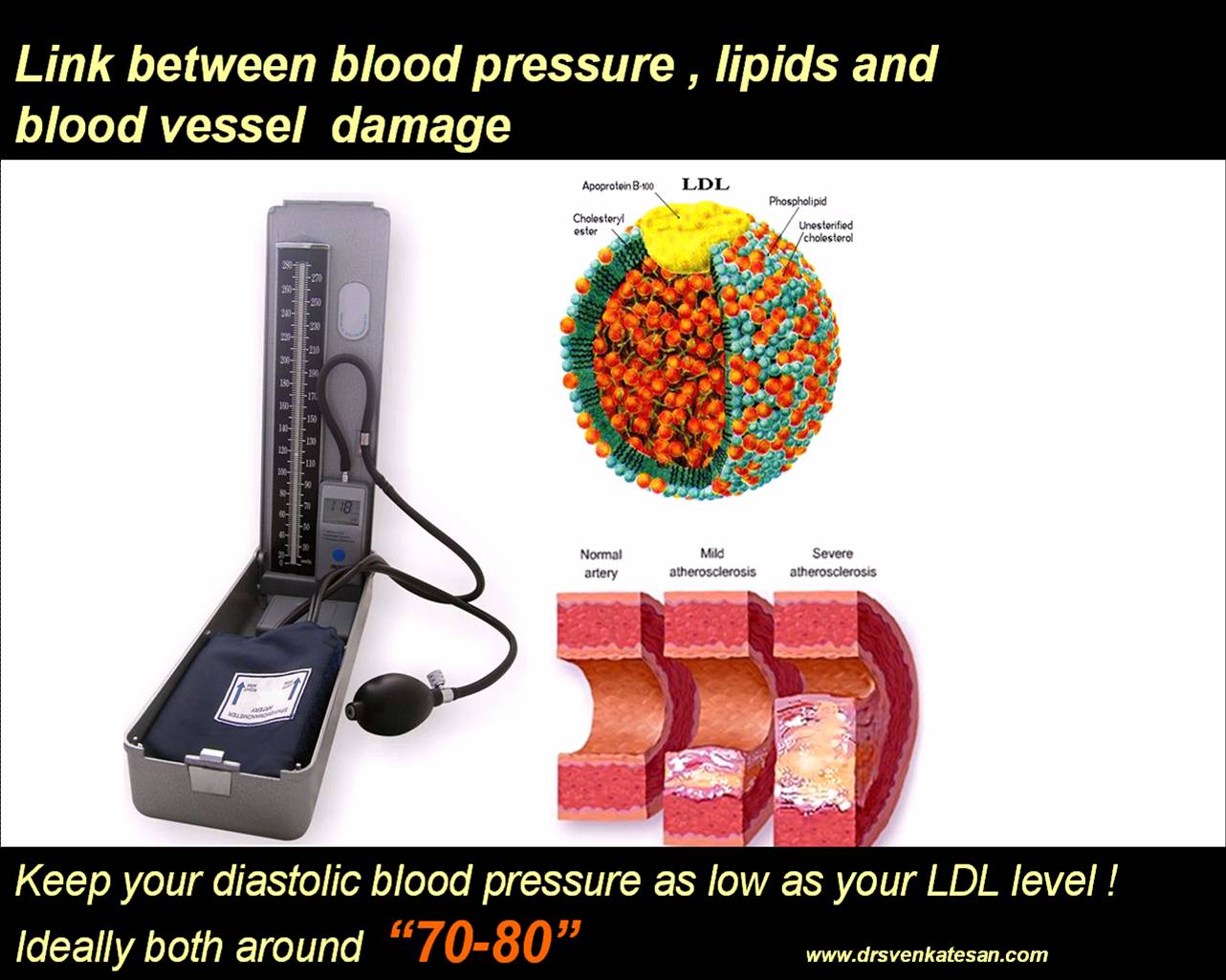
  • HT per se is less lethal but when it combines with hyperlipidemia and diabetes or smoking  it becomes  aggressive.The blood lipids  especially the LDL molecule  enjoy the high pressure environment  ,   penetrate and invade the vascular endothelium.
  • ASCOT  LLA  study has taught us,   for blood pressure reduction to  be effective and reduce CAD  events one has to reduce thier  lipid levels also.So , for every patient with HT there is not only a target BP but also a target LDL level .

picture1


Final message

The tip for better vascular  health is  , all  hypertensive patients should keep their lipids to optimal levels and all hyperlipidemia patients should keep their BP as low as possible .

“Keep your LDL  as low as  your diastolic blood pressure  and  let us  keep it around 70 -80

Read Full Post »

                                                          Left main coronary  lesions are  fairly common  during routine coronary angiogram.These may be a critical or a innocuous lesion.The  word “left main” triggers a sort of alarm reaction to many cath lab staff as well as the cardiologists and surgeon.Many times, these left main lesions are detected in patients   with chronic stable angina who have stable symptoms. Left main disese has not been graded  clearly in literature . Often it is perceived , any lesion in LM is serious.

There is an unwritten rule,  rather a medical compulsion  to take a patient  with left main disease  for emergency CABG ( Now some centres ,emergency PCI) .Some institutions make it  a rule these patients  are posted  in the  next available slot in the theatre.

 The basic question we raise here is   “Should we consider all  left main  disease  as  an  emergency”?

Not really , especially when it occurs in a stable angina .One can wait , buy some time to fully evaluate and prepare  the patient  and may be the patient can be posted  as an elective case. It is a well recognised fact that, CABG carries adverse outcome when done as an emergency procedure. This is primarily due to inadequate pre op work up and resultant complications. It is also well known ,  surgical  back up team may not be available in full strength in odd hours .

This post is  to convey the message , that left main is  a serious disease but that doesn’t  mean it should elicit  a panic reaction and be taken as an ultra emergency . There has been many morbid and fatal outcomes in many hospitals due to this apparent  pseudo emergency !


Note* 1.Left main  disease during acute coronary syndrome is to be seen in different perspective.2.Some of the proximal LAD lesions are so tight and  could be more significant than left main lesions.

Read Full Post »

Coronary artery disese  predominantly  occur in the proximal segments of coronary artery.The fact that CAD is mainly a proximal disese , implies  that  clincal impact is likely to be more . But we now recognise distal coronary artery system is equally affected .But isolated distal CAD  is a not a common finding .We describe our analysis on the topic .

distal-cad-csi-2005

Click on the slide to download

Read Full Post »

Atherosclerosis is  the number one killer of mankind  .It involves all medium and large sized blood vessels.Any intima and media can be invaded by the disese process.Most common to involve are  cerebral, carotid, coronary, aortic  and it’s branches, renal, and peripheral arteries. But how pulmonary artery is missing in this list ? Is it really true (or) are we missing it ? One logical explanation is pulmonary circulation is a low pressure circulation and the maximum presssure is less than  30mmhg . This pressure may be insufficient to induce endothelial injury that predispose lipid mediated injury.

Other explanation could be a structural difference in the media and intima compared to aorta .But in patients  with primary or secondary pulmonary hypertension where,   inspite of PA pressure being high ,  still atherosclerotic changes is very uncommon . or Is it the Heath Edwards pulmonary vascular sclerosis  grading  reflects nothing but pulmonary atherosclero-thrombosis !

If this is true there could be a major role for HMG Coa reductase inhibitors in altering the natural course of pulmonary obstructive vascular  disese . Statins might be tried in PPH  a disese with no specific  treatment !

Read Full Post »

Older Posts »