Feeds:
Posts
Comments

Posts Tagged ‘lancet’


 Rescue thrombolysis in acute   myocardial   Infarction  

 *Venkatesan sangareddi ,Madras medical college,Chennai.India


   Back ground  Failed thrombolysisin acute myocardial infarction occurs in 30-40% of patients. The incidence of progressive pathological remodelling and cardiac failure is high in these patients. The approach to the patient with failed thrombolysis is generally considered to be catheter based and the outcome is not clear. Bleeding can be troublesome in patients, taken for interventional procedures in the immediate post thrombolytic state. The option of repeat thrombolysis has not been studied widely and is not popular among cardiologists.

Methods:We present our experience with six patients (Age 42-56, M-6, F-0) who were thrombolysed for failed first thrombolysis. All had anterior MI and had received either urokinse or streptokinase (between four to nine hours) after the onset of chest pain. All of them had persistent ST elevation, angina not responsive to maximal doses of IV NTG and beta blockers. The initial thrombolysis was deemed to have failed. Repeat thrombolysis with streptokinase (15 lakhs) was given between 16 and 24 th hour. The clinical outcome following the second thrombolysis was rewarding. It relieved the angina, ST segment elevation came down by 50% and coronary angiogram done at 2-4 weeks showed complete IRA patency in four out of six patients. The factors responsible for failed thrombolysis is complex and multifactorial. A logical explanation from the fundamentals of clinical pharmacology would suggest that a common cause of failure of any drug is due to a inadequate first dose.

Conclusion :We conclude that repeat (Rescue) thrombolysis can be an effective medical intervention for failed thrombolysis in AMI.

Personal perspective                  

                             Repeat  thrombolysis for failed ( initial ) thrombolysis  is still   considered  a  fantasy treatment  by most of the cardiologists !  The utility and efficacy of this modality of  treatment (Rescue thrombolyis ) , will never be known to humanity , as planning  such a  study , in a large population  would  promptly be  called unethical by the modern day cardiologists.

                     While a cathlab based cardiologist  take on the lesion head on with multiple attempts  , it is an irony , poor  thrombolytic agents are given only one shot  and if failed in the first attempt,  it is doomed to be a  failure for ever.Currently,  the incidence of  failed thromolysis could be up to a whooping 50 %  .There has not been much scientific initiative  to enhance the efficacy of these drugs.

                            Common sense and logic would suggest it  is the  inadequate first dose ,  improper delivery , pharmacokinetics is   the major cause of failure of action of  a drug in clinical therapeutics.

If the first  dose is not working ,  always think about another  incremental dose if found safe to administer.

Can we increase the dose of thrombolytic agents  as we like ? Will it not increase the bleeding risk to dangerous levels ?

This is a clinical trial  question.

  • In patients with prosthetic valve thrombosis and acute pulmonary embolism we have safety data of administering of  1 lakh units for an hour for up to 48 hours.

Can  the same regimen be tried in STEMI if the initial thrombolysis has  failed  and emergency intervention is not possible  ?

Logic would say yes . Unfortunately we can’t go with logic alone in medicine .We need scientific data ( with or without logic ! ).But now ,  as we realise common sense is also a integral part of therapeutics  It is called as level 3 evidence / expert consensus by AHA/ACC .

Applying  mind , to all relevant issues ,  continuous streptokinase infusion 1 lakh/hour for 24-48 hours in patients with failed thrombolysis can indeed be an option,  especially when the patient is sinking and  no immediate catheter based intervention  possible .This study question is open to all researchers , and may be tested in a scientific setting if feasible.

Read Full Post »

Answer: Do  coronary angiogram  for all patients  who had suffered from an acute myocardial infarction* ( Forget about all those mulitpage ACC/AHA  guidelines !).

For an  interventional cardiologist ,  it is often  considered a crime to  follow a conservative  approach !

*Caution This one line guideline is not based on scientific fact  but reality based . Ideally one should identify  high risk subsets among the patients who had an AMI .Patients who had complications during the MI get immediate CAG. Others need  a focused LV function asessment ,  pre discharge  sub maximal excercise stress test or perfusion studies .But this concept has been  virtually replaced by pre discharge coronary angiogram for all ,  in many  of the centres in the world.

Read Full Post »

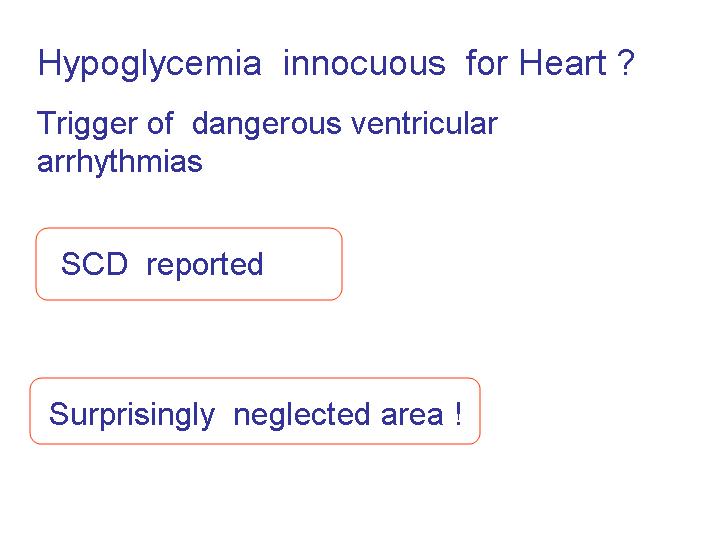
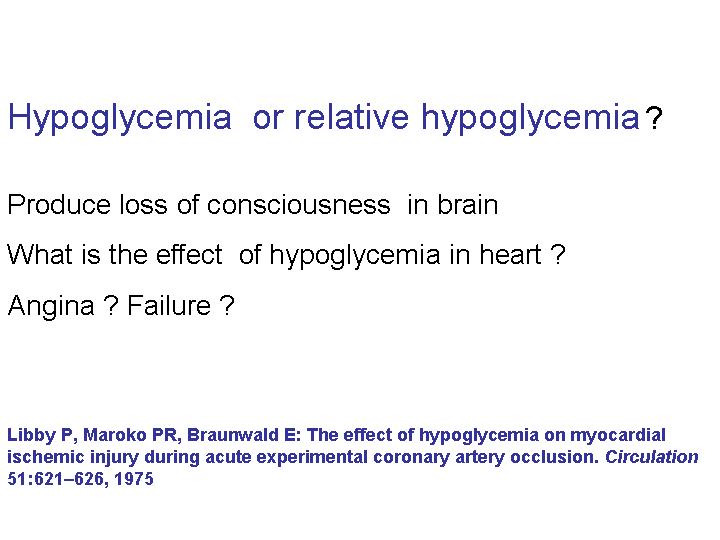
                             Glucose is the molecule of life   ,burnt every second inside the body at the energy store house called mitochondria. Heart , the most active organ in the body  gets  bulk  of it’s energy supply  from fatty acids,  glucose and a little from keto acids. Under anerobic conditions this energy substrates shifts towards glucose .

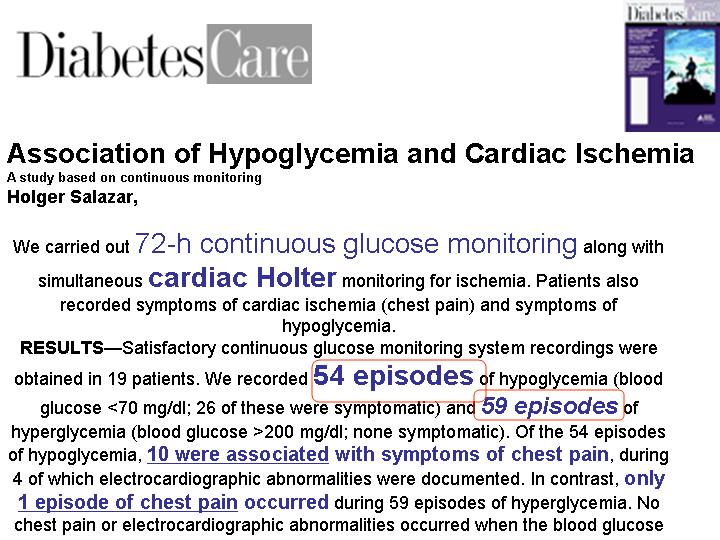
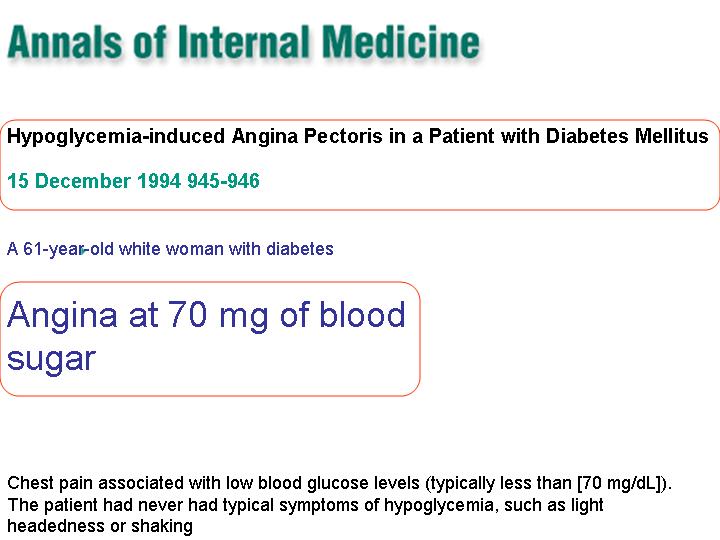
                             We are  rarely inclined to think  that heart  can ever suffer from hypoglycemia ! But hypoglycemia can have distinct direct and indirect effects on heart.  In fact indirect effects due to activation of adrenergic activation is more obvious.An episode of hypoglycemia can precipitate an arrhythmia . Glucose potassium insulin infusion


Final message

Hypoglycemia , can be a trigger of ACS .This aspect is poorly recognised and studied.

Read Full Post »

Ventricular tachycardia is considered as one of the most  dangerous  cardiac arrhythmia .Rather , it is the label  VT  that spreads more  fear than the arrhythmia itself. It is a fact many patients with VT walk into hospital , still  VT will always be a sinister arrhythmia as long as it carries a risk of degenerating into ventricular fibrillation.

What determines hemodynamic stability in VT ?

  • Origin and location of VT
  • The ventricular rate
  • Presence or absence of AV dissociation
  • Impact on mitral inflow pattern
  • Associated left ventricular dysfunction or valvular heart disease.
  • VT in the setting of acute coronary syndrome.(Ischemic VT)
  • Inappropriate drug selection

Origin and location

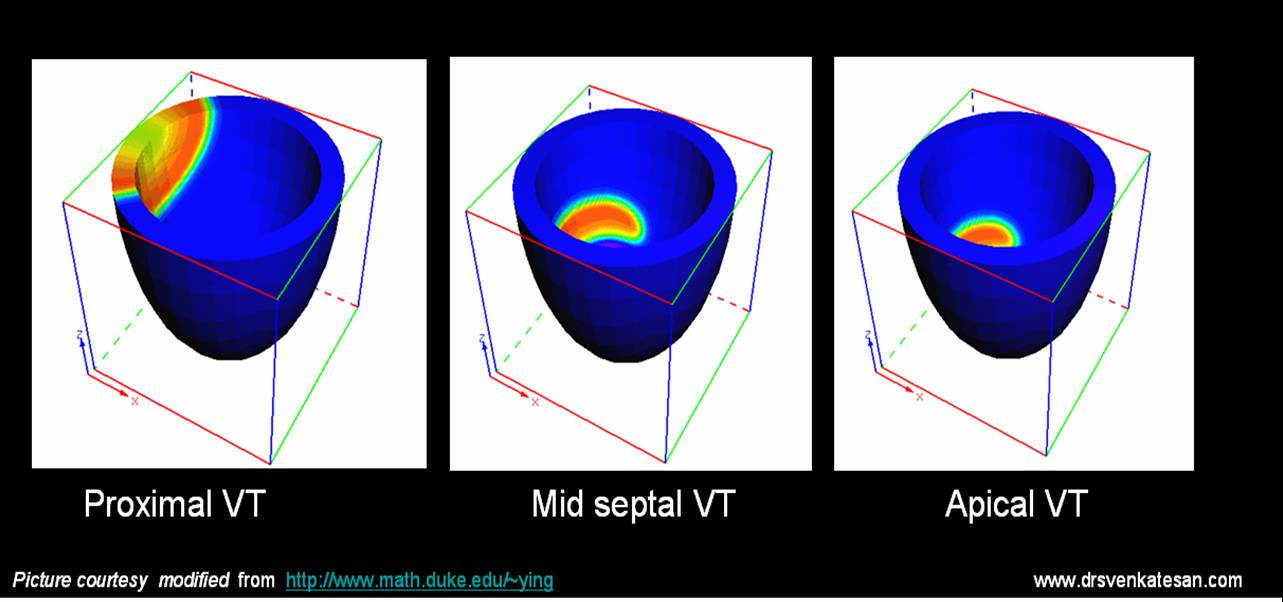
VTs originating high up in the ventricle( High septal VT,Proximal VTs) have more organised ventricular contraction  and they are more stable.Distal VT  originating  in the myocardium away from the conducting system has chaotic myocyte to myocyte conduction.These are very unstable.

The term fascicular VT is nothing but VTs originating  in the His bundle and it’s branches( Can also be termed Septal VT ).These VTs are also stable and some of them respond well to calcium blockers indicating that they are very close to the AV junction and carry the properties of junctional tachycardia. QRS width gives  a rough estimate about the location of VT. Narrower the VT higher it’s origin.( But remember even in VT ,  qrs can further widen on it’s way downhill !)

LV dysfunction.

This is probably the most important determinant of the outcome in VT. Patients with severe LV dysfunction (EF <30%) fare badly .Hence the land mark concepts from MADIT 1& 2 demanded ICDs in these patients.The most common clinical setting is  dilated cardiomyopathy.SomE of them have bundle branch re entry(BBR).This particular  VT can be stable for many  hours.

Ventricular rate.

Usually VT has a rate between 120-200.Higher the rate of VT more the chances of instability .This rule is also not always true as fascicular VT can be well tolerated at high rates.So location of VT focus  and LV dysfunction usually over rides the impact  of ventricular rate.

Mitral inflow pattern

Proper left ventricular filling is the key to hemodynamic stability in VT. In proximal, septal,fascicular, LVOT VTs doppler studies  suggest (ACC /AHA Type C evidence : Personal observations in CCU during VT) near normal preservation of  bi modal filling of mitral valve inflow.In ischemic myocardial VT  the mitral inflow profile is critically affected . There is no distinctive forward filling was observed .In fact  at rapid rates a short pulsatile MR jets are noted instead.

Associated valvular diseases

It is obvious,  aortic  and mitral valve disorders can aggravate the hemodyanmic instability.

Final message

The clinical behavior of  ventricular tachycardia is widely variable and dependent on multiple factors.

Associated LV dysfunction and  structural heart disease ultimately determine the outcome.


Read Full Post »

                                  Even as cardiology community is preoccupied with systemic hypertension & CAD  ,  pulmonary arterial hypertension(PAH) is a much neglected , still  an important clinical cardiac problem encountered . The irony is self evident , there are half a dozen methods to grade systemic hypertension not even a single stadardised grading available for pulmonary arterial hypertension. The WHO  working group defined pulmonary hypertension  few decades ago and was not clinically graded .The only grading available is based on  the pulmonary vascular biopsy changes (Heath Edwards) 

                                   Currently PAH management has gone through revolutionary changes. There is an urgent  need for grading  this entity .This will facilitate to  diagnose , manage and assess the efficacy of the currently available treatment.

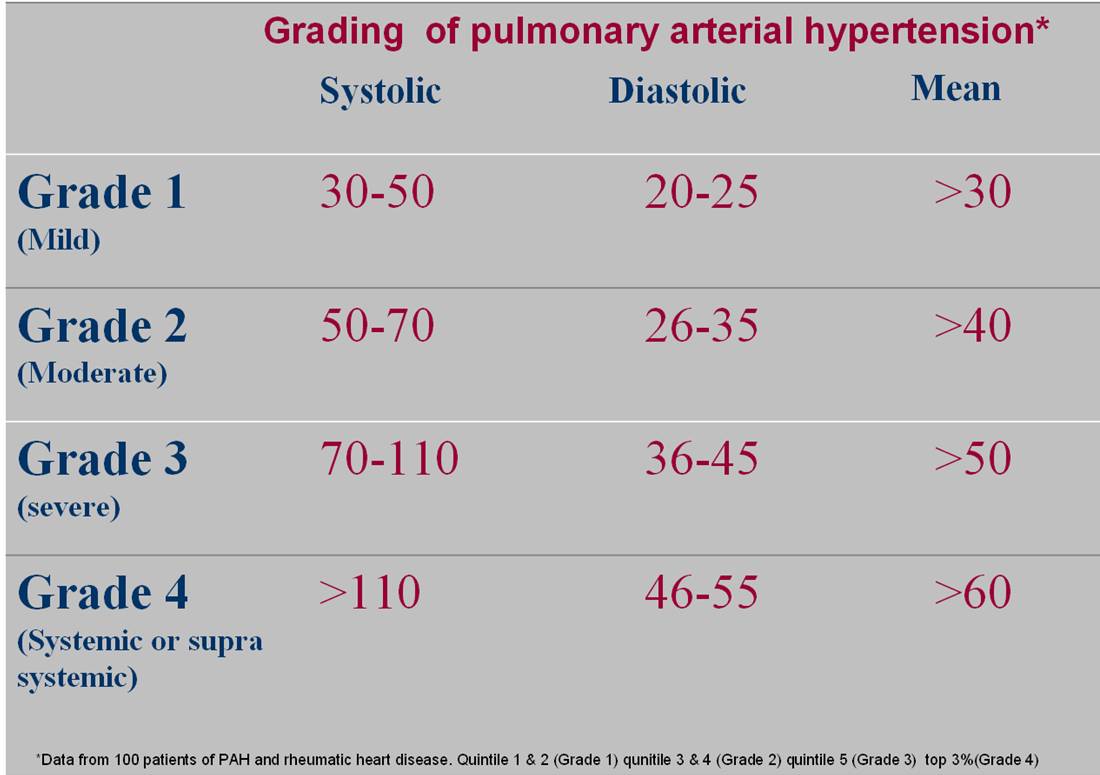
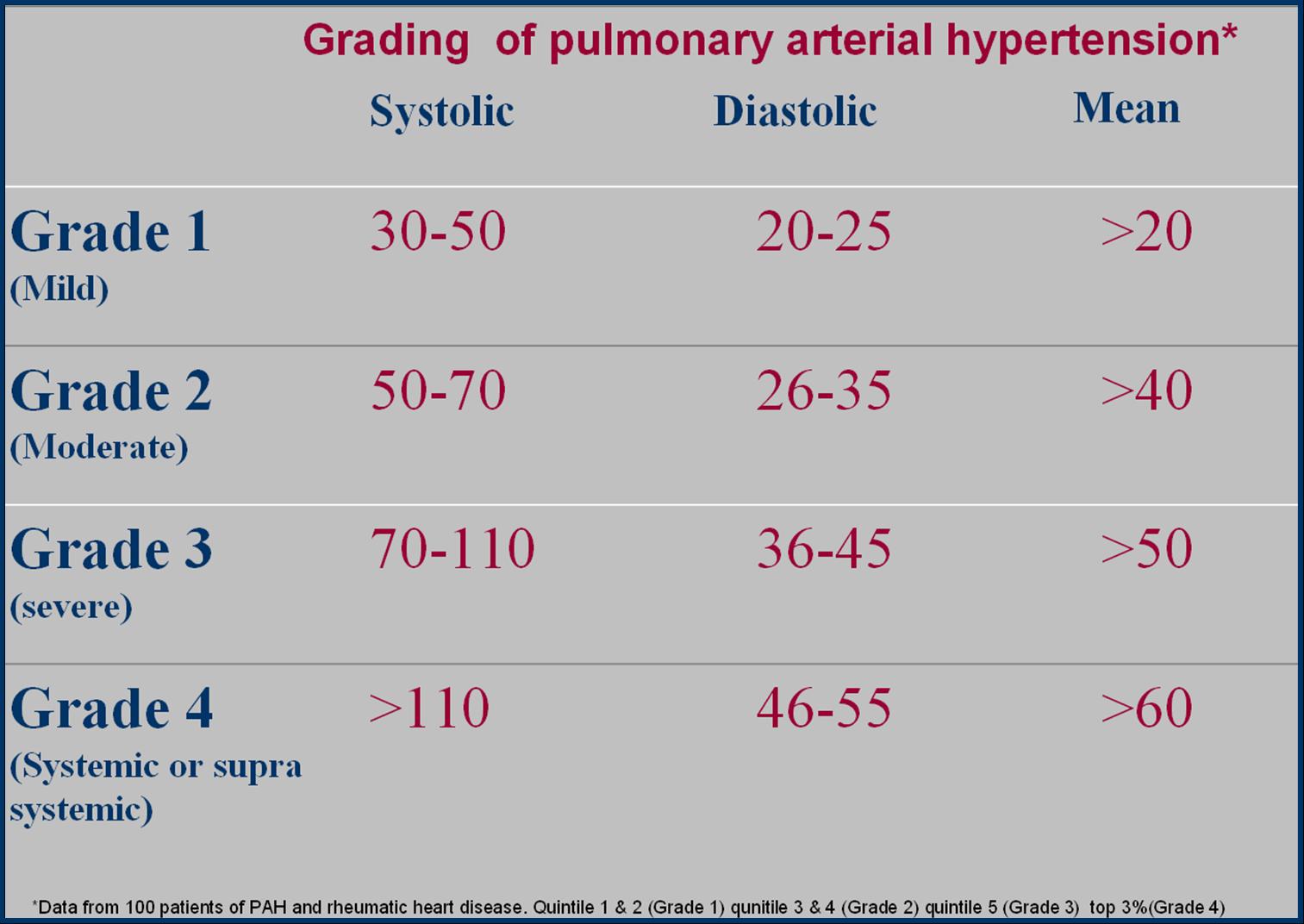
                                Developing countries like ours have a great number of PAH due to rampant rheumatic heart disease.  A simple study was done in  100 patients with PAH .Bulk of the study population had RHD .Few had primary pulmonary  hypertension .Systolic , diastolic, and mean pressure was assessed by doppler echocardiographic analysis of tricuspid regurgitation (TR) and pulmonary regurgitaion(PR) jets. TR jet provided the systolic PA pressure , PR jet provided mean as well as diastolic PA pressure .TR jet was available in all patients. PR jet was available only in 60 patients .Hence the diastolic andmean PA pressure data has been extrapolated in some  and  was plotted in a scatter diagram. Five equal quintiles were divided. Patients in first  and 2nd quintiles were graded 1   and third  and 4th  quintile were  graded 2 ,  5 th  was graded 3 respectively. From this cut off points for  various grades of PAH were identified .The top 3% of patients  with highest PAP were graded as grade 4 and all of them had supra systemic PAH. 

The following grading is suggested for PAH* 

 *This is a preliminary  attempt to grade PAH. This could be applicable mainly in rheumatic heart disese and primary pulmonary hypertension .Further refining of methodology is  required.PAH grading may be little different in congenital left to right shunts.

Read Full Post »

                        Palpitation is one of the common symptoms for which cardiac patients are referred. Like dyspnea , palpitation can either be a physiological expression of normally beating heart or a  dangerous pathological state of the heart. This makes this symptom unique and warrants careful evaluation.                                                                                                                                                         By definition palpitation  is abnormal  awareness  of ones own heart beat. Heart is a mechanical organ with multiple mobile anatomical structures. There is  constant  blood  flow in multiple directions . Apart from this the heart   has  it’s unique translational, rotational movement . These intrinsic movements combined with proximity to chest wall  generate vibratory  motion  signals .These signals are generally dampened by the encircling pericardial space .The neural signals responsible for  perception  of palpitation is not clear. If the heart hits against the chest wall it is the  somatic nerves from the chest wall that carries the signal. Vibrations generated within the heart chambers, and  and the  valves  are  carried  by the  myocardial and intravascular  sensors.( Autonomic) 

What are causes of palpitation?

       Cardiac

  • All hyperdynamic circulatory states. It may be generated from either  right or left ventricle or both.
  • Regurgitant lesions ( Mainly Mitral and aortic regurgitation)
  • MVPS*
  • Congenital heart disese ( Mainly left to right shunts-ASD/VSD/etc)
  • Apart from this patients  with prosthetic heart valve, and pacemaker patients can feel their heart beats.
  •  Cardiac arrhythmia .Both tachycardia, and bradycardia . Ventricular ectopic beats are the very common cause .( It is often described as missed beat)

* Mitral valve prolapse, a very benign condition, over diagnosed in the last few decades raised considerable anxiety and palpitations for the patients (mainly after the diagnosis ! ).Now the cardiology community has sought to underplay this entity with strict diagnostic criteria.( Thickened mitral leaflet ,presence of MR both must be present to label a patient  as MVPS)

       Non cardiac

  • Physiological
  • Anxiety state
  • Anemia 

What is the relationship between ejection fraction and palpitation?

                                        Generally palpitation indicate a  hyper kinetic state of heart .The commonest cause of palpitation is  anxiety  state .This also happens in hyper dynamic circulations like anemia , fever, thyrotoxicosis, pregnancy etc . In all these situations palpitation indicate increased force of contraction which   generates high dp/dt(Rate of rise of ventricular pressure)  . So  the left ventricularejection fraction is normal or more than normal . So  presence of  palpitation could be an  indirect evidence  of reasonably good LV function.

    “Patients  with dilated cardiomyopathy or CHF rarely feel their heart beat during exertion , instead they have dyspnea  as the LV force of contraction is less”

What is the significance of palpitation that occur during rest ?

                              Palpitation occurring at rest indicate more often a  pathology.It is invariably due to an cardiac arrhytmia  either tachycardia or bradycardia. Intelligent patients can give accurate information about the  regularity of rhythm , any  extra beats or missed beats . Atrial fibrillation, VPDs  could be  diagnosed by history alone in them !

If palpitation  is associated with visible chest pulsation what is the likely diagnosis ?

    If  significant visible pulsation over chest wall  pulsations are seen   in young adults it could simply mean a hyper dynamic circulation and thin chest wall. Pulmonary arterial pulsations is not normally felt in left 2nd inter costal space.If felt one has to rule out shunt lesions like ASD or pulmonary hypertension.
                    “ASD is the commonest cause  of right ventricular  palpitation “  

Read Full Post »


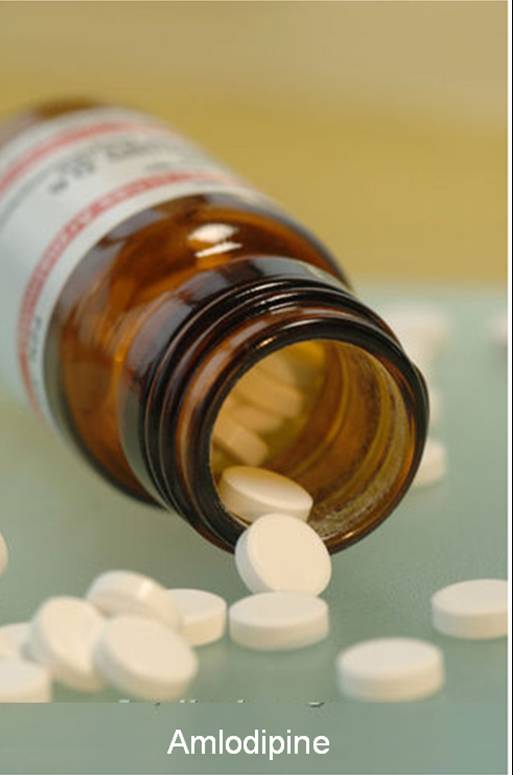
                            Amlodipine , the most popular anti hypertensive drug  used world wide has an very important action on coronary blood flow.When nifedipine was introduced three decades ago it was  known for it’s powerful anti anginal properties. Subsequently  amlodipine was introduced with almost similar action. But over the years, amlodipine was projected primarily as anti hypertensive drug and gradually many of the physicians are made to believe it is a drug that  should be used only if the blood pressure is high.The fear of reflex tachycardia in few was exaggerated.


                              In fact a cross section of  today’s general physicians were queried  about amlodipine  and none of them acknowledged  using this drug as an anti anginal drug. And few of them went to the extent of withdrawing amlodipine if it was used for the purpose of angina relief !

Why amlodipine’s  anti anginal action is in doldrums ?

The single word answer is unfortunate!   Marketing bias ,coupled with  the fact  that mainstream cardiology texts have ignored this aspect.

Final message

                                    Amlodipine , can still be used as a antianginal drug especially  in a patient who has angina with associated bradycardia  , significant LV dysfunction . Some reserve amlodipine and nifedipine exclusively for vasospastic angina where beta blockers alone are theoretically contraindicated .

Read Full Post »

.

It is a well known fact squatting is a simple compensatory posture adapted by children with cyanotic heart disease during exertion to get relief from breathlessness. The children with tetrology of Fallot and related conditions have baseline hypoxia due to right to left shunting .This gets aggravated during exertion. Squatting promptly relieves this exercise-induced worsening of dyspnea. The oxygen saturation improves immediately after assumption of squatting posture. The exact mechanism by which squatting relives the dyspnea is not clear.

Apart from squat induced po2 raise there is a fall in the concentration of pco2 and raise in blood Ph that pacify the sensitive respiratory centers,thereby bringing down the tachypnea

Hemodynamics of squatting has two phases

  • Immediately ( First 15 seconds) after squatting there is a sudden drop in venous return.
  • Sustained squatting for 1-2 minutes result in steady increase in venous return, raised systemic vascular resistance.

Both these effects help the children with TOF. The initial trapping of highly desaturated blood in the lower extremity gives a quick relief as soon as the child assumes this posture. In the next 15 seconds or so the systemic vascular resistance increases and bring the aortic after load sufficiently high to divert the blood into the pulmonary artery.

The net effect of squatting is there is a transient or sustained (as long as child squats) increase in pulmonary blood flow and this is made possible by the relative reduction of right to left shunt as the aortic and systemic resistance is raised by this posture.

Other explanations

There is one more possible effect of squatting. By, compressing abdomen (Knee chest) cause a mechanical push on the splanchnic blood pool into the aorta which has high o2 saturation. This is thought to provide immediate relief to brain hypoxia and avoid the vicious respiratory/ hemodynamic cycle

What is the clinical inference from squatting in cyanotic heart disease?

Squatting implies there should be a large VSD, associated with a delicate right to left shunting very much dependent on the degree of pulmonary stenosis or ( any RVOT obstruction) and the systemic vascular resistance.

How common is squatting history in pulmonary atresia with VSD ?

It can occur with collaterals are sparse.The mechanism of relief is slightly different.

The likely mechanism of relief with squatting in Pulmonary Atresia, VSD is two fold.

1. The Initial relief is due to trapping of deoxygenated venous blood in squat posture, which is similar to TOF

2.The sustained benefit is due to raised systemic vascular resistance which favors more flow across MAPCAs from Aorta.

The second one has no authentic reference , but its a hemodynamic plausiblity as there is zero RVOT flow in PA with VSD.

What are the other cyanotic heart diseases in which squatting is reported ?

  • Tricuspid atresia
  • Double outlet right ventricle with pulmonary stenosis
  • Any combination of large VSD and RVOT obstruction
  • Rarely in Eisenmenger syndrome*10%)

*Mechanism of squatting episodes in Eisenmenger is tough to explain. But, it does give relief. The most plausible mechanism is the raise in SVR with squatting tilts temporarily a favorable QP/QS as PVR -SVR ratio falls .(Venous return component doesn’t operate here as in squatting of TOF) It should be noted squatting is mainly reported only in VSD Eisenmenger.. ASD/PDA -Eisenmenger is extremely rare or doesn’t occur. This is understandable as Interventricular communication has to be present to shift in QP/QS with a response to a rise in SVR.

Squat equivalents

Assuming a squat position has cultural issues. Grown-up children may avoid these public places. Standing with legs crosse is a common posture. In fact, the mother holding a crying baby in a chest with knees folded promptly prevents a spell . This can be called “squatting by proxy”

*Though squat equivalents do give relief from dyspnea they are given less significance in terms of diagnostic value of TOF

Reference

1.Paul R. Lurie ,Postural effects in tetralogy of Fallot The American Journal of Medicine Volume 15, Issue 3, September 1953, Pages 297-306

2. Warren G. Guntheroth. M.D.Beverly C. Mortan. m.Venous return with knee-chest position and squatting in tetralogy of Fallot American Heart Journal Volume Volume 75, Issue 3, March 1968, Pages 313-318

Read Full Post »

Heart is externally covered by two layers of pericardium .  Pericardial space is formed between parietal and visceral layers of pericardium . It is a narrow space which is normally lubricated with pericardial fluid up to 25ml. When these two tissue surfaces  come into contact ,  pathological  rub takes place.It is heard  whenever the pericardium is inflammed . Pericardial rub is a distinctive but uncommon  clinical sign .

Common clinical conditions

  • Acute pericarditis
  • Uremic pericarditis.
  • Rheumatic pericarditis
  • Post myocardial infarction

Pericardium has two layers .

There are four  possibilities for pericardial rub to take place.

The rub can occur

1.Between the two layers of pericardium

2.Between the visceral pericardium and the epicardial layer of  heart*.

3.Between parietal pericardium and the  chest wall

4.Pericardium can rub with the adjacent pleura( Pleuro pericardial rub )

The second and third mechanisms are very rare.

An update

We have realized one more possibility . Diaphragm forms the floor of the heart on which the hanging heart  rests . Rubbing of pericardium over diaphragmatic surface is a beat to beat affair that lasts the entire life !. In inflammatory states of  diaphragm especially  the contagious  ones from abdomen  , can result in pericardio- diaphragmatic rubs .These rubs are almost impossible to hear clinically.

pericardial effusion rub plural pleuro pericadial

*The anatomic mystery : Is epicardium same as visceral layer of pericardium ?

Some anatomist feel that both are same entities. If that is the case myocardium can never split its relationship with visceral pericardium.But it is also a anatomical fact visceral pericardium engulfs the coronary artery and  are located sub epicardially.

How many components of pericardial rub are clincally heard ?

Pericardial rub  classically has three components. Systolic, mid diastolic, and pressytolic atrial components. Pericardial rubs are typically described as to and fro rub. Systolic component is most consistent. In atrial fibrillation mono component pericardial rub is heard.

Quality

Superficial , scratchy, high pitched ( Can also be low pitched)

Location

Left sternal border , left 2nd or 3rd space  .Best heard in  sitting , leaning forward in inspiration. Many times the rubs are transient and evanescent . Since it has multiple components it may be mistaken for added heart sound like S 3 or S 4.

What is the mechanism of pericardial rub in the immediate post MI phase ?

Presence of pericardial rub post MI indicate a transmural involvement or atleast significant epicardial involvement . Recognition of this is important as presence of pericardial rub increases the risk of rupture  and hemorrhagic effusion if anticoagulants are used.

What is the  relationship between  pericardial effusion and  pericardial rub ?

Generally it is said with the onset of effusion pericardial rub disappear.But this is not necessarily true.

Rubs after contusion chest and fracture ribs can be with the chest wall and may have  no relationship with effusion.

Is pericardial rub a painful condition ?

Pericardial  rub associated with acute inflammatory pathology is severely painful (like a pleuritis).But pericarditis associated with chronic inflammatory conditions are less often generate pain.The exact reason is not known.

What is pleuro pericardial rub ?

This  clinical entity is poorly defined , often taught by veteran professors  in clinical auscultation classes.It can be heard in the mid segment  or diaphragmatic pleuritis with or without pericardial effusion in patients with  atypical pneumonias.

Read Full Post »

No reflow is the terminology used primarily in cath labs where, even  after a successful opening and stenting  of a coronary artery the coronary blood flow is not  restored to myocardium . The point to be emphazised here is blood do cross  successfully the site of  the obstruction but fails to enter the muscle segment  to which the coronary artery is supplying. So the paradoxical situation of artery  being open but the  myocardium is closed to receive  blood flow  happens . This is termed as no -reflow.  Actually it is a  misnomer , and  ideally it should be called “no flow” because  normal distal flow  does not  occur (After PCI)  in the first instance  to get interrupted  later on  and be labeled as  no re-flow.  .The only positive effect of PCI in these situation is blood flow would have improved by few centimeters ie till it reaches  but falls short of myocardium . In fact no reflow , can be termed as  glorified and concealed  terminology  for  PCI failure . It needs urgent action . No reflow is also called as myocardial epicardial dissociation.

Mechanism of no reflow.

Curious case of open coronary artery and closed myocardium !

Coronary  microvascular plugging  is mainly  due to thrombus and atheromatous debri , myocardial  edema , microvascular spasm may also contribute.

Where can it occur ?

  • First described in cath lab, especially following primary angioplasty.
  • It can very  well happen following thrombolysis in STEMI.
  • Can occur in venous grafts.

How do you recognise no reflow?

In cath lab it will be self evident from the check angiogram. Some times it is less obvious and may  require, myocardial  blush score, TIMI frame  count, contrast echocardiography, PET scan etc. In post MI a very simple method to recognise this entity could be the observation of persistent ST elevation in ECG .

Treatment.

Extremely difficult. Almost every coronary vasodilator has been tried.(Nitrates, nicorandil, calcium blockers, etc).Success is less than 30%.  High pressure flushing with saline inside the coronary artery is advocated by some.Others believe it’s dangerous to do it. So prevention is the key. Avoid doing PCI in complex, thrombotic lesions. Use thrombus suction device like export catheter(Medtronic). Distal protective devices are double edged devices , useful only in experienced hands.

Unanswered question

What is the size of the particle (thrombotic and atheromatous  debri)  the   coronary microcirculation safely handle and push it into the coronary venous circulation and the coronary sinus for disposal ?

If we can lyse the thrombus into micro particles by some mechanism and make it traverse the coronary circulation this complication of microvascular  plugging can be treated and prevented .

What is the final message ?

  • No reflow is relatively common condition during emergency PCI done for ACS patients
  • More common in complex thrombotic lesions.
  • Can also  occur in STEMI
  • Treatment is often vexing . In fact the treatment of this condition is so difficult , it can be termed  almost synonymously with “Failed PCI” if flow is not restored.
  • Successful treatment of no- reflow  means not momentry restoration of  myocardial flow  by mechanical and pharmacological modalities ,but to maintain sustained myocardial   perfusion. This we realise, as patients who have had a no reflow during  a PCI, do not perform as well in the follow up  .
  • So prevention is the key.

Read Full Post »

« Newer Posts - Older Posts »