Feeds:
Posts
Comments

Archive for the ‘Cardiology -unresolved questions’ Category

Patent foramen ovale (PFO) is the new generation hole in the heart for  21st century  cardiologist. Present in about 20% of population  , would correspond to 140 crore  “man holes”  as  on  2012   in this planet. PFOs are embryological remnants across the inter atrial septum.

These minute  holes measuring few mm  are largely a  benign finding .In the recent  decades , it is being increasingly debated these holes  may  not  be innocent after all .Extensive  use of echocardiography in recent times   has contributed to  the awareness  as well as anxiety.

Evidence  is mounting  linking PFO to

  • Migraine,
  • Stroke and
  • Peripheral embolism.

While the above   observation may be true  ,  the  fact that >100 crore people have this entity   , raises  a serious question ,  as labeling  all of  them as heart disease will create chaos among the already health obsessed   population .

So , the main purpose should be ,  to identify the high risk subsets* of PFO population .(This will be a <5 %  at the most). People with PFO may  carry  a mental  stigma because it is referred to as a hole in  the heart by the  general  public .For many  the sense of living with a hole in heart is often more damaging than the hole itself ! (Incidentally , many develop  migraine only after reporting about this hole !)In a strict sense  PFO  is not a hole , rather  it is a communication it may be tunnel  or  slit like .It is argued physician should avoid calling PFO as a hole .

*What is a significant PFO ?

  • Large PFOs >5mm
  • PFOs that shunt blood
  • PFOs with septal aneurysms
  • PFOs with documented stroke or embolism
  • PFOs with atrial chiary network
  • PFO in  persons with systemic pro-coagulant states (Except probably in  pregnancy )

Final message 

PFO is a common residual congenital  atrial septal  anomaly . Usually  benign  . One can  live with it perfect harmony. Only occasional patients  are  at risk.

So the prime job of cardiologists is to not diagnose and create panic about  this entity. rather reassure  them (Is it better do not reveal to them if it is found incidentally ? Patient empowerment group would call  this a  foul !  I do not support blind empowerment  )

At the same time our main  aim is to identify the  high  risk subsets who are prone for events.

Closure of   PFO with device is required in a fraction . (*By the way ,  if   PFO is really dangerous ,  why It is never an indication for surgical closure ?  )

Reference

Your  search for best information  on PFO  would end here .  Here is  land mark   article  in JACC  by  Hara   also contributed by  Renu Virmani . A US  Japan  combines initiative  : A must read by every cardiologists
http://content.onlinejacc.org/cgi/reprint/46/9/1768.pdf
http://www.anesthesia-analgesia.org/content/93/5/1137.full

Read Full Post »

Possibly yes !

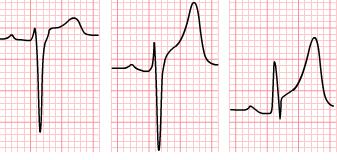
In a preliminary analysis of 50 consecutive ECGs with ERS pattern, only  3  were females .An  astonishingly low incidence of  6 % is it not ? . The 94 % exclusivity in males  demands a  detailed  EP analysis of this entity.


How often you see an ECG such as this one in young women ?

This finding may not be a  surprise ,  if  we  link  another fact  namely  ,  the   longevity of    QT interval  in  women. Repolarisation  begins   when  rapid  sodium channel extinguishes and  potassium  channel starts  firing and  efflux  this cation   from within the  cell  .This happens  during  interface between phase 0 and phase 1. This point  corresponds to the onset of repolarisation.

The onset of repolarisation is not entirely  related to K+ efflux  (Rather  K +  determines largely  the duration of  repolarisation).QT interval is prolonged in females because repolarisation is slow  in women .In men it is early ,  short  and swift .

The mysteries surrounding the ion channels especially the  K+  with vast genetic and gender  heterogeneity  is yet be unraveled. Influence of  sex hormones on  right from the early days of  fetus could be  one  such area for research.

Other  related  gender specific ECG findings include

  • In women T waves rarely grow beyond 5 mm. In young men tall T waves are the  rule
  • An iso- electric or even inverted T waves  especially in leads V 1 to V4  are  quiet a common finding in women.

Link  to  another article  on  Early repolarisation syndrome from this blog

Final message

It is a well recognised  fact  ,  repolarisation  is  brisk  in men  and slow in women  .It is  now  realised ,  the onset of repolarisation is also earlier in most men .  This has a direct bearing  in  the  impact  of ischemia  on fibrillation threshold . Arrhythmias  induced by EADs  are logically more common in  persons with ERS.

Statistics again reveal men are more likely  to have primary VF  during  STEMI  . ( Male Gender  by itself a  CAD risk factor !) .Recently Hassagure  et all   elegantly   documented  ,  ERS is  indeed a risk factor for primary  VF at times of ischemia

Reference:

In the above article , the  incidence of ERS was 72%   in males , considerably lower than our observation . Still ,  the male dominance is confirmed. We still feel  in our country true  ERS occurs in a negligible minority of women. This finding need to be  confirmed  with  data from other centers .

Read Full Post »

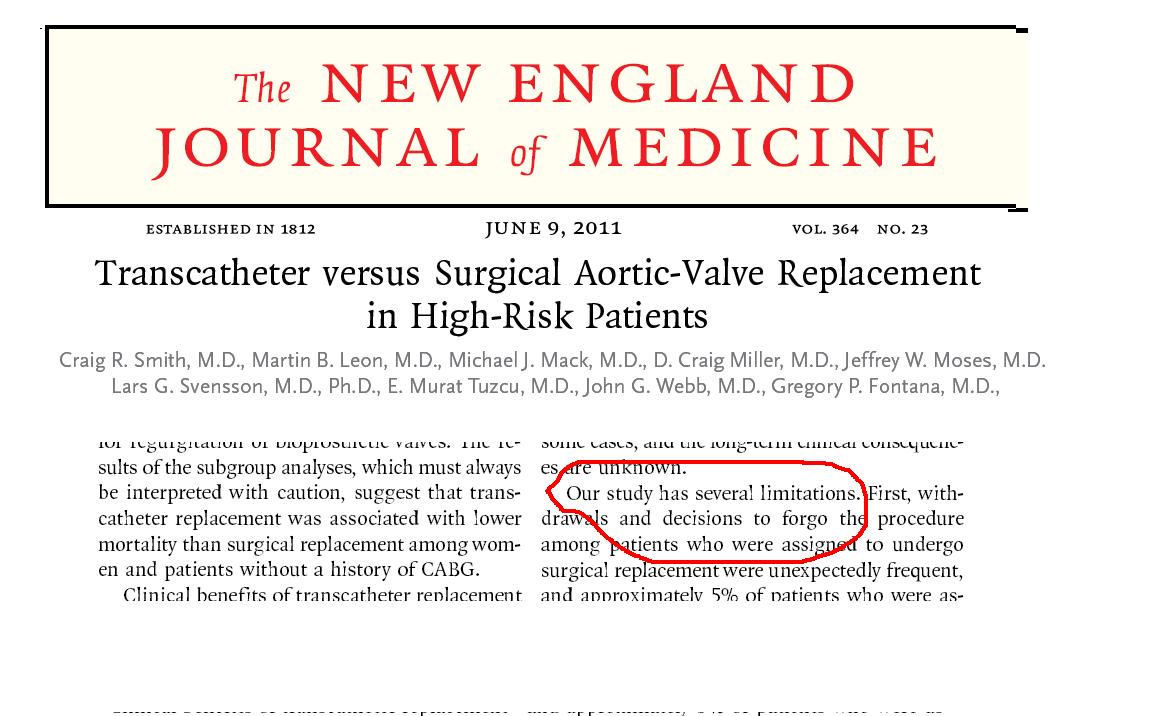
“Limitations of a study”   column appear in scientific articles  because . . .

  1. It  offers   lame excuses
  2. It  informs us  ,  not to get  fooled by  their  finding  .It could  be terribly wrong
  3. The editors won’t publish the paper  without this customary paragraph!
  4. Judge yourself . . . we are transparent !
  5. No study is 100% perfect . Just to make sure the readers are aware of it.

I fail to understand , why even  good articles are rejected for minor  errors  in methodology by many   journals.

Meanwhile ,  how on this earth it’ s  possible  ?   for  some articles to  appear in  top journals ( with questionable conclusions )  embellished
with   major errors in methodology ,  but has  a proud declaration and confession about the  flaws  of the study  in the “Limitations of study” column !

So , in this  modern scientific world  ,  it suggests to me ,  one can  can write whatever  you think as science , as long as  you  declare it and able to impress the editors  to  shift the errors into  limitations column ,  you  are likely to be excused  and also  rewarded !

Read Full Post »

Often general practitioners refer  ECGs  with abnormal resting  ST/T wave patterns  to cardiologists .

Following are few of them

  • ST elevation
  • ST depression
  • T wave inversion
  • Tall T waves
  • A relatively uncommon  finding is  a flat ST segment  , which  is discussed here.

The commonest( benign) abnormality   is  T wave inversion  in women and tall ST /T waves   reflecting  early repolarisation  pattern in men. A flat ST segment is an occasional finding in general population.

ST segment is inscribed  during the most important  time  of  cardiac cycle.This is the period the ventricle is doing its prime function , namely ejecting the blood in systole .Hence it is subjected to maximum stress . During times of ischemia  ST segment  gets elevated or depressed depending upon the severity of ischemia. For the same reason , even  subtle changes in this segment is  frowned upon by cardiologists. Most of them would receive a EST.

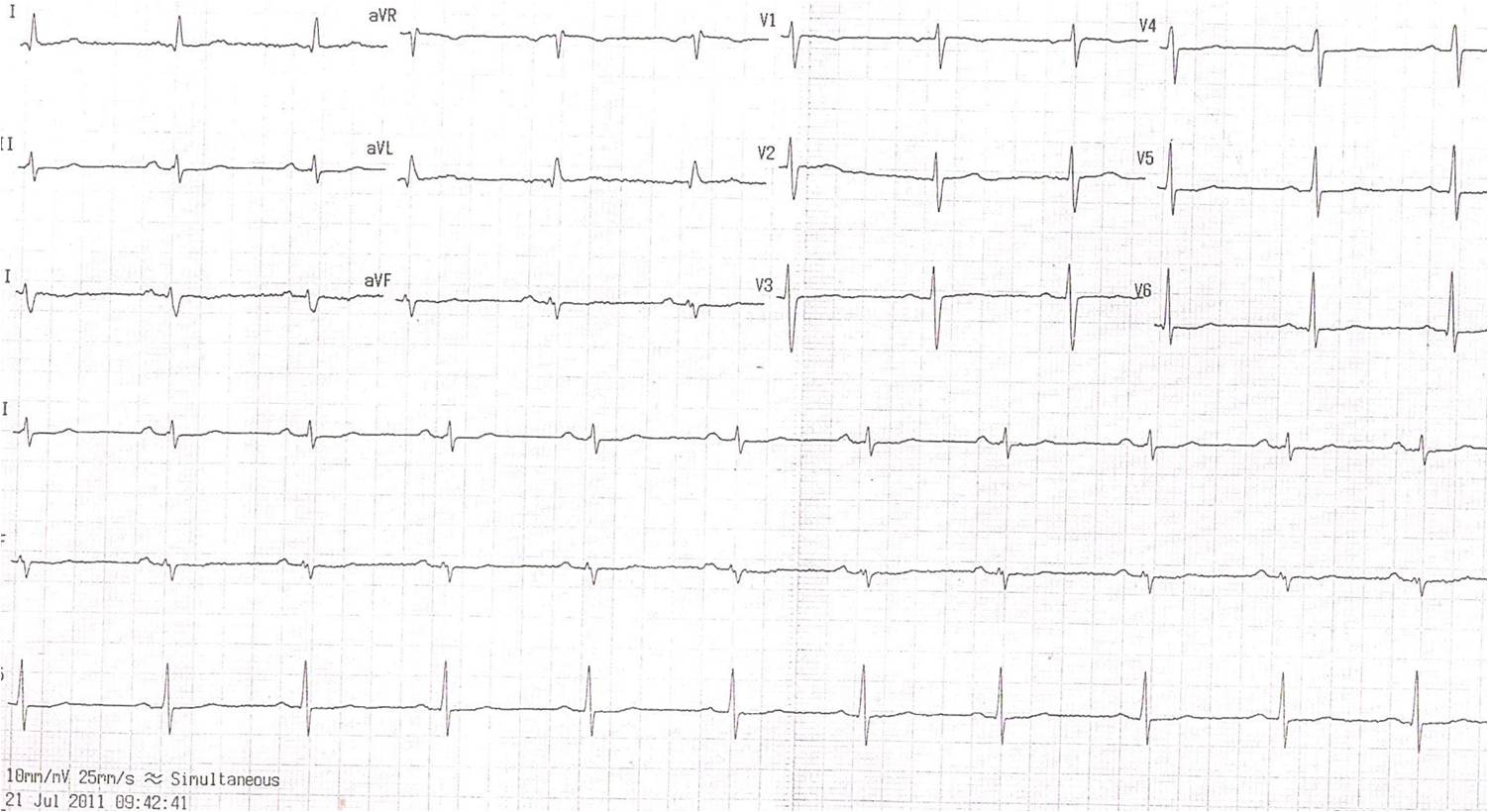
It is ironical to note  , few normal people  show almost silent electrical activity during this  crucial  phase of   their  ECG .ST segment is often  a flat line  in them . This is a ECG of a women referred as CAD. She was asymptomatic . Echocardiogram  was normal . She was asked to do  a EST.

This asymptomatic women was refered for ECG opinion

The peculiar thing about T waves  are ,   a 10 mm upright  as well as  5 mm inverted T wave ,  both can be normal. So .  there is no element of surprise  to note absent  T waves  or a flat  T wave  to be called as normal .

The curious case of lost ST segment !

* T waves are recorded when K+ efflux occur rapidly out of cells . Hypokalemia  can be an important cause of flat T waves.

It is still a  mystery to me  why some people inscribe a tall T when  potassium comes out  of cell and  an equal number (Esp women)  record a down ward T wave  for the same event !  I wish  I get an answer  to this  lingering  question from  any of the readers !

Is a flat T wave represent  a T wave in  transition  to become inverted T wave  later ?

Possible .But we  are not sure ! A static T wave is safer than a dynamic T wave .

Final message

Flat ST segment and absent T waves  represent a same spectrum of ECG  findings  which  are  referred to as  non specific ST segment changes in  clinical practice .Generally , they have  little clinical significance.* In our experience we have found , female patients, Anemia  hypothyroidism  are  often associated with flat ST segments  . If CAD is suspected exercise stress test  should be done. Some believe a flat ST segment  is more likely to  result in EST positivity (Not necessarily true positive !)

* Non specific ST/T changes by itself is a  huge topic.  Ideally the term non specific ST /T changes should be avoided , as it  primarily came into vogue  to denote non ischemic ST segment (Still , other pathologies are very much  possible) It is estimated there are about  50 causes for non specific ST/T changes , right from a  benign situation  like deep   respirations , to significant  myocardial disorders. However , it still makes   good clinical sense for a  general practitioner  , to refer to a cardiologist , whenever ST  segment deviates  without any reason .

Read Full Post »

Can you diagnose inferior MI with poor R waves ?

No , you need  a “Q ” that’s  for sure !   Do not diagnose inferior MI without a  q wave  . ( The luxury of diagnosing MI without q waves  is available  only for LAD region )

Any axis deviation ( even 30 degrees) from  base line  can alter the inferior lead qrs morphology to a great extent. R wave amplitude is  primarily determined by the  initial septal depolarisation .  So if the  inferior septum is intact  it will never allow to inscribe a q wave  . Further ,  limb leads are bi polar leads and they are   sum-mated  potential  reflected along the entire  bottom half of the  torso . Hence it is not  reliable to attribute  significance  to presence or absence of  r wave (Unlike  chest leads).

The lung and diaphragm  exert  not only electrical insulation but   also mechanical  alteration of septal profile with phases  of respiration.

Counter point

Not really  . . .  you do not need a  Q   waves  to diagnose inferior MI  ,  electrically  diminutive R  is same as  “Q”

There is  an alternate way of  reasoning  too  . R wave is muscle , We diagnose LVH with tall  R waves so muscle loss should be equivalent to R wave loss .We have innumerable examples where  low voltage R waves are  recorded in inferior leads after a well documented inferior MI.

How do you diagnose old inferior MI by ECG ?

  1. Near normal ECG with degeneration of q waves and regeneration* of  R waves
  2. Residual T wave inversion
  3. Simple low voltage inferior leads
  4. Slurred or notched qrs  complex in 2 3 AVF
  5. Rarely with atrial abnormalities and AV nodal prolongations

The concept of regenerated R is well established . And it brings to the age-old debate of R with live muscle Q is dead muscle

Regeneration is salvaged muscle (Natural salvage , awakening from hibernation etc)

How good is Echocardiogram in diagnosing old Inferior MIs ?

Surprisingly , echocardiography do not help much either .Technically inferior transmural MI  is expected to  leave  a residual wall motion defect.  But many times it do not. Many non q inferior MI (Is there such an entity ?)  do look perfectly normal by echo .

The primary reason  for this is ,  infero-posterior surface is anatomically remote and it makes  wall motion analysis difficult .Newer tissue motion analysis (Velocity vector imaging)  could aid us better.

Some times a trivial or mild  mitral regurgitation is the only sign of   old inferior MI  as  the pap  muscle  lags behind in it’s  functional recovery  while  free posterior wall is  fully salvaged and contracting well .

Final message

It needs  that extra bit of   of  knowledge to  expose  our ignorance.

Even in this  maddening   scientific  era  we have valid  reasons to  go back to fundamentals  of  R wave and Q  wave genesis in MI ,  where clarity  is lacking .

Read Full Post »

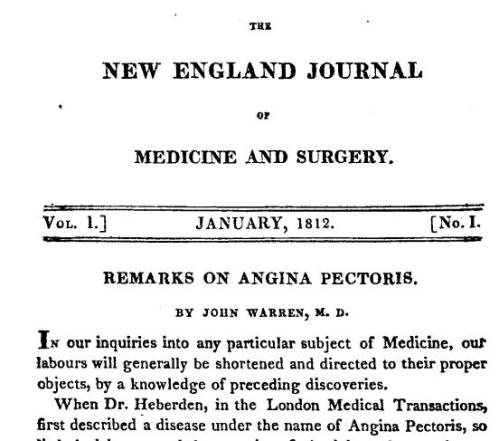
It was  the year 1812 ,  exactly 100 years before the Titanic sank  over the Atlantic  , a  small bulletin from  Massachusetts General Hospital was  released .  It  later on became  the  single most  important  journal  for the medical community.  The appearance of  an article about  angina pectoris in the inaugural issue ,   reiterates the  importance of cardiology  even in those   days of primitive  medical care .

The volume. 1  : No. 1  issue of NEJM egan with a classical and critical observation of angina pectoris written  by Jhon Warren .

http://www.nejm.org/doi/pdf/10.1056/NEJM181201010010101

The first issue of NEJM . . . Witness to 200 years of medical excellence

Those were the days  when angina  was treated with tincture  opium and Fowler solution (Arsenic  potash ) .They  can be  termed as  height  of  inappropriateness  and  also  condemnable acts  . . .  is it not  ? 

200 years  later   . . .  in 2012  what  do you think has changed ,  in terms   of  appropriateness  of management   of angina pectoris  ?

What a surprise ,  two centuries  later ,  even as we are  treating  angina  in hi-tech cath labs  with bio-degradable stents and metabolic modulators   ,   bulk of our  population is  grappling with inappropriate therapy for angina pectoris .

Today ,patients are subjected to  questionable modalities  in the management of CAD ,  which the following paper   tries to expose !

Keeping the inappropriate flag high . . .200 years later in 2012


What a way to progress in Medicine !  The reason for this  “200 year  old ailment”  is  attributed to  extreme scarcity of common sense !

( A study , which says regular exercise  can be  as good as PTCA in multivessel CAD ,  would  sound  as a  “nonsense article”  for most  cardiologists  of  current  generation  !)

Finale

When we look  at human history , where billions  lived ( and continue to live ) in this  age old planet , it  would appear  a trivial matter  whether you treat angina pectoris with Tincture opium / Arsenical potash or  Prasugrel  / Rosuvsatin . . .

Whatever be the scientific advancement  the ultimate outcome on human health will depend on how we apply it. So, all young  medical fellows beware of this   !

Read Full Post »

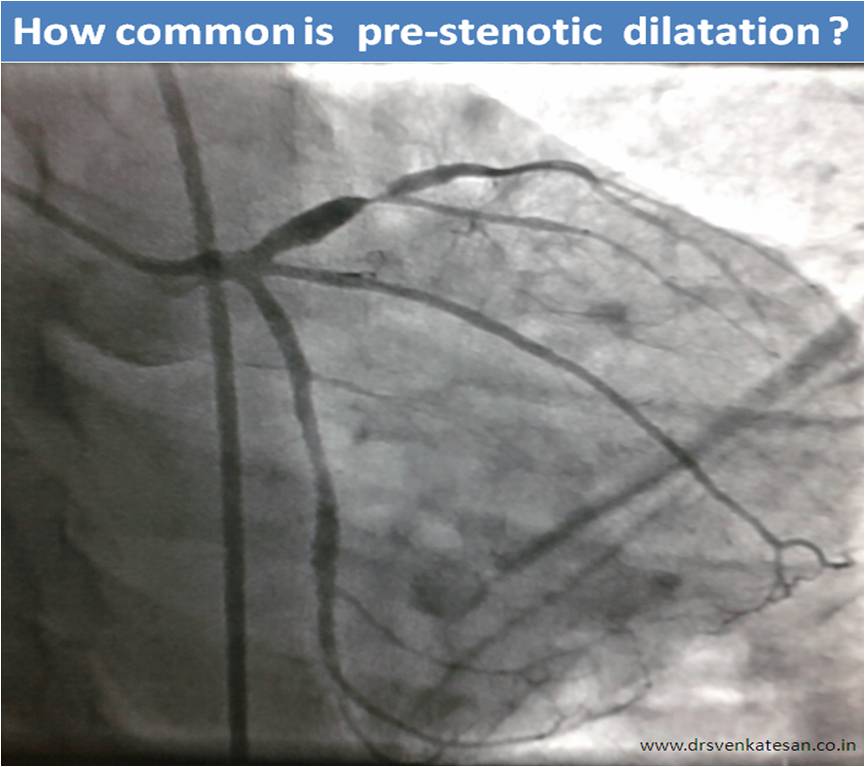
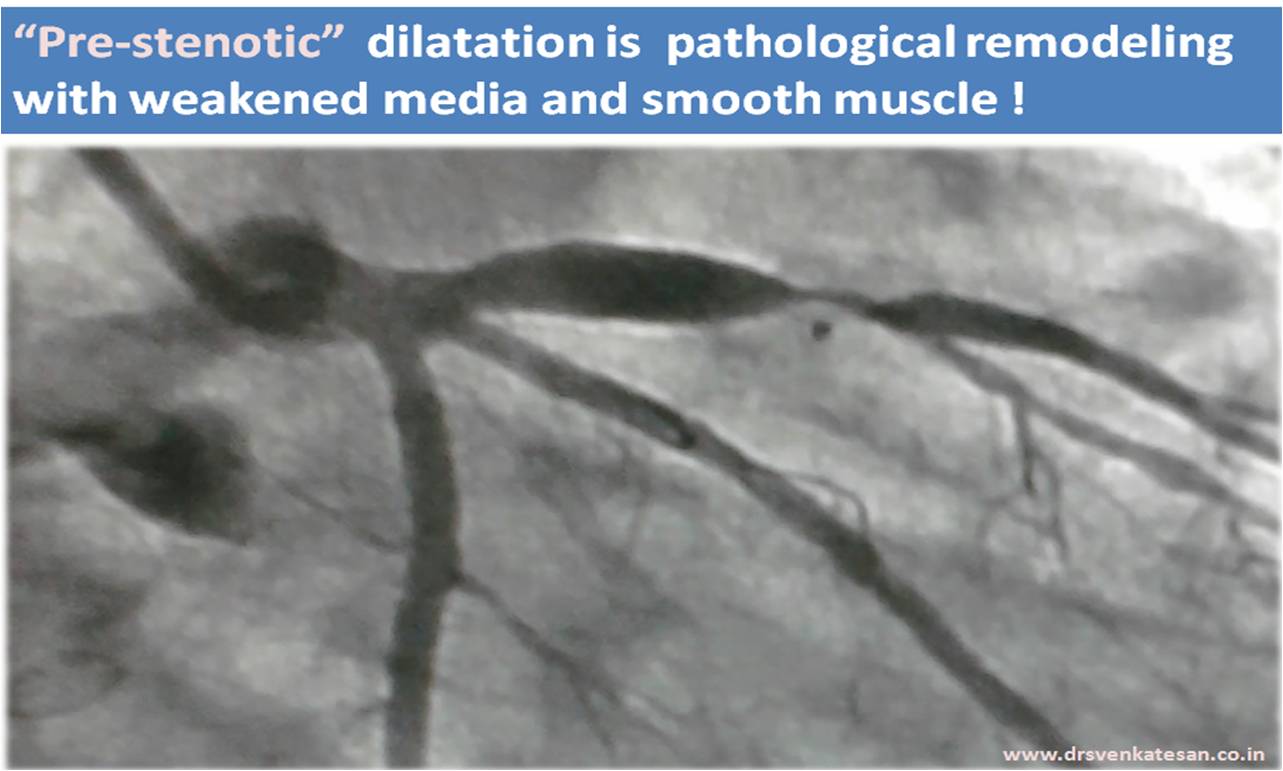
Laws of fluid dynamics dictate there is a pressure drop across   a point of narrowing  and recovery  thereafter  . At  recovery point if the vessel wall is weak it tends to balloon out .This is called post- stenotic dilatation .This is  the anatomical equivalent of Bernoulli or venturi  effect. This theoretically  occur only distal to obstruction .

How do you explain the common observation of pre- stenotic dilatation?

  • Intimal weakening due to disease process is the prime  suspect.
  • Pre stenotic  increment in mean pressure  also play a role .
  • Mechanical distention due to stagnated blood  proximal to  critical obstruction  is  a  logical explanation.
  • Finally and most importantly ,contagious , sub – angiographic  atherosclerosis.

How is  dilatation  different from ectasia ?

May be they are all related phenomenon. The definitions  of ectasia ,  dilatation, aneurysm are  more to do  with semantics than with academics.

Clinical and hemodynamic implication in cath lab

  • Sluggish  flow prone for thrombus
  • Stent selection errors likely
  • Stent dislodgment  and migration

Long term effects

  • In stent re-stenosis is more common if adjacent segment show dilatation.

Finale

Enlargement of vessel wall in both pre and post stenotic segments are possible . In small vessels pre- stenotic dilatation is  more common , while in large vessels post stenotic dilatation is  more prevalent .(Aorta, Pulmonary artery)  The mechanisms are slightly different. Apart from the lesion tightness ,  hemodynamic  and genetic factors are also responsible These dilatations are  often labeled as ectasia in coronary artery  and  most cardiologists  tend to   ignore this finding especially if  the margins are smooth.

But , newer imaging modalities like IVUS, OCT have given   better  insight about these dilatations.These   are  actually an  expression  of the  contagious  atherosclerosis .  Pre-  stenotic segments are prone for extensive disease  than even the diseased segment due to  more hemodynamic turbulence. There is some evidence atherosclerosis progresses  proximally more than distally.Smooth margins within the  pre -stenotic dilatation  does  not guarantee  disease free status.

During PCI  there could be  an  argument for covering the dilated  pre- and post stenotic segments  as well* . (We vouch for endovascular stenting when aorta is dilated why  do we hesitate  in coronary  ?)  .Careful selection of  coronary stent size  is  recommended  and  allowance should be given  for these two (Pre and post coronary dilatation ) patho -anatomic phenomenon.

* Stent missing a lesion is stylishly called geographical  miss ! This should logically include dilated segments also.

Read Full Post »

Very often in clinical  practice  cardiologists are asked to R/O significant coronary artery disease in asymptomatic persons .This population includes  people with multiple risk factors like diabetes, HT dyslipidemia  and non specific ST/T changes in ECG.

Many of us have lost the confidence of   ruling out CAD   in these population without looking at their  coronary angiogram.

Is it a right way of practicing cardiology ?

What we need to realise is,  we are asked  to rule out any critical lesions that are going to make a impact on these  other wise comfortable patients.  Nothing wrong if you miss a 30% lesion in PDA or OMs or diagonals !

Can we do this without doing coronary angiogram ?

Yes ,  we can .

Step by step  Ask these questions

  1. Ask the patient , if  he /she   can climb three  flight of  stairs  without any difficulty or
  2. Walk briskly for  20 minutes (5km/hr)

If yes , give  a   certificate   that he  has no critical  left main or proximal LAD  disease.

If you do not believe in his words , put him on a tread mill ,  if he crosses   stage  3   Bruce in TMT ( 9 mts)

give the above certificate  “with a frame”  now .

For still suspicious  physicians ,  We have  one more  investigation called  echocardiography !

Echo : The forgotten tool  for screening left main lesion.

Modern day echo machines have a  3mm resolution power (Many have 2mm ) .While ,  we are expected to look for 3mm vegetation to R/O Infective endocarditis , rarely is  a  cardiologist ,  tuned to  look for the left main ostium  in routine echocardiography  which averages 4-5mm is size. (Left main by echo link to another article)

In short axis  view just tilt at the level of pulmonary valves  (Atrio- pulmonary sulcus) one can visualise the left main ostium and the proximal left main emerging from the 4 o clock position. If you are lucky you can see the entire left main.

If nothing satisfies the physician (Or the patient)  ,Refer him for sliced CT scan , catheter coronary angiogram , or a  nuclear Imaging .Be ready for the attendant anxiety, interpretation errors, corporate  pressures , urge to  balloon ,  kick backs etc etc

By the way , how can  one  be happy by ruling out only left main disease ?  Is it not other lesions possible ?

Experience (Not science) has taught us  no  critical coronary obstruction is  possible ,  if  a patient walks for  9 minutes  in treadmill (10METS).

Even if it is there (A remote chance)  there is little documented benefit of any revascularisation procedure.

Counter point ?

Is it not a “crazy idea  to rely on patients history in ruling out  CAD   in these era , where   angiograms relayed  live  into   cardiologists  ipad  ?

Science has no value if it is not applied  for the patients welfare. Meticulous clinical  examination (And application of mind)  is the foundation stone on which  any medical investigation and therapy  should be based  upon. Most of the inappropriate coronary revascularisation are due to  neglect   of  this vital  component of clinical examination.

(I wonder ,  is it  really possible  these ” acts of omission”   be  deliberate some times  ! )

Final message

Clinical interrogation  may  miss an insignificant  CAD  ,  but it can never miss a critical CAD* .


Do not do coronary angiogram routinely to R/O  CAD.

It is not the way cardiology is to be practiced !

If only we apply  those  simple,  time tested concepts in every day practice we not only  save millions of  Rupees ,   but also thousands of futile   diagnostic tests and associated untoward effects can be avoided.

* Senstivity of  ruling out any CAD is about 70% , but it’s capcity to R/O critical CAD approaches 100%.

Reference:

Please refer your own Brain.

Read Full Post »

Myocardial infarction is the self-inflicted ,  modern-day death sentence  especially  among the  young generation who are   addicted to the affluent life style .

We know the  cardio vascular events  are  precipitated  due to a  sudden trigger in those  people  who have a base line risk profile. The major  risk factors are ,

  • Diabetes
  • Smoking
  • Hyperlipidemia
  • Hyper tension
  • Obesity

When one or more of the above factors   progress unabated he or she is at high risk for acute coronary event .

Is that a fatal stock market rhythm !

A loaded gun  needs a trigger to fire  , similarly  in a vulnerable patient (Plaque )  any of the following can act as a  trigger to precipitate an MI.

  • Hemodynamic stress (Fall or raise of BP )
  • Any  systemic illness( fever etc)
  • Physical stress
  • Mental stress , any strong surge of  emotion (Negative or positive)*
  • Non cardiac surgery

*Anger, fear , euphoria , guilt , bereavement ,

Now there is evidence pouring in  ,   natural calamities (  perceived fear of death) can  act as trigger  for MI.

We have reports  of  excess cardiac events   following  . . .

  • Earth quakes
  • Terrorist attacks
  • Flight scares

Any events which can release  sudden pulse of adrenaline into the plaques can trigger an acute coronary event.

Now,  this study from Shangai ,  documents how the coronary events dance to the tunes of stock market movements in the financial capital of  China .

http://eurheartj.oxfordjournals.org/content/32/8/1006.abstract

Final message

Chaos theory states no two events are isolated in this world  !   When stock market swings it can  pull down your heart too .

be cautious !

Read Full Post »

The link between migraine and PFO is  . . .

  1. Incidental  & man-made
  2. Almost certain
  3. Definite
  4. A wild imagination

Answer : One of the above  is correct  , but  we do not know  which one is   !

There has been many  patients with TIAs , cryptogenic strokes , who  had  documented PFO  ,complain of prolonged  head aches . This was the beginning of suspicion of PFO as a cause for migraine .Then the device industry foresaw a huge opportunity . Things began to unfold and  the concept is currently as nebulous as it can be .

Mechanism of migraine in PFO

(All are  presumptions )

  • Right to left shunting of  vasoactive amines from venous circulation (Serrotonin)   which bye- passes  the lung where they are supposed to get filtered.
  • Venous micro emboli (Antiplatelet agents reduce migraine as well as TIA ! )
  • Hypoxia transient – cerebro vascular hypersensitivity
  • Atrial naturetic  peptide spills more into systemic circulation through  PFO

Counter arguments

  • If right to left shunting is causing the migraine , why it  is not fully disappearing even after closure of  PFO (MIST data with  starflex  device ,  migraine persisted in a significant chunk !)
  • What is the incidence of migraine in the  prototype  right to left to shunt situations like TOF, Eisenmenger , pulmonary AV fistula ?  if shunting is the mechanism , logically  migraine incidence  should be very high  in this population , but it is not .
  • Migraine occurs in 10 % of population, PFO  is present in 20%  .  What are  the chances of over lap ?  It could be the simple statistics at play !

Where is the evidence  ?  The mystery called MIST study.

This study , done in UK generated more controversy , which  it was supposed to remove  . Still  this  study is considered to be a major evidence for the link between PFO and migraine . Star flex device  was promoted by NMT medical Boston .

http://www.medscape.com/viewarticle/541260

Link to  best review article on PFO

http://chestjournal.chestpubs.org/content/130/3/896.full.pdf+html

Final message

The link between migraine and PFO can be a fact or myth depending upon our belief in current  methods of  research in  science. The issue is  debatable . Of course ,  one issue is probably  closed  forever  , even  if they  are  linked casually (or seriously )  device closure can  never be a  sensible treatment  option for migraine ! *

We  expect a  proof / disproof  in this   mysterious migraine -PFO  hypothesis very  shortly.  Of course , many  cardiologists  already  have their  own conclusions !


*Please note , PFO  device closure  for  stroke in young is a different story

Read Full Post »

« Newer Posts - Older Posts »