Feeds:
Posts
Comments

Ectopic beats , other wise called premature depolarisaton are one of the common ECG abnormalities  diagnosed by physicians.

  • Atrial premature beats (APDs)
  • Ventricular premature beats(VPDs) 

APDs and VPDs  form  the bulk of all clinically important ectopic beats.

Heart has a specialised electrical conducting system , every cell in this system is capable of firing on it’s own. But why then only the atrium and ventricle produce ectopic beats .Other structures like AV node, His bundle , purkinje are relatively rare to produce ectopic beats .

Is the AV junction relatively immune to develop JPDs?

The answer to this question would be  “May be yes” . Yet, we need to recognise they may not be as rare as we think , many times we fail to  diagnose  it or rather recognise it !

Certain observation about Junctional premature depolarisation are made .AV junction has unique properties than any other parts of the heart.The basic purpose of AV junction ( AV node is not a preferred word as it has no anatomically distinct demarcation)  is to apply a electrical break on the incoming electrical signal .Nature does this with a purpose .   It is essential for the ventricles to fill adequately . We call it as PR interval.

So, when the basic purpose of AV junction is slow down the conduction it is logical to expect it won’t get irritated that  easily  and  result in ectopic beats. So JPDs are less common than other forms of ectopic beats.

What is invisible JPD and HIS ectopics ?

We should realise many of the JPDs  & his bundle ectopics are not conducted ,  the impulses simply dissipate down hill .  Unlike the atrium and ventricle the junctional and his tissue has no associated chambers to depolarise , hence they are not  often visible in the surface ECG.The only evidence in the surface ECG may be an unexpected pause which represents concealed conduction. A EP  study  of the bundle  ECG often unmask these silent JPDs and His VPDs.

 JPDs are  less common  , while  junctional escape beats are the  hall mark of any  severe supraventrcualr bradycardia . How  does  that occur ?

AV junctional cells have  an unique behavior in that , it comes to the rescue of the heart whenever the native SA node becomes too slow  . This happens as a passive response .We call this as junctional escape beat.The major difference between a JPD and Junctional escape beat (JEP or JED )  is in the initial timing of the beat . Escape beat comes late .The coupling interval of escape beat (We generally use coupling interval for ectopic beats only , but  it helps to understand )  will be longer than the previous sinus cycle. So escape beat is never premature (Rather a  post mature beat !) .Ectopic beats are always premature ,( except Interpolated ) and occurs earlier than the next anticipated beat.

The other difference is escape beats are tolerated well as the primary purpose is to rescue back up.Their rate is generally equal to the  intrinsic rate  of AV junction ie around 40-50.

General characters  of  Junctional  premature beats and tachycardia

  • Fortunately rare,  fires at a  higher rate.(Unlike junctional escape beats )
  • Enhanced automaticity is a common mechanism
  • Reentrant JPD is rare , unless the patient has AVNRT or it’s variant  physiology.
  • Manifest as narrow qrs complex . JPD with aberrancy is distinctly possible .In that case differentiation from VPD may be difficult.Retograde  P wave morphology may help.But it is non specific as VPDs also have varied atrial capture depending upon the VA conduction .
  • Causes include Hypoxia,  (Rarely ischemic junctional tachycardia. ) common causes include  digoxin induced , post operative states, incessant JT
  • JTs are Difficult to control.Overdrive pacing may be needed. May lead onto tachycardic cardiomyopathy.
  • A benign form of junctional ectopic tachycardia is also reported .

Importance of Junctional escape rhythm

The role of AV junctional escape is vital in extreme bradycardia , as if the junction fails to escape the dangerous ventricular cells take  over  electrical control  and that’s  bad news for the heart  with  sinister consequence.The situation can rapidly degenerate to VT  , what we call  as phase  dependent or brady dependent VT. The treatment for which is increasing the proximal heart rate. By isoprenaline or pacing. So the AV junction does  a delicate balancing act .At times of tachycardia it blocks unnecessary impulses.At times of extreme  bradycardia it assists the heart as escape rhythm . The problem here is many of the disorders that affect SA node , affect the AV node as well .So ,  AV node may not be able to help the SA node always.That is the reason many extreme myocardial end up with VT straightaway.

Final message

JPDs are not very uncommon as one would believe.It has some unique properties. There are vital difference between JPDs and junctional escape beats.JPDs can trnasform into JTs in local pathological milleu and as a rule they are difficult to control.

AVNRT is also a type of  junctional  tachycardia  but,  it  is delinked from  the ( unofficial  ! ) classification of JT  , not  with  any  academic purpose  but by tradition.

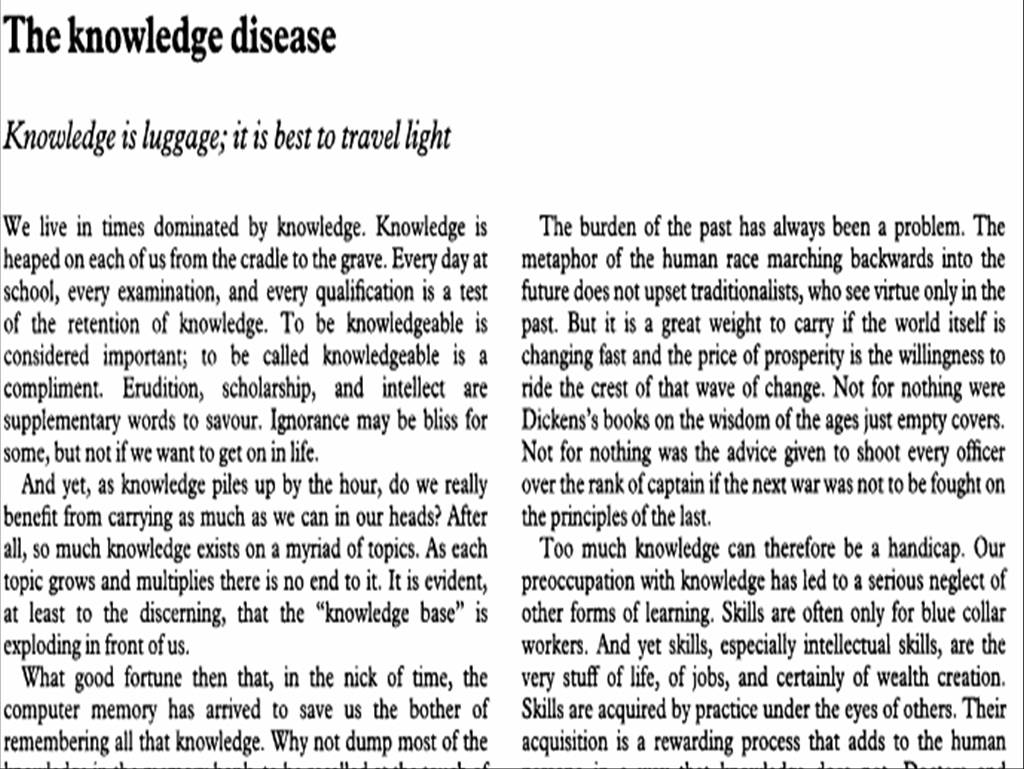
When we get contaminated with excess  knowledge , we lose our ability to think !   &  Common sense is the casuality . . .

Human beings differ from other forms of life by their sixth sense . Our planet is  few billion years old . Life came into existence over a million years ago .Our life has  evolved over many  thousands of years .The average life span of  human race   is  75 years . We need to realise , our life constitutes  only a fraction of our planet’s life (<.0000001% ) . A  may fly , which lives a life of  less than a  day ,   does it in style  , looking for the light  throughout  the night ,  says good bye ,  to earth by morning  leaving  it  unharmed . Actually ,  in terms of time , the life of the fly is  just a  fraction less than  human life span , when compared  to  our planet’s life !

When these children are  longing for food , some of  earthly humans go to  spend millions for  obesity surgery ! That is  the progress of knowledge driven society . . .

It is  extremely common to  experience the following  scenario  in any corporate hospitals of  both developing and developed country .A   uninsured  or half insured !  person is  refused entry into a hospital even for an  emergency care  while a wealthy person is lying comfortably watching TV in a five star suit of the same hospital after an inappropriate coronary angioplasty for  an   innocuous   lesion of his heart !

The irony is ,  in this short span  of  earthly life  ,  we want to prevail over the nature and conquer the planet . God is watching  this human  behavior silently . And he is smiling  . . .

With all our knowledge base ,  modern science  have done the maximum possible  damage to our  planet  .We have made many lives extinct. If  we  tend to  think , with the help of  6th sense  we can become immortal , it would be the ultimate foolishness. When every one of us ,  is  obsessed with our own  health  , we are deaf  to  the silent cries  of  our beloved planet earth .

Now , all of a sudden we realise all the accumulated knowledge & development has actually worked against us. We find our knowledge is dissociating our thoughts   and now , we are fighting  vigorously  over acquiring the rights to damage our planet  .

So it seems ,  the more we learn,  less wisdom we have  ! We may need to  learn important lessons  of living  from  all those  species   which  do not  boast to have  the  6th sense  !

Read a related article , excellent one published in British medical journal  nearly 2 decades ago

Knowledge disease BMJ. 1993 December 18; 307(6919): 1578.

The commonest cause of ST elevation is  STEMI .

The non infarct causes of ST elevation include

  • Pericarditis
  • Early repolarisation syndrome
  • Hyperkalemia
  • Brugada syndrome
  • CNS injury

What is the mechanism of ST eelvation in pericarditis ?

The mechanism of ST elevation in STEMI  is  injury current coming towards the recording lead. In pericarditis  we are not  sure  about the presence of  injury current  because pericardial cells are not  capable of depolarising and repolarsing .But ,  the fact that  epicardium and visceral layer of pericardium are anatomically  are almost same entities .Attempts to rip off visceral pericardium from myocardium ie epicardium is often futile .This makes it very obvious  any true pericarditis  must involve epicardial layers of the heart.

How does inflammation of epicardium  lifts the ST elevation ?

This again is a mystery .The   effect of   inflammation   on the polarity of ST segment  is  complex one. Diffuse and global ST segment elevation with concavity upwards  is the hall mark of pericarditis. This makes us believe pericarditis has to be diffuse  and involve  the entire  circumference of the heart.

Logically and realistically  this happens rarely . Many of the pericarditis are localised and regional . Even regional constrictive pericarditis are reported .The factors that determine the ST elevation in pericarditis  depend on the  spread of the inflammatory process beneath the epicardium .If the inflammation is active  andeep  ST elevation is likely to be  prominent.

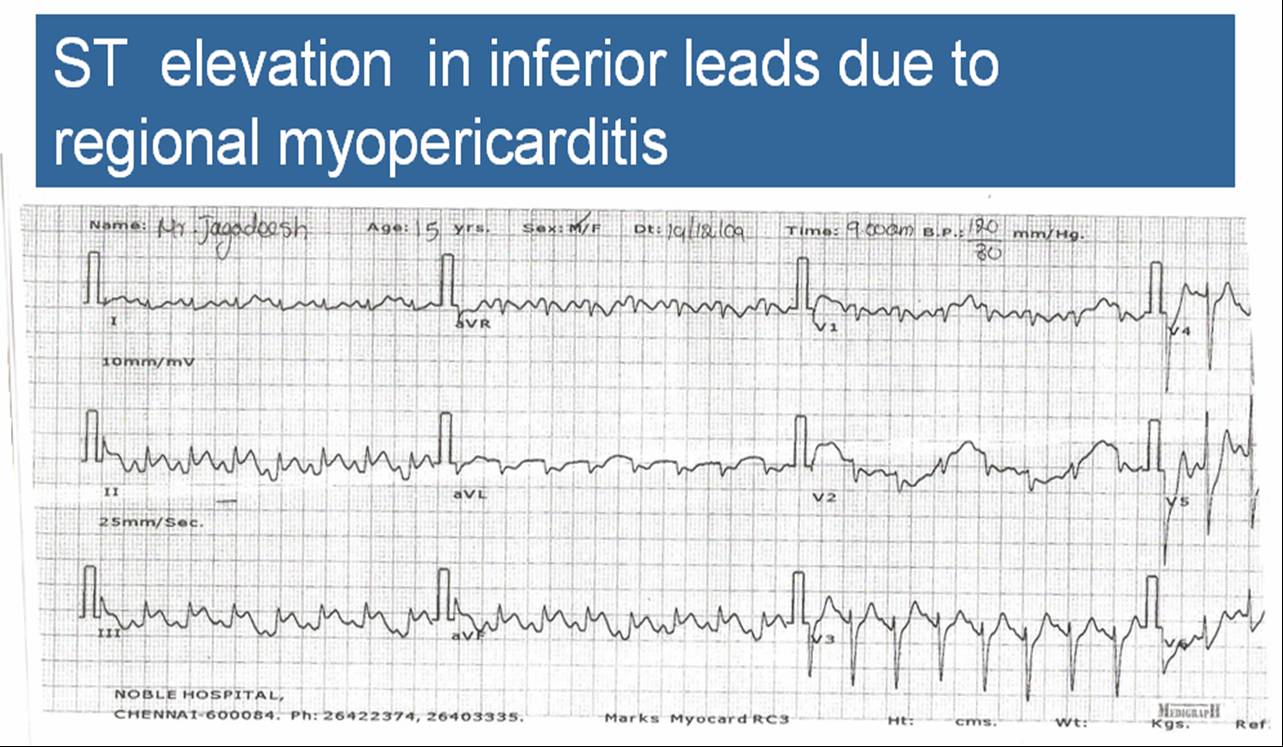
The ECG is  that of a 15 year old boy  with a febrile illness .  He developed  severe myopericarditis .The echocardiogram showed  global hypokinesia and severe LV dysfunction .Patient failed to respond  with  medical therapy and succumbed  after 48 hours of onset of shock .

Can we localise pericarditis with the help of ECG ?

It is possible. But there is no clinical purpose to do it.

Can troponin be elevated in pericarditis ?

No it should not happen in pure isolated pericarditis.But , epicardial involvement can result in inflammatory damage  to muscle and troponin can be elevated. When pericarditis occurs as an accompanying manifestation of pancaritis troponin  is bound to elevate (Fulminant pan carditis of acute rheumatic fever)

Final message

Pericarditis need not be diffuse and global infact pathologically it is rare to have global pericarditis  . Localised pericarditis especailly adhesive type , which involves the  posterior  /anterior  epicardial layers can mimic an  either inferior  or anterior  STEMI  . This has important clinical implication as unneccssary coronary interventions can be avoided.

Do not expect  text book descriptions for any ECG pattern in clinical cardiology .

We will be rarely  correct . . .

PAH  is  the major determinant of surgical outcome of left to right shunts. In this  modern era of cardiac care  allowing a child  with   left to right shunt   to progress to a  stage of   Eisenmenger syndrome  is  considered  as a  huge medical failure . But  , this is still rampant in many of the developing countries .

Cardiologists are divided over the issue of  operability of Eisenmenger syndrome .The confusion is largely due to the conflicting data of outcome in these patients. While  there is strong   data  when  PVR exceeds  SVR  ,  the death is imminent in the post operative period .

What has complicated the issue is   there are  many case reports  where severe PAH patients have been successfully operated. Most would think it is a statistical exception and one can  not alter the traditional criteria based on few case reports.

But ,it remains an irony as on 2009 ,  we do not have a proper methodology to assess reversibility of PAH in Eisenmenger syndrome . Further ,  there is a  significant number of  patients with high PVR  , who continue to experience  an  unabated left to right shunting .  We do not have an answer  for either the mechanism of such shunts and  how to manage these patients.

Click over the slide  to view full  PPT  presentation in PDF format .

This short paper was presented in the Annual scientific sessions of cardiological society of India 2009 regarding the usefulness of a new parameter to assess reversibility of PAH. This may not be called as  a study rather a report of  our experience  in  five  patients  with eisenmenger syndrome

Download the full PPT presentation in PDF  format.

pulmonary artery pulse pressure

Can  modern technology  bring back  the life from a   dead person ?

Yes it is possible  ,  not in the near future !  but  in the present era  . . .

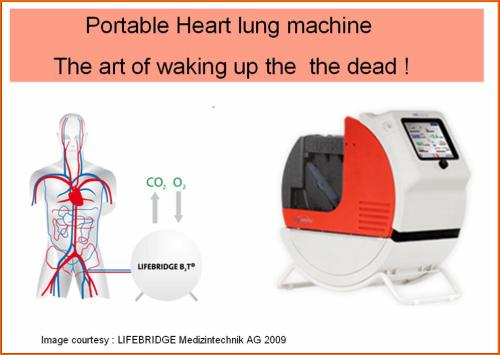
This revolutionary new portable heart lung machine may just do that .

Imagine  this scenerio : A cardiac arrest  victim  – failed resuscitation  with  ACLS  ,   the patient  needs  to be taken for an emergency cardiac surgery or intervention .You need time at least ,  few hours .Till that time  this simple device   takes  over the  role  of GOD    i e  sustaining life   by   pumping  and oxygenating  6 liters of blood !

Learn more about this award winning wonder machine from lifebridge .Germany

LIFEBRIDGE Medizintechnik AG / Product / LIFEBRIDGE B2T®

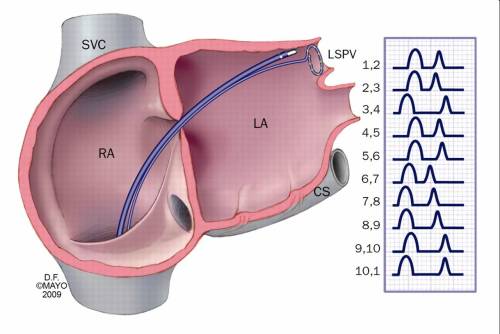
This is a real life experience of  a patient who underwent a electrophysiology study and   ablation   procedure for atrial fibrillation  .The blog describes  how the procedure became a nightmare .Written in a  most  readable fashion .  Interventional cardiologists need  not get hurt by this  narration  instead  they should  do a  reality check on the dangers  of  the some  of the  complex  procedures !

Adventures in Cardiology

Click over the  image to  read the real  time experience of   Pulmonary vein  ablation

Image courtesy Mayo clinic

The message from the above story  :

  • Atrial fibrillation is  one of the  relatively  benign  cardiac arrhythmia , that  can be treated  with   simple and effective  drugs . Now we have strong evidence to say rate control is equally , if not more effective than the rhythm control  modalities .
  • The RF  ablation  , which aims at rhythm control  is a too complex a procedure with  lots of expertise  technology  .
  • This should be  reserved  as a last resort  in an occasional patient who had exhausted all other  options .
  • Patients should  realise ,  the consent forms they sign  before any new and innovative  procedure is always  incomplete and  he may be the first person to experience  a new complication  hitherto unreported .
  • A cath lab is run by a team ,  you can’t  expect  the chief doctor to be on your  side always.   Many of the procedures  are  done by either experienced or inexperienced  fellows . That’s  only the  way medicine  can be practiced !
  • So beware all patients , many times, modern medicine is nothing but  experiments on live humans  !


Pessimism, from the Latin pessimus (worst), is a state of mind which negatively colors the perception of life, especially with regard to future events.

Understanding pessimism is not that simple  . Some people argue  optimism   represents a strong mind while  a pessimism  is the domain of the weak . But it is not necessarily true.  Both pessimist and optimist are unreal , and playing the dangerous game of predicting the future. So realism is the answer .

In this era of information highways , commercial exploitation of science ,  our thought process is grossly determined by our perception of events.We hardly have an intention or time to analyse our thought process.

  • An optimist  ( Rather , unregulated optimist ! ) is a person who welcomes  any growth good or bad.*
  • A pessimist  is  a  person who welcomes only good growth.*

So how to identify good growth ? That is the million dollar question!

  • Many of the  optimists may not  bother about the final outcome of a treatment *
  • A pessimist bothers only about that .
  • An optimist  rarely asks questions, blindly accepts every thing !
  • A pessimist never believes any thing !

Actually the fundamental principle of scientific medicine lies in proving the null hypothesis null and void.Any treatment is useless until proved other wise .  So pessimist can be argued to follow true science , while  many of  the hardcore  optimists are blind believers ..

*It may be  a harsh   way of  interpreting an optimist  but  uncontrolled optimism  has played havoc in our  patients like many of the failed treatments (Some of them released prematurely into patient domain   has  killed many lives  . Power of positive thinking should be within the  realms of scientific feasibility !

So in  our  journey   to  conquer human health ,   we   may  proceed with  an optimistic mind and  a pessimistic eyes !

This understanding is all the more important in this era of contaminated science .It is a well known fact ,  now last 50 years of  planet earth has inflicted the maximum damage  to ourselves  than our ancestors did in 5000 years. That’s why we are compelled to meet at Copenhagen .(We never learn from our mistakes, that’s a different story !) .

There is definite and urgent  need for world summit  on  cleansing the medical science from  the clutches  of commerce  and ignorance . A medical green house effect, with dangerous holes in health care  is imposing on us (Another pessimistic thought . . . of course in the interest of human kind !)

World health organization ,  a sleeping giant has to be awakened on this issue


Final message:

Mankind has evolved over many millenniums ,  probably with a sole  purpose of living ,  that is reproduction and propagation of our genre without harming the environment and other species.

Unrestricted  and unregulated growth of any kind is dangerous we call it as malignancy in pathology .In science , we tend to call it a” great future ”

Our  sixth sense*  has  outgrown  miserably  out of  reality  , as have we decided to take on the nature and GOD .Now , many developing country men do not believe in death .They are fighting a losing battle against the God. And they suffer with escalating health costs of keeping the elderly ,  alive who are  knocking at the doors of heaven or hell . The same countries,  which deny funds for curable illnesses of the poor is a different story altogether !

The principle of modern medicine  would ideally  be

  • Reduce human suffering irrespective of economic status
  • Curing a illness if there is a cure
  • Prolonging life if there is useful purpose
  • Allow a good quality death if there is no cure.
  • Most importantly  , prey to god give us strength and capacity to identify which is good and which is bad for our patients  .

Read and learn for a  complete guide on optimism and pessimism

* It  is  important to recognise , the same sixth sense  has   made it possible to share our views through a great tool of  Internet  . So we should not be against the growth of science but against the misuses and wrong interpretations of it .

Pessimism

Optimism

The traditional characters  of  a pessimist

//

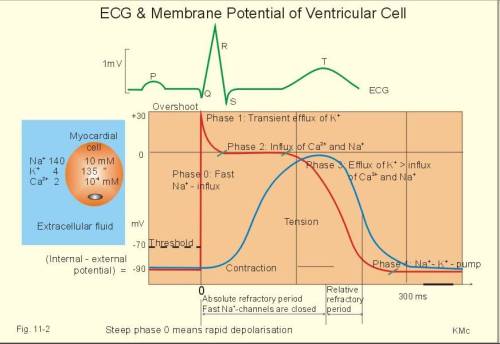
Here is  the link  to  one of  the best illustration for cardiac action potential  which I  have stumbled upon !

Spend some time on the following illustration  depicting  the  normal  cardiac  action potential that  explain the ionic movements . Understand why a cardiac muscle has two refractory periods , why there is a sustained dome for  myocardial action potential  and this is missing in SA and AV nodal potential ?

Click below to reach the online book

Textbook in  Medical Physiology And Pathophysiology

Essentials and clinical problems Copenhagen Medical Publisher

Note :

Red curve indicates electrical action potential .Blue depicts the mechanical contraction . Both red and blue curves together form the electromechanical systole. Realise  ,   QT interval  represents electro mechanical systole . It  includes both cardiac depolarisation and repolarisation .

There is a inherent tendency for our brains  to equate depolarisation with systole and repolarisation with diastole .It is totally a wrong perception. Please , be aware of this !

Identify the gap between the  red and blue curves that represent 50%  of ARP  .This is the time the myocytes can not be stimulated whatever be the  power of stimuli because the Na  channels are closed .

Understand ,the above action potential  represents only half of the cardiac cycle as diastole is not fully illustrated here .Recognise  the fact ,  diastole begins at the end of phase 3  and  goes into phase 4 as diastolic depolarisation  by a slow Na current.

After learning   the basics of action potential   read about the antiarrhythmic drugs . You will get to understand it better .

Learn  which drug acts on which receptors or channels and what does it do  to the various intervals  .For example ,  any drug that is prolonging an action potential  duration is fraught with risk of  ventricular arrhythmia as it is synonymous with prolonging QT interval (Eg Class 1 A /1B/Class 3) .

Sicilian gambit is the receptor & channel based classification for anti arrhythmic drugs . (Sicilian gambit 2 )

  • Understand the paradox of  QT interval getting shortens with Class 1 B (ligocaine /Mexilitine ) while 1 A  does the opposite !

Class 1   Drugs blocks sodium channels .The blockage  occurs in  a complex rate dependent fashion . It blunts the slope  the phase 0 and hence prolongs the action potential .

Class 2 . Beta blockers

Class 3 . Blocks K + Channels and hence prolongs the AP

Class 4  .Calcium blockers

Finally  don’t forget to say thanks to Copenhagen medical  publishers  for this excellent illustration .

Modern era of cardiology aims to treat ACS  as and when it develops .That is , as soon as the vulnerable plaque ruptures or a thrombus  blocks the victim’s coronary artery.

But this can be achieved only if the patient reacts to this event.We know 20% of ACS can be totally silent. Some produce very vague symptoms especially in elderly and diabetics. ECG and enzyme changes may help us in patients who do not have clear symptoms.There are variety of markers available for STEMI & UNSTEMI.(CPK-MB, Troponin T , myoglobin etc) Now we are working at finding a marker for ischemia without necrosis. Ischemia modified albumin is one such molecule that is showing promise.

The ER department world over have vigorous screening protocols to diagnose ACS  for  the patients with chest pain. There are thousands of triaging protocol in the  emergency management of chest pain.In spite of  the highest awareness and availability of  scientific expertise , knowledge base the error rate of diagnosing  ACS  stands at an astonishing 58%.  This may seem odd , but this is what  this land mark article in NEJM tell us  (Data from Boston , Milwaukee etc).

Out of 10500 patients with suspected ACS. Only 17 % had real ACS.  55% were admitted initially as ACS  later turned out to be non cardiac .This may seem  acceptable for many  even if it is  an act of unnecessary admission and investigation. It gives us , a sense of satisfaction for not missing a diagnosis of ACS. But it has it’s own risk of complication arising out of unnecessary investigations.It is a chain reaction of  suspicion that  may end up in a coronary angiogram in many ! .It is also a well recognised fact these patients    spend  atleast an average of  2 days  to get rid of the ACS tag over their  necks .

Experience has taught us  simple presence of a human being as a patient within an  ICU ( however short the stay  may be ) can be a health hazard and risk .  This  55 % error ,  which does exactly  this to  our  patients with chest pain  who reach the ER  never bothers us  This is because  we feel credited both academically as well as financially .

In the same study 2.3 %  (About 25 patients) with true ACS  were sent home  after a missed  diagnosis . Paradoxically  this 2.3%  has worried the medical professionals too much . . . This happens  ,  even as we  do not have proper data on  how many of them had a real adverse event after a missed  ACS.

So the message here is even in best centres both missed and wrong diagnosis are  rampant. while wrong diagnosis (25 fold more here  )  is easily accepted by the medical community .We can justify  this as a screening camp for ACS  ,  akin to arresting  a group of suspected  criminals in a  preventive raid ,  later releasing for want of evidence.

In the morals of  criminal judiciary  , it is often said one can afford to  lose  a real offender from the clutches of law  , but a  innocent should  never be punished in any circumstance .

In medical parlance this  goes something like this  . . . Thousand patients shall die because of his or her illness but not even a single healthy person should die due to unnecessary treatment.

The above thoughts  were in response to  the excellent original article on missed diagnosis  of ACS from NEJM.  http://content.nejm.org/cgi/content/full/342/16/1163?ijkey=652d8337709a8bf84c813f4c9d685863ee053162

Final message : (Sorry for the  lengthy message !)

Can we afford to miss an  ACS in emergency room ?

“Definitely not” . . .but do we succeed in that ?  The answer is same “definitely not “

When we are able to accept with pride every time  we make  a  wrong diagnosis of  ACS  in perfectly normal people , It may to provocative to say  we can  also  afford  to do  the same  when we occasionally   miss a  diagnosis of ACS  as well .  Law of statistics dictates for every correct diagnosis made there is many fold number of wrong or missed diagnosis takes place. May be , reducing that is the only aim of medicine.

We need to realise  with even with a 55% of false positive initial  diagnosis  2%  real ACS  escape net !The only  fool proof method  for  not missing  ,  even a single case of ACS   is to label every patient with chest pain as ACS .

In this vexing  issue , we should realise  , in field of  medical decision  making ,  errors  due to acts of commission  ( Making an  inappropriate drug/procedure /surgery  is easily accepted by medical professionals as well as   the court of law !) . But acts of omission ,   like missing a diagnosis or failure to prescribe  a  drug or perform a procedure  is rarely accepted   and  is  considered   a great negligence and  bring intense guilty feeling among the physicians .

This  perception is definitely  not warranted in this  greatest profession  of glorious uncertainties ! Both acts of commission and omission  cause significant damage to  patients . In this modern era  ,  we have clear  statistics  that   reveal ,  acts of commission  leads far ahead over it’ s counterpart in injuring our people .

Hippocrates got it right over 2000 years  ago .  First let us do no harm  . . .

A  good collection of resources dedicated to cardiology

http://www.touchcardiology.com/articles/primordial-prevention-cardiovascular-disease-the-role-blood-pressure