Practice of cardiology is simple as long we don’t dwell deep into coronary physiology.
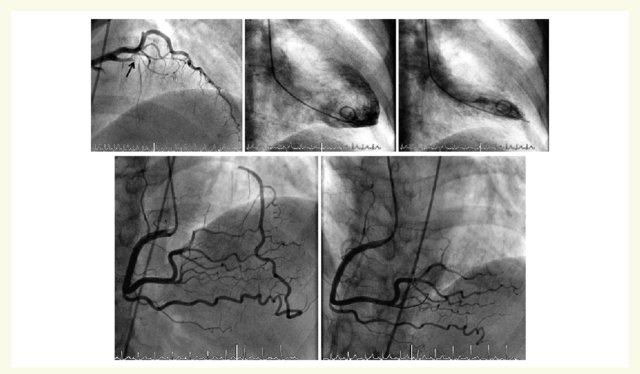
One of my patients asked, why he was told his total occlusion in LAD appears safer now, which was subtotal a few months ago.I told him, it is indeed true. It is the fear of subtotal disease that’s prone to a fresh coronary event. In total occlusion, chances of that happening are less or nil.
How can you say 100% block is safe? Is that always true?
No, it’s not always true. He was surprised when I said it is not 100 %, even 90% lesion can be safe if it’s not causing significant angina and responding to OMT. Of course, It is the morphology and stability of the lesion that will dictate* the outcome in the subtotal occlusion. If the lesion is stable, FFR is good >.8 (TMT is poor man’s FFR equivalent ) you can leave it as it is. Doing OCT /Virtual histology /NIR spectroscopy to define the vulnerability of plaque is neither practical nor desirable (Extreme academics is injurious to health)
So it is not the degree of the block that’s going to matter, but the effects of that block on distal circulation that will decide the rules of the myocardial revascularisation game. But unfortunately, both you, (the patients) we (the cardiologist) are finding it so difficult to come to terms with this basic truth in spite of multiple guidelines.
Meanwhile, CTO however makes it much easier to make a decision. One need not bother the content of CTO unless you plan an Intervention. I guess there is no FFR for CTO. Are we aware of any studies that have quantified antegrade flow across a 10% patent LAD and compare it with the Collateral flow in LAD in 100% CTO?
We have long glorified a concept of the open artery hypothesis. (Mainly in Post STEMI though) No one has dared to test and compare a hypothesis that a closed artery might still score over the open in at least some of the subsets of stable CAD. Such a study can never be ethically forbidden after all its a well-observed truth in the real world.
Reference
Trials on CTO revascularisation DECISION CT (Not useful ) EURO-CTO (May be useful)
Poverty is the number one killer in this world . Malnutrition, infectious diseases , poor maternal child and health are the leading killers. The life expectancy is short in many underdeveloped countries.
While the scenario is dismal for most of the poor people in this world.
Can affulence be a risk factor for poor health ?
Yes. This seemingly awkward answer is many times true. The disease acquired by affluence is labeled attractively as life style diseases . They are : Obesity, Diabetes mellitus, cardiovascular diseases, some forms of cancer etc .
How else can affluence affect the health of an individual ?
Apart from affluence being a risk factor , it is a powerful risk factor for getting inappropriate medicines, procedures & surgeries , hence the resultant adverse effects.
It is a non-established fact , in both developed and developing world , the single important predictor of a given form of treatment say revascualrisation or surgery for CAD is affordability to the treatment (Either by insurance or self payment) .Financial well being , interferes with applying valid scientific principles on them . Applying the results of the land mark trials CAD trials , COURAGE & BARI 2D are very difficult for them , which argues for simple , less costly , less glamorous medical therapy for CAD.
Example 1
A wealthy adult male who lands up for master health check up in a big state of the art hospital found to have a borderline stress test , CAG reveals a single vessel distal RCA disease .He was given an option of PCI , undergoes it , and ends up in a complication and damages his entire inferior myocardial territory.
Had he been a poor uninsured guy , he would have promptly be labeled as stable CAD and would have been on good medical therapy* and his myocardium could have been saved .
* PCI can never be an option for him , courtesy : His wealth status !
Mind you , this is not an isolated example, such affordability guided treatment modalities are rampant in the society and has a potential to make our rich and affluent a major health risk target !
Final message
Being wealthy and affluent can also be a health risk factor. While the poor suffer from lack of health care the rich many times suffer because of too much health care ! (or Is it care less , health care ?)
Scientifically , the indication for coronary revascularisation should be based on following
Patient’s symptom ( more specifically angina , dyspnea is less important !)
Prov0kable ischemia ( A significantly positive stress test )
Signifcant LV dysfunction with documented viable myocardium & residual ischemia
A revascularisation eligible coronary anatomy * TVD/Left main/Proximal LAD etc ( *Either 1, 2 or 3 should be present in addition )
All emergency PCI during STEMI /High risk NSTEMI
Practically ,
A CAD patient may fulfill “Any of the above 5 “ or “None of the above 5” , but , if a coronary obstruction was revealed by coronary angiogram and if he fulfils The 6th criteria , he becomes eligible for revascualrisation
6th criteria
If the patient has enough monetary resources (by self ) or by an insurance company to take care of PCI /CABG *
*The sixth criteria overrides all other criteria in many of the cath labs .Of course , there are few genuine ones still fighting hard , to keep the commerce out , from contaminating cardiology !
Anginal pain is a type of visceral pain.It is carried by type C unmylinated nerve fibres.The perception of angina is a complex process.It is a combination of visceral and cutaneous referral pain.
How often is angina silent in diabetes mellitus ?
Presence of diabetes per se does not make an angina silent. In fact, if one takes 100 patients with diabetes , if angina occur in them , it is more often , manifest than silent. So , only few of the diabetic patients who develop diabetic autonomic neuropathy fail to have angina.The exact incidence is not known.It could be around 20%.
If angina can be silent in diabteics , can they have anginal equivalents ?
This again is not answered in literature. Among the anginal equivalents , the most common is dyspnea , which can occur in diabetics.But now , we know dyspnea also needs thoracic nerve signals from the intercostal muscle spindle and colgi organs.This can also be impaired in diabetics.
Can silent and mainfest episodes occur in a same patient ?
Yes.
Once silent does not mean always silent, and similarly once angina is felt it does not mean he is going to feel the next episode as well !
This strongly reminds us medical science is much a complex subject and what we know is very little in pain perception.
How is silent ischmia different from silent angina ?
There is considerable overlap between silent ischemia and silent angina
The questions to be answered are
Which is silent ? Is it the angina or is it the ischemia or both ?
Silent ischemia can occur in any individual , this is also called as silent CAD . When ischemia occurs but fails to generate pain it is silent ischemia .Undiagnosed CAD in asymptomatic individuals is also called silent ischemia or CAD.In this population Exercise stress testing detects CAD which was otherwise silent and masked.These patients may develop angina during EST.
During exercise stress testing many times patient has significant ST depression more than 2mm but still chest pain may not occur.These episodes may either be silent ischemia or ngina. Many times the EST is terminated before angina is manifest .( Chest pain is the last to occur in the chain of events following ischemia- Concept of ischemic cascade )
What are the other situations where angina can be silent ?
Pain perception and threshold level is high , so patient indeed has anginal signals but fails to feel it .
Patients on antianginal medication , fail to feel the angina.
Chronic betablocker therapy can exactly mimic autonomic neuropathy
Is it a blessing for the patient to have painless episodes of angina ?
When their ischemic colleagues , suffer a lot with chest pain it is tempting to think these diabetic patients are blessed!
Scientifically , this could be true in at least in some especially in a patients who’s coronary anatomy is known and devoid of any critical proximal lesions. For example a small PDA lesion can produce severe angina , but may be silent in diabetic and be comfortable .This lesion is insignificant other wise * !
It should also be recalled , pain relief has been an important goal for treatment of CAD .In olden days, thoracic sympathectomy was done for angina . In fact , even in CABG , one of the the mechanisms for angina relief is attributed to cardiac denervation.
Caution: Even a small episode of ischemia can trigger an electrical event .But it is rare.
How common is silent infarct (STEMI) in diabetic patients ?
In a simple questionnaire we asked the diabetic patients in our CCU how they felt their pain during MI.Most felt it normally as do other non diabetic . Diabetes does not make all anginal episodes silent. Severe episodes of ischemia may be painful while less severe episodes may be painless. Diabetic autonomic neuropathy is a least recognized and poorly understood complication of diabetes.Diabetes , involves the vasanervorum of the autonomic nerves.
The other mechanisms postulated in diabetic neuropathy are
Reduction in neurotrophic growth factors.
deficiency of essential fatty acids .
Reduced endoneurial blood flow and
Nerve hypoxia .
Is diabetic autonomic neuropathy treatable ?
Very difficult problem indeed.Controlling diabetes may partially correct the neural dysfunction.Many add on neuro vitamins and aminoacids are having a good market !
If you successfully treat diabetic autonomic neuropathy will my patient start feeling the hitherto silent episodes of angina ?
We don’t know.Logic would answer ” YES”
What is the ultimate effect of cardiac autonomic neuropathy.
Angina pectoris , classically occur on exertion and gets relieved on rest .This is called typical chronic stable angina as described by Heberden (CSA ) . Unstable angina(UA), the term originally described by Noble O Fowler in early 1970s. ( Also being referred as intermediate coronary syndrome , preinfarction angina etc).The definition for unstable angina has evolved over the years and currently refers to .
1.All new onset angina of any degree*Some include severe angina only ! New onset angina of very mild degree on exertion could be the onset of the first episode of stable angina.
2.Rest angina of more than >30 mts not relieved by taking sublingual nitroglycerine.
3.All Post MI angina
4.Any angina in patients who have been stented by PCI.
How to recognise a patient who is shifting from stable angina to UA ? UA is to be suspected when a patient develops. 5.More frequent episodes than usual6.Angina occurring at lesser level of exertion than before7.Angina radiating to new site ( Example : Chest pain radiating to jaw rather than to the usual left arm or vice versa)
Why the first episode of angina is given a special status and often considered critica ?
Angina is the clinical expression of myocardial ischemia.The course of the first episode of angina , can not be predicted.It could be a the beginning of a chronic disease process, or it could be a progressive coronary occlusion as in unstable angina /NSTMEI , or the onset of even a STEMI.
In contrast a patient with chronic stable angina has a predictable chest pain , at a particular level of exertion, radiation to same site, same character, and the patient knows for sure the pain would promptly dissappear when he takes rest or nitroglycerine tablets.
What is the underlying pathology in UA ?
Generally it is very rare for a stable plaque to produce a serious episode of unstable angina .It requires an unstable plaque* to precipitate an unstable angina !
Unstable plaque refers to any plaque which is eroded, fissured, ruptured or hanging eccentrically , with
an active thrombus.
What is the significance of post PCI angina?
It is an irony, any angina following PCI is to be considered unstable as sudden occlusion of stent is quiet common.This is a paradox of sorts as one would wonder in a patient with CSA who undergoes PCI with stenting of left anterior descending coronary artery (LAD) all his subsequent episodes of angina will be labelled as UA even if a stable angina occur in his other coronary artery.And these patients would go for early invasive approach and potentially inappropriate interventions even if they are at low risk !
Is all angina at rest can be termed as unstable angina ?
No, but many times , rather most of the times cardiologist believe all rest angina to be unstable.
What are the situations where stable angina can occur at rest?
An episode of angina during mental stress, or post prandial* state are very common in patients with CSA. This gets relieved after the stress. Some times patients with CSA during episodes of fever may get angina at rest .These are considered variants of stable angina.
Post prandial angina , may be considered by some as unstable
How often a diagnostic confusion occur between CSA and UA ?
Generally, this issue is rarely addressed in cardiology literature , for the simple reason it is never considered an issue at all !
According to Canadian cardiovascular society grade 4 stable angina is almost similar to unstable angina , as it denotes angina occurs with minimal effort or even at rest. In fact CCSC grade 4 should be termed as UA.
Can ECG be useful to identify stable angina from unstable angina ?
ECG will some times come to our rescue when one is confused between stable and unstable angina even though resting ST depression can occur in both stable and unstable angina . Statistically , if ST depression is noted during an episode of angina it is more likely to be UA rather than CSA. . Apart from ECG , Troponin T or I levels may be elevated in some of the patients with unstable angina. Rarely stable angina can also show elevated troponin.
In patients with systemic hypertension and LVH or cardiomyopathy resting ST depression may not indicate UA
So differentiation between, stable and unstable angina even though appear simple and straight forward, it requires a diligent appraisal of history , physical examination (Aortic stenosis /HCM may cause stable angina) and ECG, enzyme evaluation.
Final message
In any coronary care unit , admissions with initial diagnosis of ACS/UA/NSTEMI , subsequently turn out to be simple stable coronary artery disese . This error happens because the chest pain or ECG changes are aggravated by non cardiac factors like a mental stress or a post operative stress or fever etc.
There could be another school of thought, that is to err on the side of safety, and manage all rest angina as UA .But the hazards of unwarranted therapy might exceed the risks of leaving these patients alone.
In this context ,there is a need for a new definition for unstable angina .
One ideal version could be . . .
Any angina , of any degree which is caused mainly by the supply side defect (By a acute thrombotic /disruptive plaque occluding the coronary lumen with a imminent danger of myocardial infarction is to termed as real UA.
All post MI and post PCI angina are unstable angina
Rest angina which occurs due to increased demand situations need not be labelled as unstable angina for the simple reason there is neither an active plaque nor a fresh thrombus likely in these patients. They rarely develop recurrent angina or MI . The mechanism of angina at rest here is most often due to a tachycardia and resultant increase in MVO2 .(myocardial oxygen consumption) .Currently they are called as secondary unstable angina.In fact , anti thrombotic drugs are misused in these situations as they satisfy the criteria of UA/NSTEMI.
Coronary artery by pass graft surgery has become the most common cardiac surgery done world over ever since it was first introduced by Favalaro in 1969.The common indications are, triple vessel disease and left main disease in any of the following situationsE.
Elective CABG(Non emergent)
1.Chronic stable angina
Either emergent or elective
1.Unstable angina
Emergency CABG*
1.Acute myocardial infarction.-Cardiogenic shock
2.Failed thrombolysis
3.Failed primary PCI
4.Complications during routine PCI(Cath lab crashes ! etc)
5.As an associate procedure after a mechanical complication during MI (Septal rupture, Acute MR etc)
*In emergency situations even a single vessel disease would require a CABG
Hybrid CABG
Combining CABG and PCI in the same patient is followed in very few centres .(Example LAD graft and RCA angioplasty)This is done in patients who have co morbid conditions who can not tolerate prolonged surgical times.Further there can be situations one lesion is very ideal for PCI while for other grafting is the only solution.
Controversial CABG
1.CABG as a primary revascularisation in STEMI*
(Rarely done now , almost obsolete , primary PCI has almost replaced it . . . but it is still useful if performed within 6 hours of MI )
2.Incidentally detected CAD* following routine coronary angiogram.
( *CABG for incidentally detected asymptomatic CAD is increasing in many parts of world )
Inappropriate CABG
If it’s triple vessel disese it must be CABG -CASS study (1980s)
Coronary artery surgery study (CASS) still has considerable influence among the cardiology community in the decision making process for CABG , even though it is many decades old .There has been a phenomenal development in both medical as well as interventional techniques since CASS . (Thrombolysis, Statins, ACEI, PCI DES to name a few) .
When CASS study was done many decades ago,it was believed triple vessel disese constitute a homogeneous population and carry the same clinical significance . For example a 90% proximal LAD , 50% RCA and 50% OM technically qualify for a CABG and unfortunately , some of them are subjected to it even in 2008 ! Now we clearly know, it is not the number of diseased vessels that is important, but it’s location, severity , LV function, presence or absence of diabetes . Finally , the presence of revascularisation eligible myocardium must be documented in all post MI patients . (Technically referred to viable & ischemic myocardium ).
Currently , with the PCI & medical management has grown so much, CABG should be reserved only for, critical triple vessel disese , with at least one proximally located lesion (Mostly LAD or Left main ), especially in diabetic individuals.
During acute ischemia the most immediate requirement for the heart is
A.Blood
B.Oxygen
C.Glucose
D.High energy ATPs
E.Free fatty acid
Answer : A will be considered by most , as correct answer . A can provide B to E . But it is also a fact heart can survive without A.
Myocardium requires energy first ! it does not in fact bother about from where it is coming at the time of crises.It may be right if you restore the coronary blood flow all other components (B-E) are made available to the heart .
The heart can survive off the coronary circulation with only chemical support during cardiac surgery and also a during heart transplantation explanted donor heart survives on a ice box during transit and till it is transplanted into the recipient heart
But ironically we spend much of our energy and efforts in restoring blood flow.One need to spare a thought about the quality of blood also . This is especially important in the setting of ischmia where a metabolic centric approach will add further benefit.
Energy based approach to ischemia : Is it relevent ?
Heart is a fascinating mechano biological organ pumping millions of gallons of blood .Fuel for this is self generated on a continuous basis from the circulation blood .So the key to human survival is the coronary blood flow that supplies the fuel and nutrients to the heart. When this key supply line is under threat during acute coronary syndrome cardiologist have the only option of restoring the compromised blood supply by any means . But during chronic ischemia there is no urgency. There has always been an option of enriching the blood with energisers like ATPs, glucose, hemoglobin etc .Providing energy support to the failing heart has never captured the imagination of cardiac physicians until recently.Still most are skeptical about the concept of biochemical ischemia.
Click to download full PPT presentation
Metabolic manipulation of CAD( Will be available shortly)
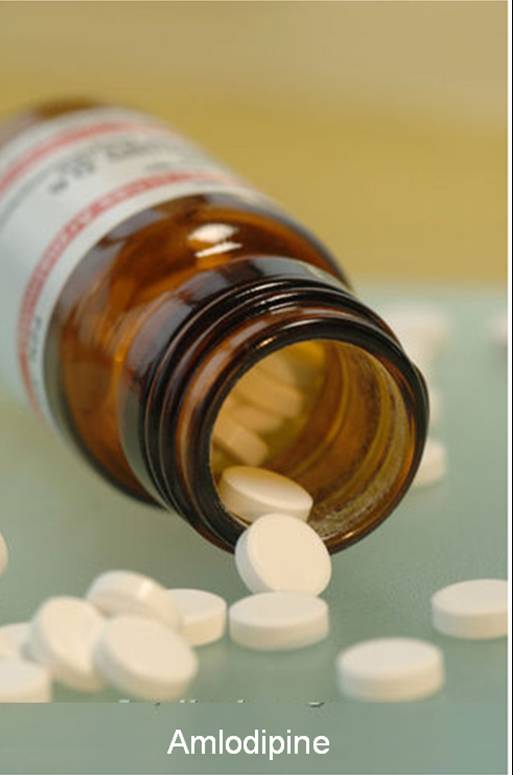
Amlodipine , the most popular anti hypertensive drug used world wide has an very important action on coronary blood flow.When nifedipine was introduced three decades ago it was known for it’s powerful anti anginal properties. Subsequently amlodipine was introduced with almost similar action. But over the years, amlodipine was projected primarily as anti hypertensive drug and gradually many of the physicians are made to believe it is a drug that should be used only if the blood pressure is high.The fear of reflex tachycardia in few was exaggerated.
In fact a cross section of today’s general physicians were queried about amlodipine and none of them acknowledged using this drug as an anti anginal drug. And few of them went to the extent of withdrawing amlodipine if it was used for the purpose of angina relief !
Why amlodipine’s anti anginal action is in doldrums ?
The single word answer is unfortunate! Marketing bias ,coupled with the fact that mainstream cardiology texts have ignored this aspect.
Final message
Amlodipine , can still be used as a antianginal drug especially in a patient who has angina with associated bradycardia , significant LV dysfunction . Some reserve amlodipine and nifedipine exclusively for vasospastic angina where beta blockers alone are theoretically contraindicated .
Left main coronary lesions are fairly common during routine coronary angiogram.These may be a critical or a innocuous lesion.The word “left main” triggers a sort of alarm reaction to many cath lab staff as well as the cardiologists and surgeon.Many times, these left main lesions are detected in patients with chronic stable angina who have stable symptoms. Left main disese has not been graded clearly in literature . Often it is perceived , any lesion in LM is serious.
There is an unwritten rule, rather a medical compulsion to take a patient with left main disease for emergency CABG ( Now some centres ,emergency PCI) .Some institutions make it a rule these patients are posted in the next available slot in the theatre.
The basic question we raise here is “Should we consider all left main disease as an emergency”?
Not really , especially when it occurs in a stable angina .One can wait , buy some time to fully evaluate and prepare the patient and may be the patient can be posted as an elective case. It is a well recognised fact that, CABG carries adverse outcome when done as an emergency procedure. This is primarily due to inadequate pre op work up and resultant complications. It is also well known , surgical back up team may not be available in full strength in odd hours .
This post is to convey the message , that left main is a serious disease but that doesn’t mean it should elicit a panic reaction and be taken as an ultra emergency . There has been many morbid and fatal outcomes in many hospitals due to this apparent pseudo emergency !
Note* 1.Left main disease during acute coronary syndrome is to be seen in different perspective.2.Some of the proximal LAD lesions are so tight and could be more significant than left main lesions.
Interventional cardiology as a speciality is in cross roads.
The number of coronary interventions (PCI) has increased exponentially world over. With increasing Cath labs and growing expertise , access to PCI has enormously increased even in underdeveloped countries. Meanwhile , public lack specific technical information about the appropriateness of these costly procedures. It is our duty to do self audit on this issue. .
In this context, the evaluation following a PCI should look beyond lumen oriented endpoints. Many land mark trials on DES report 3 months are 6 months angiographic outcome and better luminal appearance . Many tend to worry more about the status of the stent rather than the patient ! This is primarily because the device companies have repeatedly stressed the technical end points rather than clinical end points .
It is a well recognised fact that ,stented coronary artery never guarantees against future coronary events (ACS) either within the stent or away from it .It is an explict fact that , a patient after getting a coronary stent , especially a drug eluting stent carries a life long risk of acute stent obstruction and possibly SCD .This information is rarely passed on to the patient in and hence they are not able to take “learned consent”
It is true , one gets a gratifying feeling when opening up a obstructed artery , but we also need to answer this simple question What is it’s impact on patient’s life ?
COURAGE & OAT trials have put a break on the prevailing precondtioned behaviour in the labs, namely any obstruction must be relieved if technically feasible .
One should recall the Gruentzig’s legacy . Whaterver, we do inside a patient’s coronary artery must have some useful purpose . We should not use patient’s coronary artery to show our expertise and skills !
Dr.S.Venkatesan, Madras Medical College, Chennai, India
The contents of the this blog is being published as Kindle E book , as per the request of many of the readers. Every article will continue to be open source in this site. Again I shall reiterate the book format is not aimed at any commercial intent. It is only to facilitate learning in a single book format Here is the link to book https://amzn.in/d/euhL5vu
Click below to see who is watching this website live !
This site will never aim for profit. Still ,this donation link is added at the request of few visitors who wanted to contribute and of-course that will help make it sustainable .
Please Note
The author acknowledges all the queries posted by the readers and wishes to answer them .Due to logistic reasons only few could be responded. Inconvenience caused is regretted.






 Dr.S.Venkatesan MD