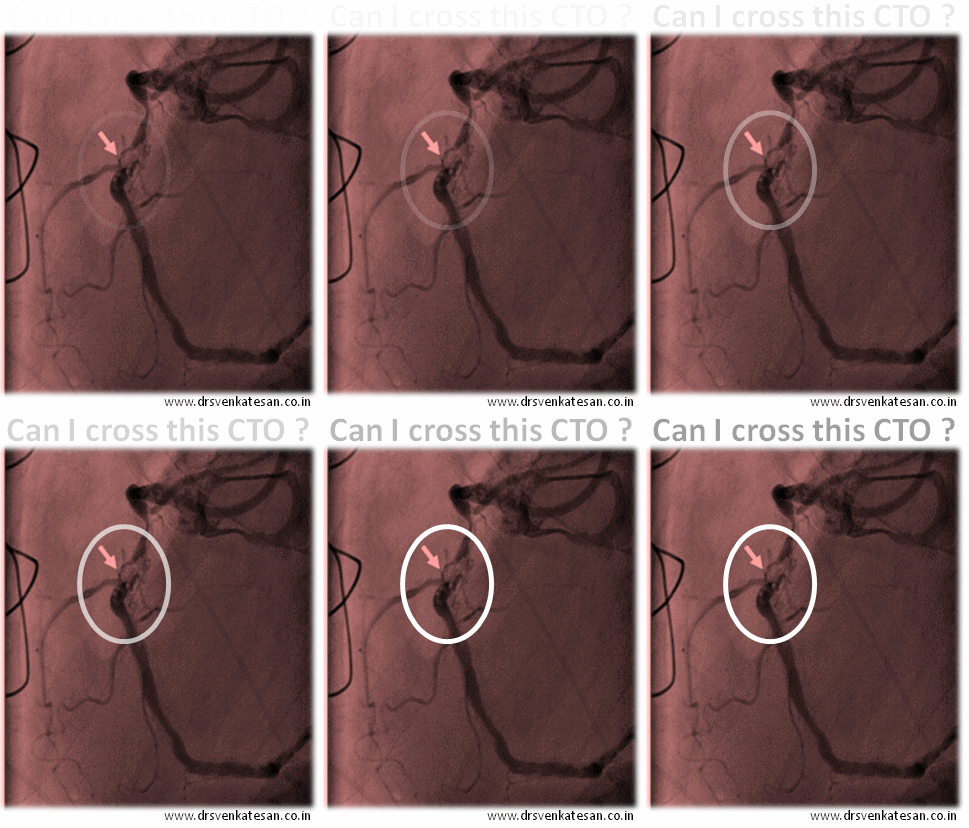
Feeds:
Posts
Comments

Posts Tagged ‘cto’

Open artery hypothesis

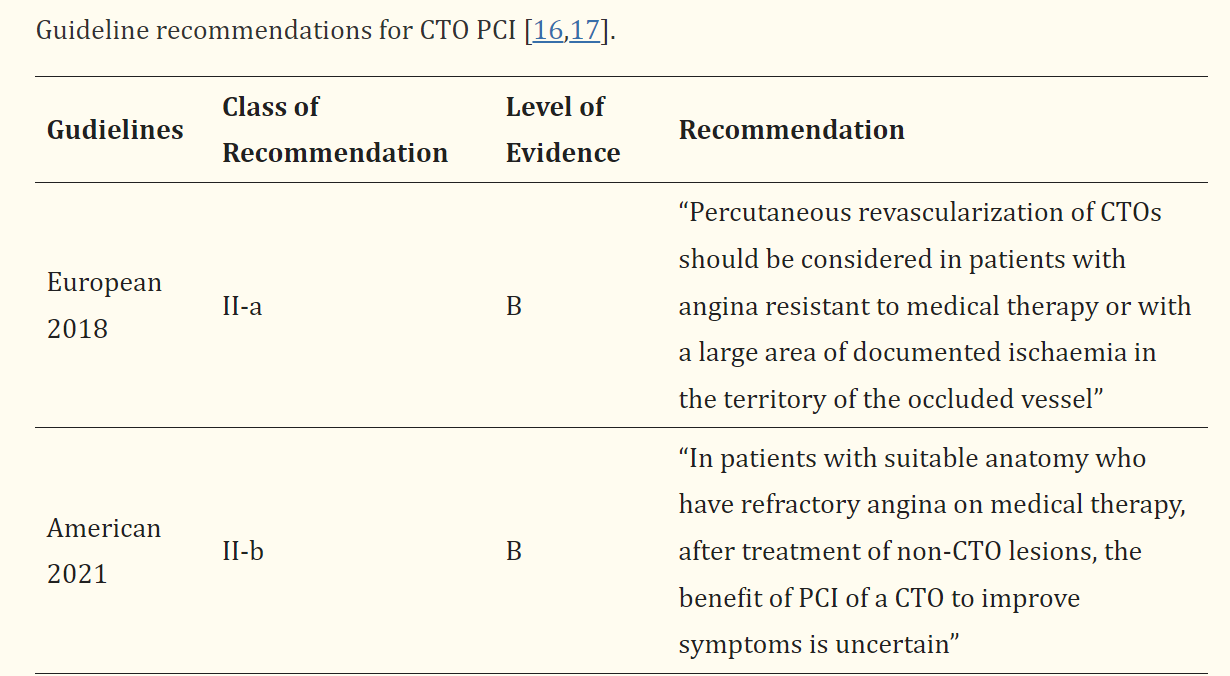
The open artery hypothesis was first postulated by Eugene Braunwald in 1993 (Ref 1). He suggested that restoring blood flow in an occluded coronary artery, has time independent benefits. beyond the acute phase of myocardial infarction. The proposal was, it could improve left ventricular function, reduce remodeling, and potentially decrease mortality by mechanisms beyond myocardial salvage, such as reduced ventricular arrhythmias and improved healing and also potential channels of future collaterals.It was a great concept and sounded very logical and got world wide attention.

Is it really valid now as a therapeutic concept in CCS ? If so, why we struggle to show benefits in asymptomatic CTOs ?

The fact that, opening a CTO is not bringing the expected benefits is one of the most intellectual questions in coronary physiology. Most of us are not keen to go deep into this question.

Could Opening a CTO Confer More Risk Than Leaving It Closed?

Now get ready for some nasty truths. There are plausible mechanisms by which opening a CTO might increase the risk of recurrent events compared to a stable, closed artery.

1.Procedural Risks:

CTO-PCI is technically complex, with risks including periprocedural myocardial infarction ,coronary perforation, stent thrombosis, restenosis, and contrast-induced nephropathy. In this context , it is worth noting the DECISION-CTO trial reported a 2-3% rate of major procedural complications, which could of offset benefits of PCI in asymptomatic patients.

2.Restored Flow and Plaque Instability:

Opening a CTO restores blood flow to a previously ischemic territory, but the downstream vessel may have unstable or vulnerable plaques that were previously “protected” by the occlusion. Sudden reperfusion could trigger microembolization, increasing the risk of acute coronary syndromes (ACS).

3 .Stent-Related Issues:

CTO-PCI often requires not only long procedure times, it often requires long stents , or multiple stents, increasing the risk of stent thrombosis compared to a naturally occluded artery that has adapted with collaterals. Dual antiplatelet therapy (DAPT) post-PCI introduces bleeding risks, which may outweigh benefits in asymptomatic patients.

4.Collateral Regression:

CTOs often develop robust collateral circulation, which may provide adequate perfusion to the myocardium. After successful PCI, collaterals may regress, leaving the myocardium dependent on the newly opened vessel. If restenosis or reocclusion occurs, this could lead to ischemia or infarction, potentially worse than the pre-PCI state fed by the caring collaterals.

5. Inflammatory Response:

PCI also induces an inflammatory response in the vessel wall, which may promote neointimal hyperplasia or accelerate atherosclerosis in the treated segment, increasing the risk of future events. All these, bring a curious and serious assumption close to reality. (That is, opening a CTO could, in some cases, disrupt a stable, quiescent milieu into, potentially un-predictable terrain and lead to more events than leaving the artery closed.)

Why CTO-PCI May Not Outperform Medical Therapy in Asymptomatic Patients

The lack of clear benefit from CTO-PCI in asymptomatic patients, as seen in trials like the Occluded Artery Trial (OAT) and DECISION-CTO, may partly stem from these risks. Key reasons include:

  • Stable Collaterals: In asymptomatic CTOs, well-developed collaterals may provide sufficient perfusion, reducing ischemia-driven events. Opening the artery may not add significant benefit but introduces procedural and stent-related risks.
  • Optimal Medical Therapy (OMT): Advances in OMT (e.g., statins, beta-blockers, SGLT2 inhibitors) have significantly reduced event rates in stable coronary artery disease (CAD), making it harder for PCI to show incremental benefit.
  • Lack of Ischemia or Viability: Most importantly ,In asymptomatic patients, the absence of significant ischemia or already viable myocardium. reduces the potential for PCI to improve outcomes.

Squeezing the landmark studies on CTOs for some data

While no study has explicitly tested whether closed arteries are better than open ones , several trials and analyses have explored whether CTO-PCI increases event rates compared to leaving the artery closed.

Occluded Artery Trial (OAT)

  • Design: Note : It randomized 2,166 patients with an occluded infarct-related artery (post-MI, >24 hours) to PCI or OMT. OAT is not a strict CTO study.
  • Findings: At 4 years, there was no significant difference in major adverse cardiac events (MACE: death, MI, or heart failure) between PCI (17.2%) and OMT (15.6%) However, there was a trend toward more nonfatal MIs in the PCI group (7.0% vs. 5.3%, ) suggesting a potential for increased events post-PCI, possibly due to procedural complications or restenosis.
  • Implication: This supports the idea that opening an occluded artery may not always be beneficial and could introduce risks.

DECISION-CTO Trial

  • Design: Randomized 834 patients with CTOs to PCI + OMT vs. OMT alone.
  • Findings: At 3 years, there was no difference in MACE (death, MI, stroke, or revascularization) between groups. However, periprocedural complications (e.g., perforation, tamponade) occurred in the PCI arm, and there was a non-significant trend toward higher restenosis-related events.
  • Implication: The trial suggests that PCI does not consistently outperform OMT and may introduce risks that offset benefits in asymptomatic patients.

EXPLORE Trial

  • Design: Randomized 304 patients with STEMI and a CTO in a non-infarct-related artery to CTO-PCI or no PCI.
  • Findings: No significant difference in left ventricular ejection fraction (LVEF) or MACE at 4 months. A subset analysis showed a trend toward more revascularization events in the PCI group, possibly due to restenosis or reocclusion.
  • Implication: Opening a CTO did not improve outcomes and may have increased event rates in some cases.

A provocative proposal

Thanks to the absolute democracy in science , I can propose a concept, however crazy it may appear. Yes, it is the Closed artery hypothesis . It can be defined as follows: In asymptomatic patients with chronic total occlusions and well-developed collaterals, leaving the occluded artery closed may result in fewer recurrent cardiovascular events than opening it via PCI, due to the stability of the collateralized system and the risks associated with intervention.

The closed artery hypothesis could turn out to be a compelling concept that merits further investigation

Reference

1.Kim CB, Braunwald E. Potential benefits of late reperfusion of infarcted myocardium. The open artery hypothesis. Circulation. 1993 Nov;88(5 Pt 1):2426-36. doi: 10.1161/01.cir.88.5.2426. PMID: 8222135.

2.Kimmelstiel CD, Salem DN. The Open-Artery Hypothesis: An Overview. J Thromb Thrombolysis. 1997;4(2):227-237. doi: 10.1023/a:1008842917403. PMID: 10639257.


Postamble

What makes coronary blood flow dynamics so fascinating ?

A cardiologist’s primary job is to open the artery when it is closed in an emergency . This rule goes topsy-turvy when it happens in a chronic fashion**. Think about the two contrasting behavior of the same myocardium. In Stemi, it bounces back to life with emergent opening of the artery, while in the other, myocardium simply doesn’t bother about total shut down and possibly enjoys* the protection conferred by a closed artery.

*Objection my Lord. The word enjoys is brutal .Are you aware CTOs can be responsible for Stemi too ? ** But, Is it not Intriguing to note, OAT study included primarily ACS population and it looks so true , even acutely occluded coronary artery need some rest from reperfusion Injury.
Read Full Post »

CTOs are opened primarily for four reasons

  • Angina which is refractory to drugs
  • Stress test positivity with or without angina
  • Anxiety of having a blocked coronary artery in a self educated patient
  • Cardiologist’s clandestine pride & pursuit*

* Personal experience included

Some evidence based observation

Most of the studies as on today do not give survival advantage of opening a CTO.(DECISION-CTO,EURO-CTO,EXPLORE,IMPACTOR)

Opening a CTO, for reasons other than angina (i.e. for relief of dyspnea or improving functional capacity) is largely conjectural and based on randomly accrued data backed by poor interpretation. The role of collateral circulation in CTO that can compensate even during exercise is well known at patient level data. This has become a difficult area of research because it involves spending more time with the patient, and hence not studied much. We are in the era of artificial intelligence ,virtual patients and statistical extrapolations that can steer the Kaplan Meyer curves in the desired direction.

Pure academicians shall follow the current guidelines. Surprise… surprise !, There is some good news. The normally aggressive American guidelines exercise much caution with a 2B punch. Still , even today it is weird to see hours of academic time is consumed in CTO Interventions in any interventional cardiology meets. (May be , they could get a breakthrough benefit , which I couldn’t appreciate)

.

CTO-PCI follow up

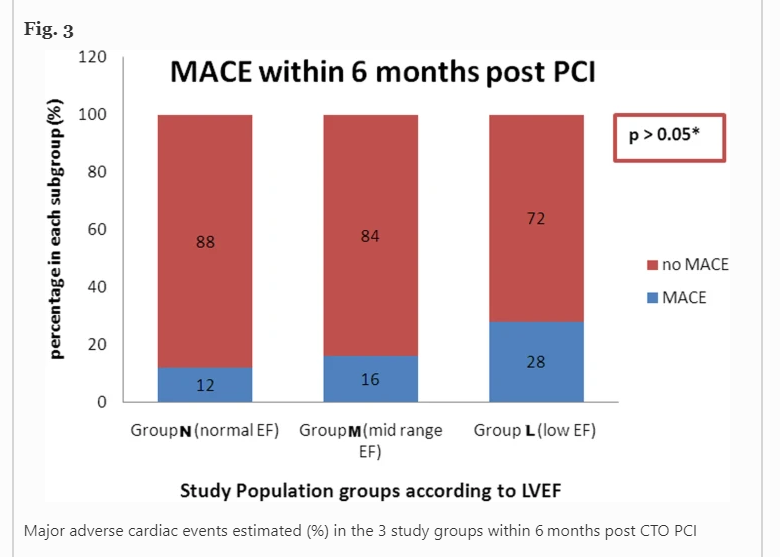
The incidence of MACE including ACS varies between 12-28% depending on LV function.(Ref 2) How about Conferring 12% risk of ACS in a person who has normal LV by doing CTO-PCI ? Still it continue to be a smart move for many of us ? This is exactly the reason experts are struggling to come to term with truths behind negativity of most published CTO trials.

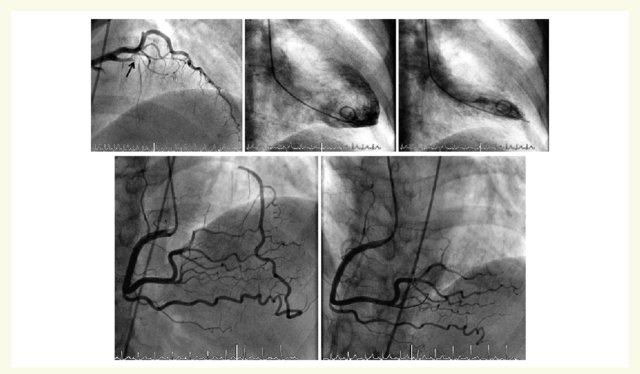
Image from Ref 2  Egypt Heart J 72, 28 (2020

Now, answer to the title question. What is the future risk of ACS in opening CTO related artery ?

Asymptomatic CTOs, with fair excercise capacity, should probably never be opened for the simple reason, a closed artery is naturally protected, against a future ACS at least in its territory

Final message

Currently, in the science of cardiac revascularization there is only evidence and it’s Interpretations, little patient level facts.

Reference

1. Hamzaraj K,Patient Selection and Clinical Indication for Chronic Total Occlusion Revascularization-A Workflow Focusing on Non-Invasive Cardiac Imaging. Life (Basel). 2022 Dec 20;13(1):4.)

2.El Awady, W.S., Samy, M., Al-Daydamony, M.M. et al. Periprocedural and clinical outcomes of percutaneous coronary intervention of chronic total occlusions in patients with low- and mid-range ejection fractions. Egypt Heart J 72, 28 (2020). https://doi.org/10.1186/s43044-020-00065-1

Post-amble

Living with a single coronary artery, is potentially a frightening scenario for the patient* which has to supply its own area and also, need to donate the occluded coronary artery . What will happen if a single donor (RCA/LCX) gets closed? One more remote risk in CTO is, acute collateral shutdown causing STEMI/NSTEMI. These statistically minuscule risks are well exploited by coronary caretakers. Meanwhile, there is little talk about the chances of CTO getting closed by itself after an apparently successful PCI. The consequences of anatomic and hemodynamic collapse of hitherto well flowing collaterals , after a CTO PCI will require a separate discussion.

*It is wiser to recall , left coronary artery is also single before bifurcating. Surviving an entire life span with a single10-20 mm tunnel called left main, rarely elicit the same fear in us.

Read Full Post »

           Practice of cardiology is simple as long we don’t dwell deep into coronary physiology.

One of my patients asked, why he was told his total occlusion in LAD appears safer now, which was subtotal a few months ago.I told him, it is indeed true. It is the fear of subtotal disease that’s prone to a fresh coronary event. In total occlusion, chances of that happening are less or nil.


How can you say 100% block is safe?  Is that always true?

No, it’s not always true. He was surprised when I said it is not 100 %, even 90% lesion can be safe if it’s not causing significant angina and responding to OMT. Of course, It is the morphology and stability of the lesion that will dictate* the outcome in the subtotal occlusion. If the lesion is stable, FFR is good >.8 (TMT is poor man’s FFR equivalent )  you can leave it as it is. Doing OCT /Virtual histology /NIR spectroscopy to define the vulnerability of plaque is neither practical nor desirable (Extreme academics is injurious to health) 

So it is not the degree of the block that’s going to matter, but the effects of that block on distal circulation that will decide the rules of the myocardial revascularisation game. But unfortunately, both you, (the patients) we (the cardiologist) are finding it so difficult to come to terms with this basic truth in spite of multiple guidelines. 


Meanwhile, CTO however makes it much easier to make a decision. One need not bother the content of CTO unless you plan an Intervention. I guess there is no FFR for CTO. Are we aware of any studies that have quantified antegrade flow across a 10% patent LAD and compare it with the Collateral flow in LAD in 100% CTO?

We have long glorified a concept of the open artery hypothesis. (Mainly in Post STEMI though) No one has dared to test and compare a hypothesis that a closed artery might still score over the open in at least some of the subsets of stable CAD. Such a study can never be ethically forbidden after all its a well-observed truth in the real world. 

Reference 

Trials on CTO  revascularisation DECISION CT (Not useful )   EURO-CTO  (May be useful) 


EURO CTO https://academic.oup.com/eurheartj/advance-article-abstract/doi/10.1093/eurheartj/ehy220/4990878?redirectedFrom=fulltext

Read Full Post »

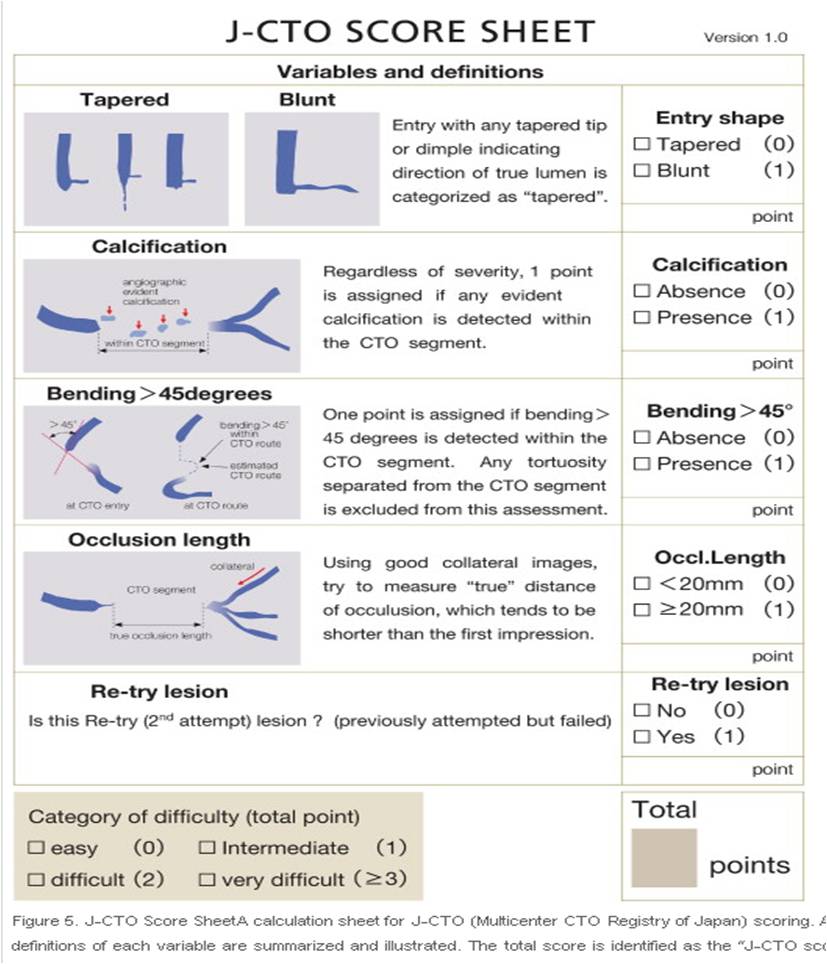
Japanese are the pioneers in CTO reopening .(I understand they do less   CABG surgeries  for  religious reasons ) CTO is the ultimate test for cardiologist patience .  it may  take  hours to open up a CTO (or even to abandon it .)  Here is a  success prediction tool from Japan .

cto score success in chronic total occlusion

j cto score  sheet

Source courtesy  : JACC: Cardiovascular Interventions Volume 4, Issue 2, February 2011

Reference

http://www.sciencedirect.com/science/article/pii/S193687981000912X

Read Full Post »

chronic total occlusion cto tips and tricks

Answer :

While each one of the above factor appears very much important  morphology of the lesion is the  clear winner  ( Which includes , the content of the lesion , hardness , micro channels , thickness of the proximal and distal caps, the length and   tortuosity   of the CTO     ( which is invisible ) the collateral status will ultimately determine the success)

It is becoming increasingly clear  cardiologist expertise is getting less and  less important .

Finally ,  it must  be told to our  younger generation of cardiologists , crossing a  CTO and deploying a stent  is not synonymous with success .It should result in long term sustained distal flow and make a significant impact on the patients symptoms (If at all any !) and survival.

Read Full Post »

Chronic total occlusion is the cardiologist’s  daymare .Here is an article that adds on to 1ooth technique to cross the chronic total occlusion within the coronary artery !

If only we succeed in  this  Arabin magic , in the cath lab we can open the doors of  all CTOs .

This technique is based on the principle  to push the hard plaque  into the adjacent side branch like a sliding door,   if the pateint has one !

The only isssue  with this  technique  could be the    “cave door”  may close again immediately  as it did for Alibaba    !

Reference

 http://www.ncbi.nlm.nih.gov/pubmed/20088015

http://www3.interscience.wiley.com/journal/122619470/abstract

Read Full Post »

  1. Do 64slice MDCT  in all patients who has  a coronary event and follow it up with catheter based CAG.
  2. Use liberally the new biochemical marker ,  serum  B-naturetic peptide (BNP) to diagnose cardiac failure in lieu of basal auscultation.
  3. Advice  cardiac resynchronisation therapy in all patients  who are in class 4 cardiac failure with a wide qrs complex .
  4. As it is may be considered a  crime to administer empirical  heparin, do ventilation perfusion scan in all cases with suspected pulmonary embolism.
  5. Do serial CPK MB and troponin levels in all patients with well  established  STEMI .
  6. Open up all occluded coronary arteries irrespective  of symptoms and muscle viability.
  7. Consider  ablation of pulmonary veins as an  initial strategy in  patients with recurrent idiopathic AF. If it is not feasible  atleast occlude their left atrial appendage with watch man  device.
  8. Never tell  your patients   the  truths  about the  diet , exercise &  lifestyle modification (That can  cure most of the early hypertension) . Instead encourage the  use of  newest ARBs  or even  try direct renin antoagonists   to treat all those patients in  stage 1 hypertension.
  9. Avoid regular heparin in acute coronary syndromes   as  it  is a disgrace to use it  in today’s world. Replace all prescription of heparin with  enoxaparine  or  still better ,  fondaparinux  whenever  possible.
  10. Finally never discharge  a  heftily  insured patient   until  he completes all the  cardiology investigations  that are available in your hospital  .

Coming soon :  10 more ways to  increase cost of cardiology care . . .beyond common man’s reach

Read Full Post »

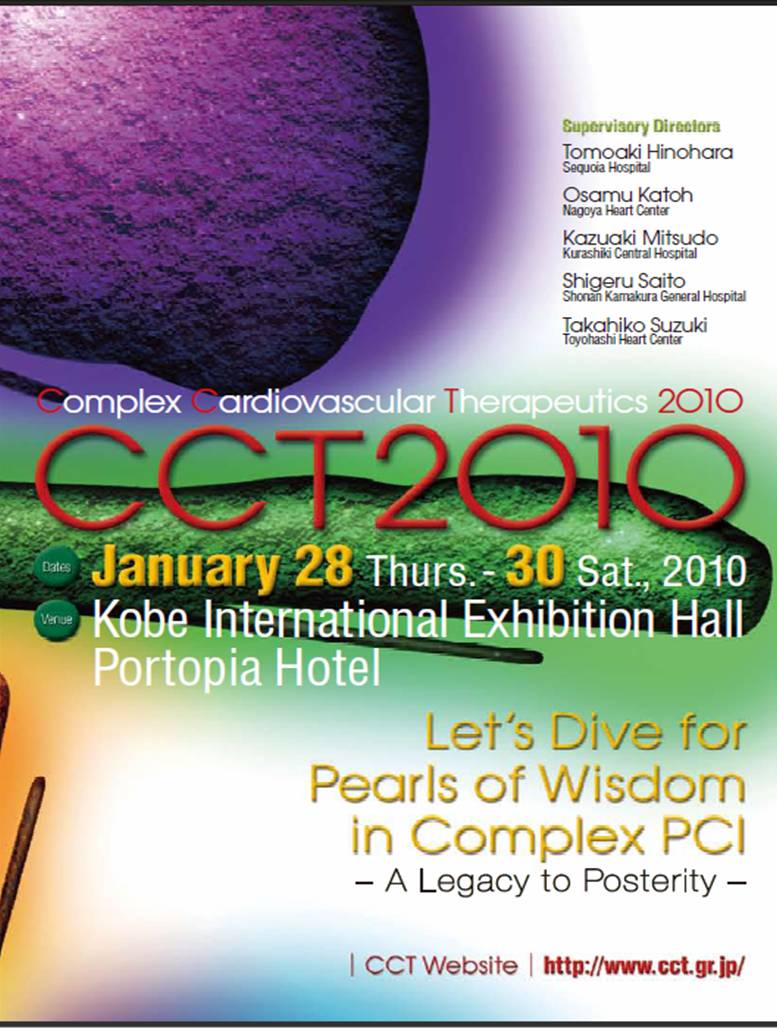
Annual workshops for interventional cardiologists has been  hugely popular events.They have  become the forum for all technological breakthroughs. Some of the popular ones are

Japanese have gained a unique place in  complex cardiovascular  therapeutics interventions especially in chronic occlusions.

Landmark article for CTO crossing

cto chronic total occlusion  Katoh coronary angiogram

www.cct.gr.jp/2003/wirehand/index.html

www.cct.gr.jp  cto japan

How to reach Japan ?

Click below

CCT2010

Read Full Post »

Total coronary artery occlusion is a common finding in CAD  especially in chronic stable angina. Normal coronary blood flow is 5 % of cardiac output  that amounts to 250-300ml/mt.At an average  heart rate of  70/mt  , each  beat  injects  about 5cc blood into the coronary circulation.This is shared between two coronary arteries.  This means , only few CC (2-3cc) of blood enters  each coronary artery with each cardiac cycle .

When one of coronary artery is totally occluded what happens to the coronary

blood flow ?

A.Total coronary blood flow  can be be  maintained   normal  at rest  as it  forms  only about 5% of cardiac output  (or it is only  slightly reduced )

B. It is believed , the unobstructed coronary artery  could receive the blood meant for the contralateral coronary artery. This  possibly explains the increased coronary artery diameter in the non obstructed artery.

C. It’s nature’s wish ,  that the  contralateral  coronary artery  shall share  50% of  it’s  blood through  collaterals if available.

D.If collaterals are not formed it , the unobstructed coronary  artery  may be over perfused with double the amount  of blood flow.

E. Some times , the collaterals steal  much more than what  the  obstructed coronary artery  deserves and make the feeding coronary artery ischemic. This is many times observed in  total RCA occlusion with well formed  collaterals  from LAD/LCX.

F.The collateral flow  in CTO also depend on whether flow is directed from LAD system to RCA or from RCA -LAD system. The LAD is better placed to assist RCA than vice versa.This is for two reasons.1.LAD blood flow is higher than RCA so it can share it.2.The driving pressure is more  from LAD -RCA , as RCA can receive  blood flow even during diastole .

F.During exertion , the coronary hemodynamics become further complex.The collateral’s are traditionally thought to be less than adequate during times of exercise.But it is more of a perception than solid scientific data.This rule  may be applicable in only certain group of patients. We know CTO patients with very good exercise tolerance who have documented collateral’s.

G.Collaterals can be either  visible or invisible by CAG. The strength of collateral circulation is not in it’s visibility but it’s capacity to dilate and  respond to neuro humoral mediators at times of  demand.  Currently  , there is lot to be desired  regarding  our knowledge about  the physiology  of visible collaterals , no need to  mention about invisible collaterals !

Final message

The above statements  are based  on logics and observations .

Is it not a  irony  in cardiac literature ,  where  thousands of articles  are coming out every month  to tackle  totally occluded coronary artery(CTOs) ,  there is  very little data   regarding the coronary hemodynamics in chronic total occlusion .   How  does a patient with CTO can manage a active life with only one functioning  coronary artery ?

Read Full Post »

Failed thrombolysis is an important clinical  issue  in STEMI   as  successful thrombolysis  occurs  only in  about 50-60%  of pateints . The typical criteria to define failed thrombolysis is  the  regression  of less than 50% of sum total( or maximum)  ST elevation in infarct leads.

So what do you do for these patients with failed thrombolysis ?

It depends upon the patient’s symptom, hemodynamic stability, LV dysfunction .

They  should  get one of the following .

  1. Conservative medical management  with /without CAG
  2. Repeat thrombolysis
  3. Rescue PCI
  4. CABG

Medical management is  thought to be  too inferior a  management,  many of the interventional cardiologists  do  not want to talk about . But  , there is  an important  group of patients (Not often addressed in cardiology literature)  who  technically fulfill the criteria  of failed thrombolysis  , but   still  very  comfortable , asymtomatic  and in  class 1. These patients ,  have  a strong option for continuing the conservative management .

Repeat thrombolysis does not have a consistent effect but can  be  tried in some  stable patients. CABG  can be a genuine option in few

Rescue PCI

This terminology  has become  the  glamorous one since the  catchy word  rescue is tagged in the title  itself. For most of the cardiac physicians ,  this has become the default treatment modality.This is an unfortunate perception . What  one should realise   here is  , we are  tying to rescue  the myocardium and  the patient ,   not the patient’s coronary artery !

Opening up a coronary obstruction is not synonymous with rescue .

For rescue PCI ,  to be effective it should be done within the same time window as that for thrombolysis (ie within 6 or at the most  12 hours) .This timing  is  of vital importance  for the simple reason , there will be nothing to rescue after 12 hours as most of the muscle  would be  dead. Reperfusing a dead myocardium has been shown to be hazardous in some ,  as it converts a simple  infarct into a hemorrhagic  infarct.This softens the core of the infarct and  carry a risk of rupture. Further,   doing a complex emergency  PCI  ,  in  a thrombotic milieu with   presumed  long term  benefit ,  is  a  perfect recipe for a potential  disaster.

While the above statement may be seen as pessimistic view , the optimistic cardiologist would vouch for the“Curious  open artery hypothesis” .This theory simply states , whatever be the status  of the distal myocardium ( dead or alive !)   opening an obstruction in the concerened coronary artery  will benefit the patient !

It is  huge surprise , this concept   continues to  be alive even after  repeatedly shot dead by number of very good clinical trials (TOAT, CTO limb of COURAGE etc ).

The REACT study (2004) concluded undisputed benefit of rescue PCI for failed thrombolysis  , only if the rescue was done  within  5-10 hours after the onset of symptoms.The mean time for  pain-to-rescue PCI was 414 minutes (6.5hours)

Final  message

It is fashionable to talk about time window for thrombolyis but not for PCI  .The time window for rescue PCI is an redundant issue  for many  cardiologists ! . But ,  the fact of the matter is ,  it is not . . .

The concept of time window in rescue PCI  , is as important as ,   that of  thrombolysis. Please , think twice or thrice !  if some body suggest you to do a rescue PCI in a stable patient  ,  12hours after the index event .

Important note : This rule   does not (  or need  not  ) apply for patients in cardiogenic shock  or patient ‘s with ongoing iscemia and angina.

Read Full Post »

Older Posts »