Feeds:
Posts
Comments

Posts Tagged ‘scai’

                                                    Drugs are poisons , whenever it is administered without valid purpose. it can enter human body  in many ways (Oral, intravenous, percutaneous etc ) And now we have another route namely intracoronary !

                                                   In quest for prevention of restenosis, many of the anti cancer drugs are now delivered directly inside the coronary arteries .These drugs are secreted  like a sustained release  tablet from the drug coated stents.These drugs are expected to prevent restenosis within the stented segment.But, after years of  intense debate and research  , we realised that ,  drugs  eluted from the stent  could damage the distal coronary vascular bed and coronary microcirculation.( And thus came the epidemic of acute stent thrombosis ! )

                                                The tender and sensitive coronary microvasculature  is constantly exposed to  these  powerful anticancer and immmunosuppresive  drugs .It is a great surprise , no body thought of  this dangerous drug -coronary artery interaction ! It required the genius of Renu virmani and others to point out this.

But still , the cardiology community by and large , fails to consider  this an important issue.This is proven by the fact, usage of DES is  still increasing  and used mainly as an off label indication.

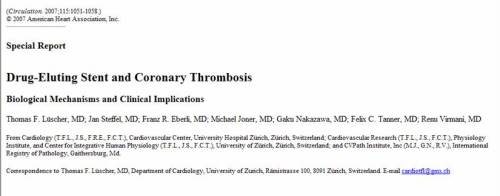
Read this land mark article from circulation

picture1

http://circ.ahajournals.org/cgi/content/full/115/8/1051?maxtoshow=&HITS=10&hits=10&RESULTFORMAT=1&author1=renu+virmani&andorexacttitle=and&andorexacttitleabs=and&andorexactfulltext=and&searchid=1&FIRSTINDEX=0&sortspec=relevance&fdate=1/1/2007&tdate=12/31/2007&resourcetype=HWCIT


Questions that need to be answered

  • What is the long term effects of drugging a coronary artery ?
  • Is no reflow or slow flow  more common after DES , because of the adverse drug reaction in the distal vascular bed ?
  • If a patient  with  DES  undergoes a CABG later what  would be  the impact of the  drug on the graft ? Will the functional vasodilatation   affected ?

Final message

                                  A drug , to get a legal clearance it has to undergo  hundreds of rigorous tests . Finally it is cleared for that  specific indication for which it is tested  .Just because a drug is cleared for one purpose ( Paclitaxel for malignancy ) it does not mean it is safe to use for any other  purpose for which it is deemed to be useful . Exactly the  opposite is happening   in the  the field of interventional cardiology . No body wondered to think what would be the effect of these drugs on the normal coronary endothelial cells and vasculature.Is it not a crime ,  without analysing this particular issue  , dozens of drug eluting stents have been released in the market . And now,  sounds of crying  foul is heard world wide !

Let us thank  , the so called negative forces in cardiology  for making this an  issue . In science ,  the watch dogs should bark  at  times of danger not wag the tail !

Read Full Post »

Contrary to popular belief ,great things happen only rarely in medicine . It takes  only  few  months of  training  or  workshops ,  for a  wrong or inappropriate concept  to  percolate  our  brains !  But , it  would require,   decades  of  time , energy  and  efforts  ,  for  correcting  that  wrongly  assimilated concept  in medicine !

Interventional cardiologists are  among the  rare breed of physicians,   who always believe in evidence !  But ,  the quality of  the  evidence  is rarely questioned  !  30 years of PCI  & 20 years of stenting has failed  our  common senses ! Fortunately , today,  we have 135 pages of new evidence ( Not really new , old evidence interpreted with  sound logic !)

Hats off to ACC and associates for bringing out this much belated appropriateness guidelines for the interventional cardiologists.

ACCF/SCAI/STS/AATS/AHA/ASNC 2009 Appropriateness Criteria for Coronary Revascularization

A Report of the American College of Cardiology Foundation Appropriateness

Criteria Task Force, Society for Cardiovascular Angiography and Interventions,

Society of Thoracic Surgeons, American Association for Thoracic Surgery,

American Heart Association, and the American Society of Nuclear Cardiology

Endorsed by the American Society of Echocardiography, the Heart Failure Society of America, and the

Society of Cardiovascular Computed Tomography

Click here to get guidelines

http://circ.ahajournals.org/cgi/reprint/CIRCULATIONAHA.108.191768v1.pdf

If you don’t have time to read the entire document (135 pages  )

Just remember only one point

Common sense,  more  often  prevails  over  evidence ,  in medicine . Apply it  , frequently  in your patients .They will reep the benefits !

Read Full Post »

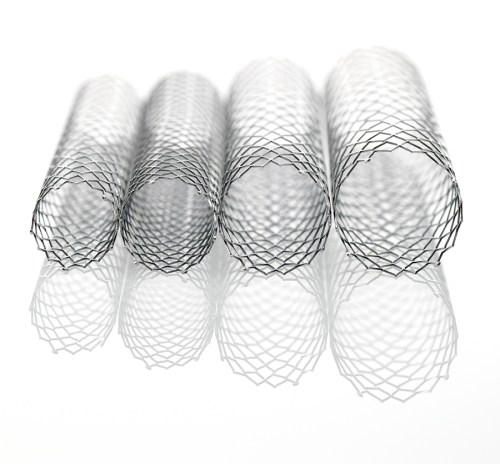
                                      One of the important principles of  post PCI care is,   we need  to be very careful  till the metal struts are fully endothelialised . This is of vital importance as improper endothelialisation  is a powerful trigger and nidus for a  imminent thrombosis and  acute coronary syndrome.

stent

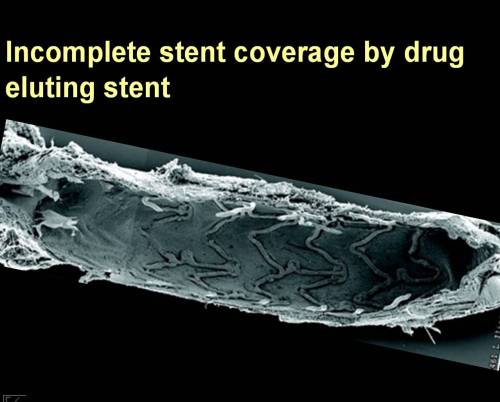
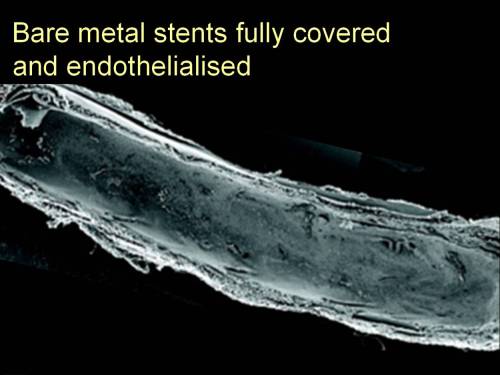
It is a billion dollor irony , the much hyped DES does exactly what we don’t want ! and still it’s  usage is  increasing world wide .  The drugs (Anti cancer agents)  which coat the DES   are the villains as it  prevents  the  metal struts  from being endothelialised  and  keep the metal surface  raw and vulnerable , while the  much maligned  bare metal stents allow  this natural endothelialisation  process  without any interruption ! So right now it is mandatory  to administer dual antiplatelet agents  life long( life of the stent !)   for the patients with DES.

 Just look , at the following image of  a stent in vitro at  30 days follow up

des

des-2

Read Full Post »


 Rescue thrombolysis in acute   myocardial   Infarction  

 *Venkatesan sangareddi ,Madras medical college,Chennai.India


   Back ground  Failed thrombolysisin acute myocardial infarction occurs in 30-40% of patients. The incidence of progressive pathological remodelling and cardiac failure is high in these patients. The approach to the patient with failed thrombolysis is generally considered to be catheter based and the outcome is not clear. Bleeding can be troublesome in patients, taken for interventional procedures in the immediate post thrombolytic state. The option of repeat thrombolysis has not been studied widely and is not popular among cardiologists.

Methods:We present our experience with six patients (Age 42-56, M-6, F-0) who were thrombolysed for failed first thrombolysis. All had anterior MI and had received either urokinse or streptokinase (between four to nine hours) after the onset of chest pain. All of them had persistent ST elevation, angina not responsive to maximal doses of IV NTG and beta blockers. The initial thrombolysis was deemed to have failed. Repeat thrombolysis with streptokinase (15 lakhs) was given between 16 and 24 th hour. The clinical outcome following the second thrombolysis was rewarding. It relieved the angina, ST segment elevation came down by 50% and coronary angiogram done at 2-4 weeks showed complete IRA patency in four out of six patients. The factors responsible for failed thrombolysis is complex and multifactorial. A logical explanation from the fundamentals of clinical pharmacology would suggest that a common cause of failure of any drug is due to a inadequate first dose.

Conclusion :We conclude that repeat (Rescue) thrombolysis can be an effective medical intervention for failed thrombolysis in AMI.

Personal perspective                  

                             Repeat  thrombolysis for failed ( initial ) thrombolysis  is still   considered  a  fantasy treatment  by most of the cardiologists !  The utility and efficacy of this modality of  treatment (Rescue thrombolyis ) , will never be known to humanity , as planning  such a  study , in a large population  would  promptly be  called unethical by the modern day cardiologists.

                     While a cathlab based cardiologist  take on the lesion head on with multiple attempts  , it is an irony , poor  thrombolytic agents are given only one shot  and if failed in the first attempt,  it is doomed to be a  failure for ever.Currently,  the incidence of  failed thromolysis could be up to a whooping 50 %  .There has not been much scientific initiative  to enhance the efficacy of these drugs.

                            Common sense and logic would suggest it  is the  inadequate first dose ,  improper delivery , pharmacokinetics is   the major cause of failure of action of  a drug in clinical therapeutics.

If the first  dose is not working ,  always think about another  incremental dose if found safe to administer.

Can we increase the dose of thrombolytic agents  as we like ? Will it not increase the bleeding risk to dangerous levels ?

This is a clinical trial  question.

  • In patients with prosthetic valve thrombosis and acute pulmonary embolism we have safety data of administering of  1 lakh units for an hour for up to 48 hours.

Can  the same regimen be tried in STEMI if the initial thrombolysis has  failed  and emergency intervention is not possible  ?

Logic would say yes . Unfortunately we can’t go with logic alone in medicine .We need scientific data ( with or without logic ! ).But now ,  as we realise common sense is also a integral part of therapeutics  It is called as level 3 evidence / expert consensus by AHA/ACC .

Applying  mind , to all relevant issues ,  continuous streptokinase infusion 1 lakh/hour for 24-48 hours in patients with failed thrombolysis can indeed be an option,  especially when the patient is sinking and  no immediate catheter based intervention  possible .This study question is open to all researchers , and may be tested in a scientific setting if feasible.

Read Full Post »

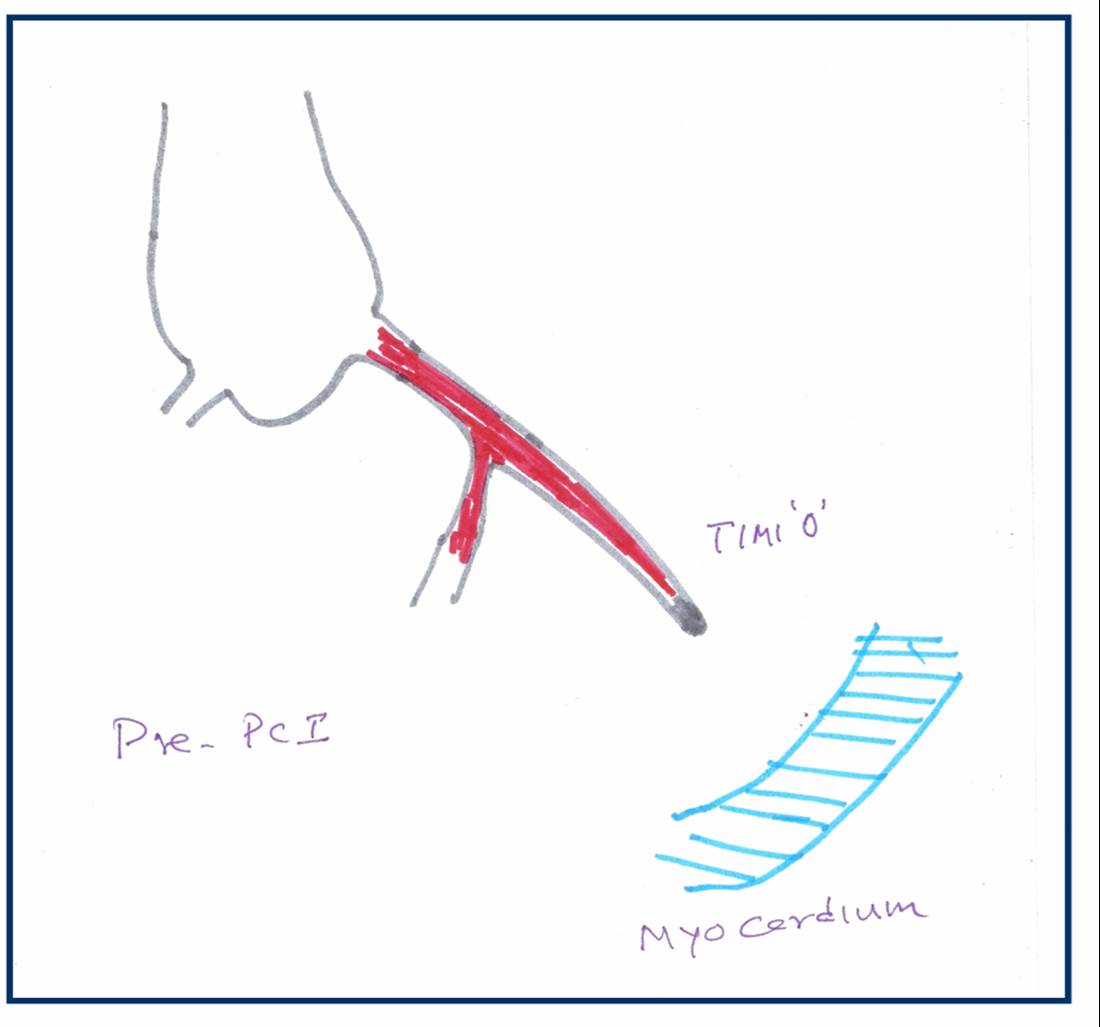
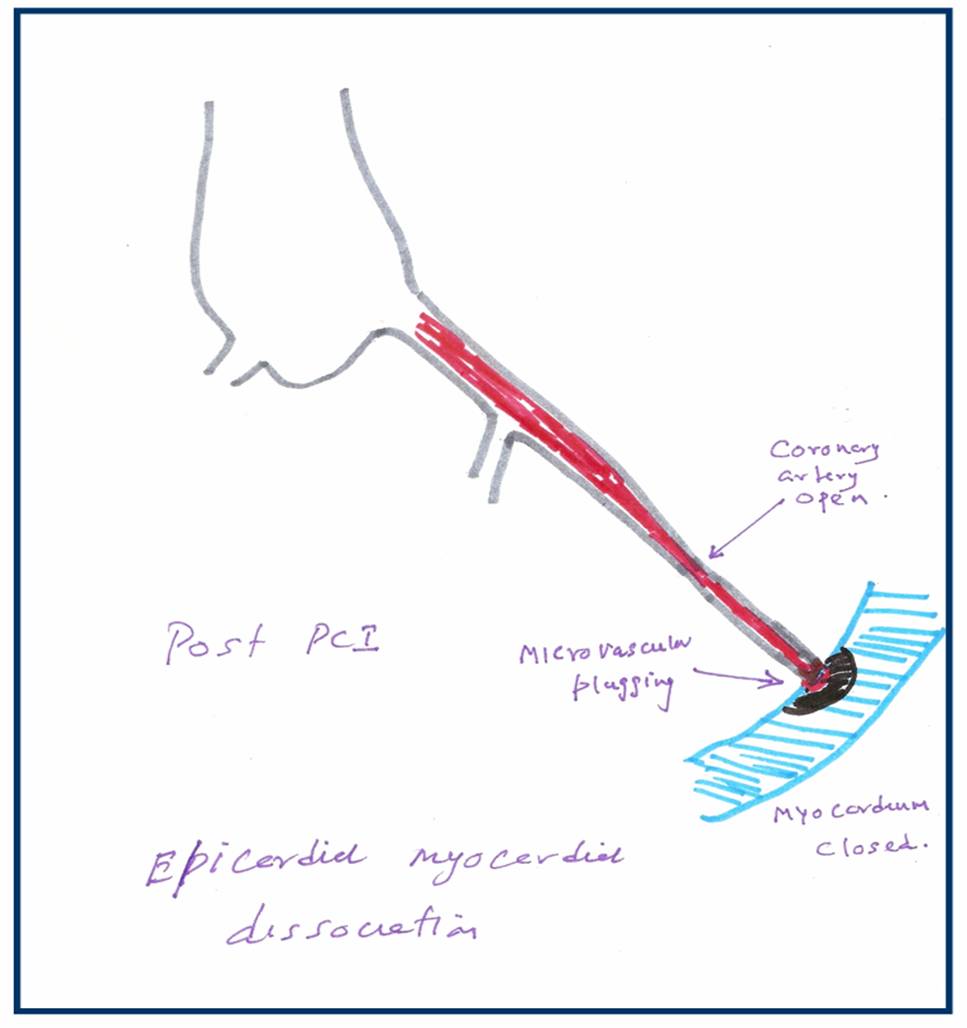
No reflow is the terminology used primarily in cath labs where, even  after a successful opening and stenting  of a coronary artery the coronary blood flow is not  restored to myocardium . The point to be emphazised here is blood do cross  successfully the site of  the obstruction but fails to enter the muscle segment  to which the coronary artery is supplying. So the paradoxical situation of artery  being open but the  myocardium is closed to receive  blood flow  happens . This is termed as no -reflow.  Actually it is a  misnomer , and  ideally it should be called “no flow” because  normal distal flow  does not  occur (After PCI)  in the first instance  to get interrupted  later on  and be labeled as  no re-flow.  .The only positive effect of PCI in these situation is blood flow would have improved by few centimeters ie till it reaches  but falls short of myocardium . In fact no reflow , can be termed as  glorified and concealed  terminology  for  PCI failure . It needs urgent action . No reflow is also called as myocardial epicardial dissociation.

Mechanism of no reflow.

Curious case of open coronary artery and closed myocardium !

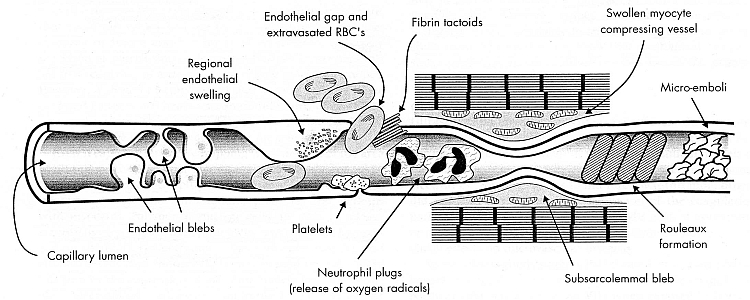
Coronary  microvascular plugging  is mainly  due to thrombus and atheromatous debri , myocardial  edema , microvascular spasm may also contribute.

Where can it occur ?

  • First described in cath lab, especially following primary angioplasty.
  • It can very  well happen following thrombolysis in STEMI.
  • Can occur in venous grafts.

How do you recognise no reflow?

In cath lab it will be self evident from the check angiogram. Some times it is less obvious and may  require, myocardial  blush score, TIMI frame  count, contrast echocardiography, PET scan etc. In post MI a very simple method to recognise this entity could be the observation of persistent ST elevation in ECG .

Treatment.

Extremely difficult. Almost every coronary vasodilator has been tried.(Nitrates, nicorandil, calcium blockers, etc).Success is less than 30%.  High pressure flushing with saline inside the coronary artery is advocated by some.Others believe it’s dangerous to do it. So prevention is the key. Avoid doing PCI in complex, thrombotic lesions. Use thrombus suction device like export catheter(Medtronic). Distal protective devices are double edged devices , useful only in experienced hands.

Unanswered question

What is the size of the particle (thrombotic and atheromatous  debri)  the   coronary microcirculation safely handle and push it into the coronary venous circulation and the coronary sinus for disposal ?

If we can lyse the thrombus into micro particles by some mechanism and make it traverse the coronary circulation this complication of microvascular  plugging can be treated and prevented .

What is the final message ?

  • No reflow is relatively common condition during emergency PCI done for ACS patients
  • More common in complex thrombotic lesions.
  • Can also  occur in STEMI
  • Treatment is often vexing . In fact the treatment of this condition is so difficult , it can be termed  almost synonymously with “Failed PCI” if flow is not restored.
  • Successful treatment of no- reflow  means not momentry restoration of  myocardial flow  by mechanical and pharmacological modalities ,but to maintain sustained myocardial   perfusion. This we realise, as patients who have had a no reflow during  a PCI, do not perform as well in the follow up  .
  • So prevention is the key.

Read Full Post »

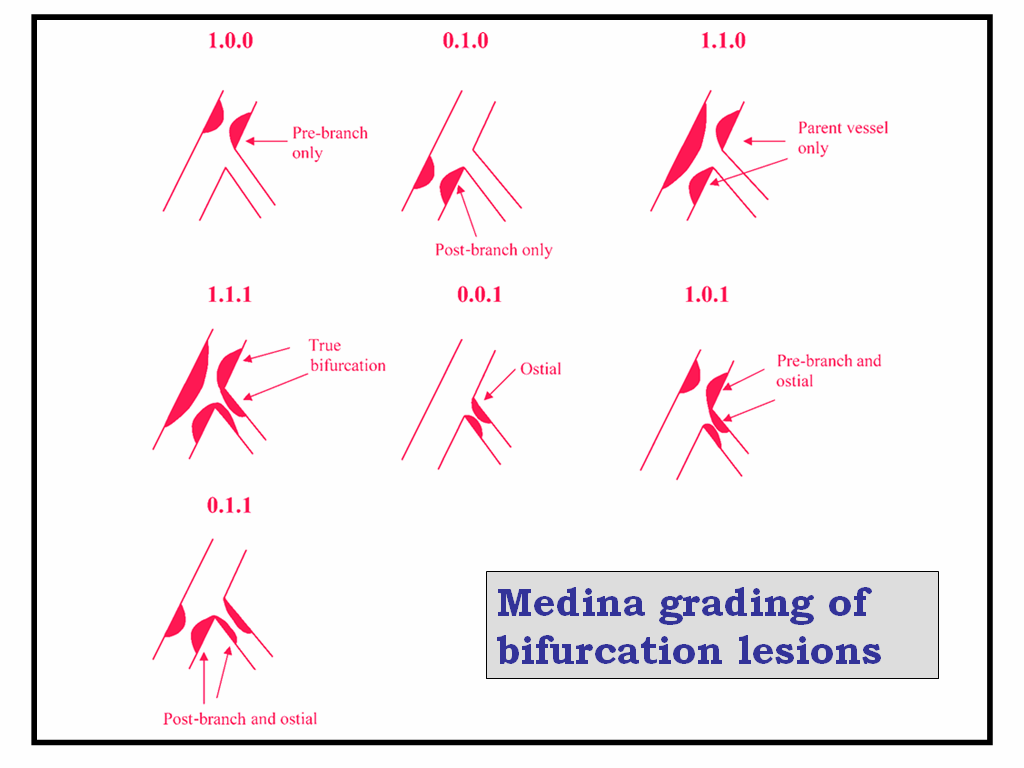
There are numerous complex grading for bifurcation lesions available.

The one proposed by Medina is simple and most useful.

In this grading three segments

  • Proximal main vessel
  • Distal main vessel
  • Branch vessel

Are given a code 0, and 1 if  lesion is present or absent .

This grading gives simple and fast method to label a bifurcatiuon lesion and to asssess the response to PCI. The only issue here is the individual  lesions are not graded , for example branch vessel ostium just involved about 20 % is not addressed . Further TIMI flow in these vessels may also be incorporated

How medina grading can be used to assess effectiveness of

angioplasty  ?

A patient with 1.1.1  after the treatment should revert back to 0.0.0.  if converted into 0.0.(.5) may indicate a residual side branch lesion  .5 shall indicate 50% residual lesion, .3 , 30% etc


What is the best management strategy for bifurcation lesions?

The topic has been discussed extensively for over a decade in various forums.

Though the lesions and intervention techniques  appear complex the basic concept is simple.

Following is the 8 point algorithm

1. Assess the bifurcation lesion accurately.

2. Apply the general rule and ask the first question whether PCI is neccessary at all ? if decided for PCI

3. Stent the main vessel.Protect the side branch.  

4. Dilate the side branch with a balloon.(KIss or through the struts) 

5. Very rarely,  if the side vessel is more significant and large  stent it and balloon the main vessel.

6. Use drug eluting stents with caution .

7. Resist the temptation of using two stents unless the situation demands and is absolutely required.

8. Never attempt to do bifurcation angioplasty during ACS as apart of primary angioplasty.( Unless you’re extremely competent, even then aim of primary PCI is to salvage myocarium quickly , not to provide TIMI 3 flow in non IRA vessel.)

Dr.S.Venkatesan.Madras medical college.Chennai.

Read Full Post »

                                   ACS   is the  most common cardiac emergency .  Management of STEMI is relatively straight forward.  The  only decision that to be taken is the  modality of reperfusion. (Primary PCI   or thrombolysis.) There is no need to risk stratify  STEMI on arrival. All STEMI patients are considered high risk on admission. Whereas  NSTEMI consists of  a heterogeneous  population. They need to be   triaged into low intermediate  or high risk categorizes on arrival.There is two management  approaches for unstable angina .All high risk UA should enter early invasive strategy . And low risk and intermediate risk group will get early conservative management. 

                                       The principle of management of  UA differ from STEMI in a fundamental way , as there is no issue of myocardial salvage in UA .The primary aim is to provide relief from pain and prevent an MI. So in the strict sense there is no time window in unstable angina /NSTEMI.


                                       But it is generally considered 48 hours is the time limit for an early invasive approach.If the patient has crossed this time there is apparently no great difference in outcome for conservative and invasive approach. 

Read Full Post »

« Newer Posts