Feeds:
Posts
Comments

Archive for the ‘Cardiology -Interventional -PCI’ Category

This is one of the wonderful corporate initiatives to assess the coronary angiogram and reporting . This calculator and teaching material was created by Boston scientific and Syntax study team . This  was used primarily during the  SYNTAX study.  This scoring system ,  though  appear  elaborate,  is a very  useful ,  objective way to assess coronary angiogram.

http://www.syntaxscore.com/calc/start.htm

Final message

It is encouraged to use this scoring system liberally . This will help us  to take more scientific decisions .

Read Full Post »


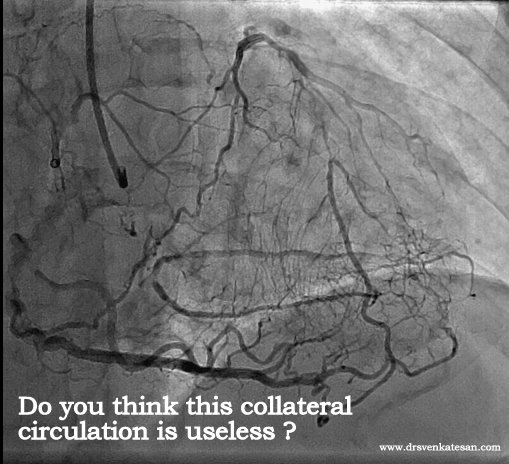
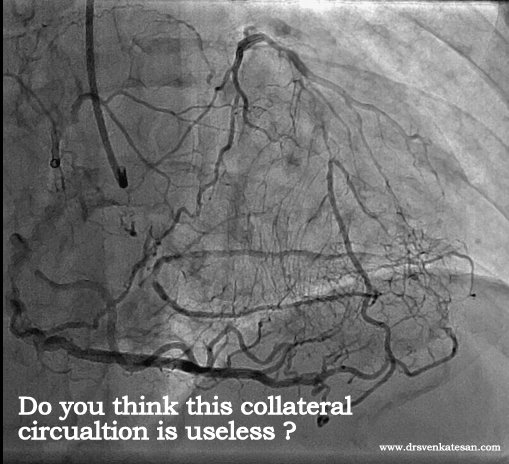
  • Coronary collateral circulation continues to be a poorly understood phenomenon.
  • It reduces the impact  of ischemia , salvage myocardium, keep it viable, and  can  even  be  life saving during a STEMI
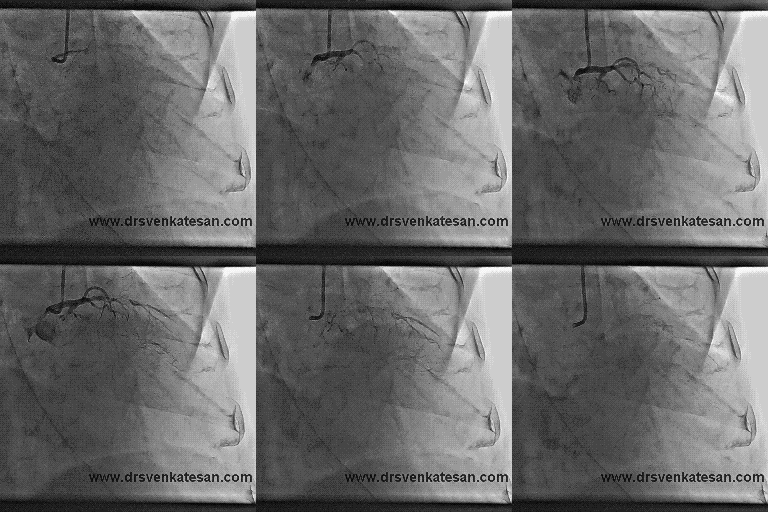
  • It can support either the same coronary artery  or the contra lateral coronary artery (Like the above patient )
  • The usefulness of  collaterals  at times of exertion is controversial .Most interventionists do not believe in  it . (Facts are opposite of course !)
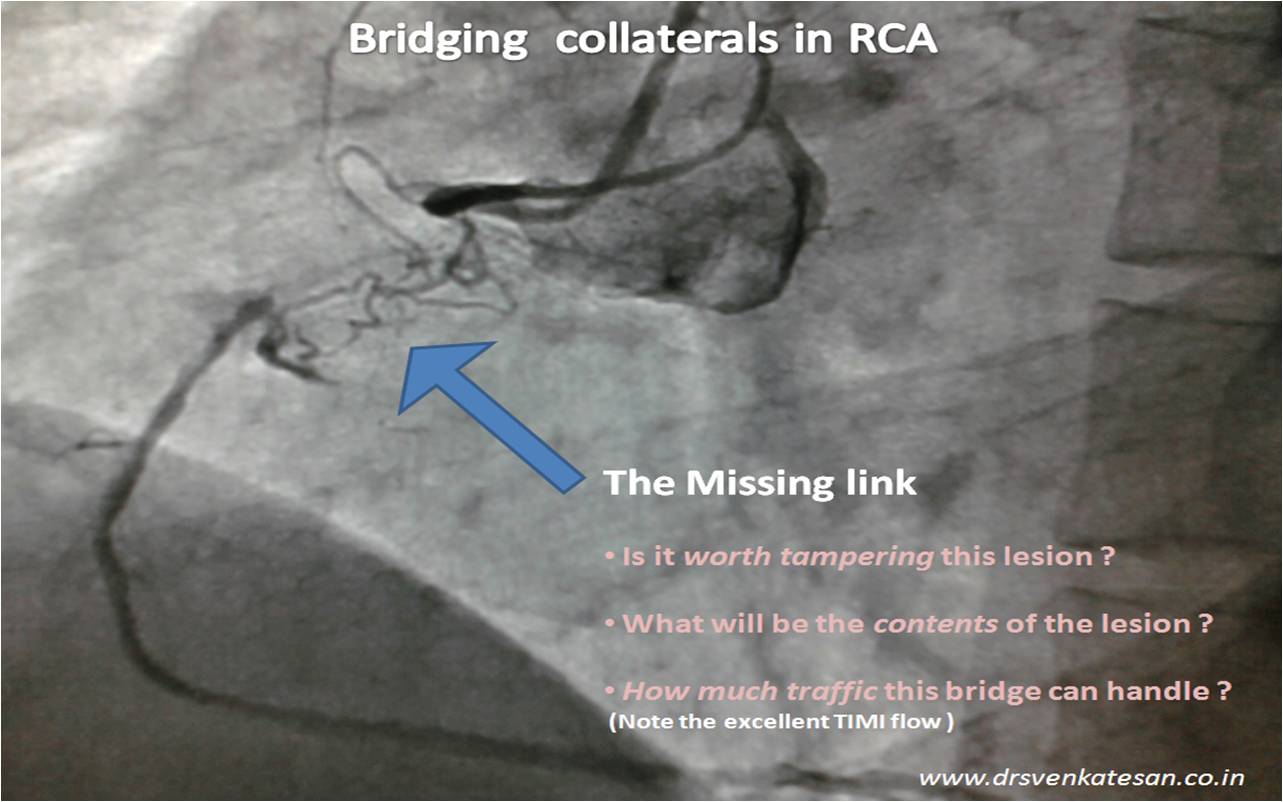
  • Bridging coronary  arterial collateral often indicate hardened total occlusion and success of  PCI is reduced

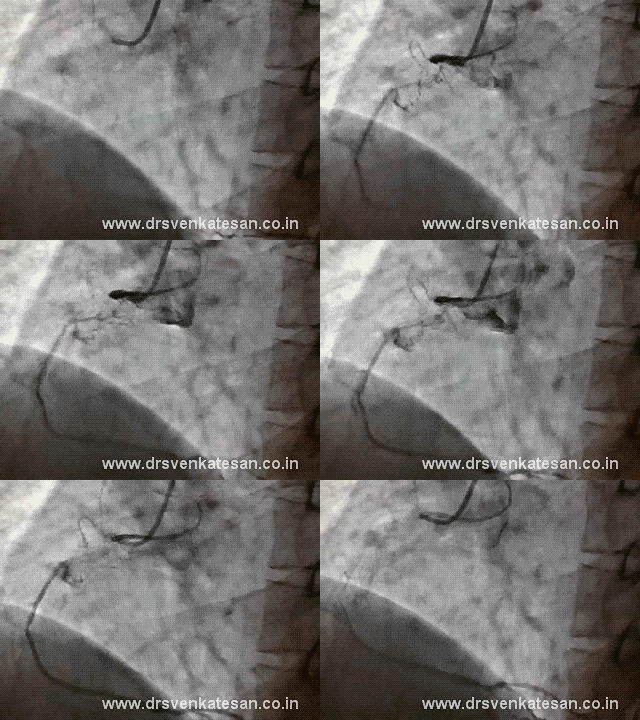
Here is  the  angiogram  which shows classical intra coronary bridging  collaterals.


Read Full Post »

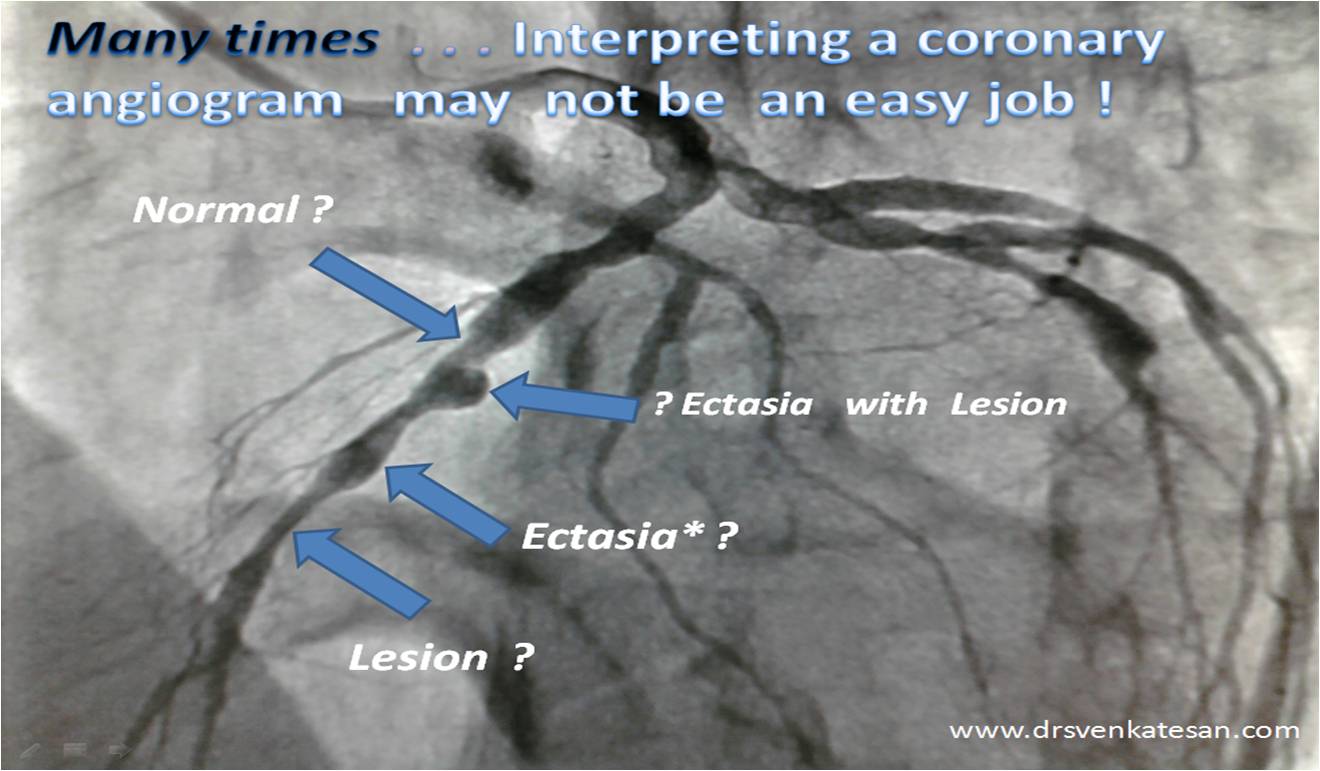
Coronary angiogram is probably the commonest invasive cardiac investigation done  world wide. It should run into millions every year. The procedure once thought dangerous  is now performed in few minutes in day care centers . While doing a  coronary angiogram  has become a minuscule task to most cardiologists, interpreting  it correctly remains a huge task !

Many  of the young cardiologists  get fascinated in   doing a coronary  angiogram and hardly spend enough time and mind in interpreting it.

Most of  us  succumb to the popular occulo  coronary reflex and describe a coronary  artery  lesions as though it is a  number game . It is very rarely we use the quantitative angiography tools available  in the machine. We need to meticulously  analyse   the length , morphology , distal flow, thrombus  , collaterals  etc . (FFR a new avatar tries to do some justice )

Calling   atherosclerois   by numbers alone,   such as  50 %  LAD  and 70 %  diagonal    20 % left main  is a huge  insult    to the deadly  & diffuse  disease process of atherosclerosis .We are paying the penalty for it .This is  the fundamental  flaw in our  reporting , that  makes every coronary intervention redundant.We must first  remember  we are looking at the lumen not the wall of coronary  artery.

Coronary  interventions is not about removing obstructions but  regression of  atherosclerosis  load within the coronary artery , prevent progression of it and ultimately reduced cardiac events and improve  survival. It  is obvious, it can not be achieved by wires and catheters alone . At best they can be adjuncts.One can  easily understand  why medical therapy  scores over wires  as it can take care of the overall disease process.

But still  ,  most* of  the  learned cardiology community  considers medical therapy   to be an adjunct to coronary intervention  , which  is  a  gross ignorance at it’s best !

* This is my perception. If  I am proven wrong ,  I am happy our patients  will be benefited !


Final message

Do not reduce  the importance of coronary angiogram   to a  farce  number game !

Do not get excited  by visualizing your patient’s  coronary artery. It may make you richer by few thousands. Realise , what you are seeing in a CAG is a fraction of coronary  circulation.

It is estimated coronary  circulation we visualize  daily in cath lab as epicardial coronary arteries  is less than  2  % of entire cross section of coronary  circulation.

This means we are 98 % blind ! ( or  2 % wise  !) .Spend  adequate  time and  mind to interpret it correctly  , so that logical and useful  ( non ) interventions can  be done .This only can make you a  true cardiac professional and your patients will respect you.


//

Read Full Post »

Coronary collateral circulation is probably the most poorly understood circulation than any other.This  is ignorance at it’s best ,  in spite of the life saving potential  of this circulation. A popular  (mis )perception is  coronary collaterals  can support only  resting blood flow and it would  struggle  to compensate at times of exertion. This is based on few case studies and not based on large , authentic scientific data.

Does this reasoning mean  , coronary  collaterals   can never / ever be complete  ?

If we believe so   . . .we are grossly underestimating the power of  nature .(In fact , mankind  was humiliated by the nature  time and again !)

Lessons  from  a unique patient we have  encountered.

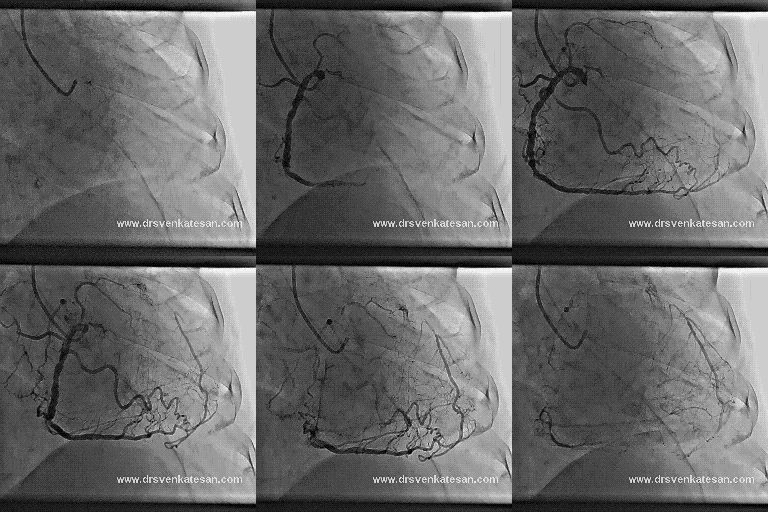
Here is an example of total LAD/LCX  occlusion with good collateral  from  RCA. He was having  stable  angina on medical  management . This patient  was not only  asymptomatic and was also negative for exercise  stress test at moderate work load .


There was an  intense debate about the management  when this angiogram was presented in the cath meeting .


  • Most of the cardiologists believed so !  But they had no answers why his stress test was negative.
  • The other argument for CABG was one can not allow a patient with a functionally single coronary  artery (RCA) However good is the collateral circulation.This at least  has some logic. not the first one !
  • One more suggestion was to quantitate  and map the real extent of ischemia by PET scanning and then decide about revascularisation.
  • One critical opinion was , since he was doing well with medical management what was the need to do coronary  angiogram at all ?

Any answers  . . .

He  ultimately went on to receive CABG (By popular opinion ) , but the point here is the collaterals were  good enough to support exertion.We have  documented quiet a few similar patients with collateral circulation supporting exercise.

What  happened to the collaterals  and (of course ) the patient after surgery ?

I will post you the  curious story soon   . . .

Final message

Coronary  collateral circulation , if well developed  can provide hemo-dynamically useful support even at times of exertion *

* The existing literature  is  biased against this concept. It generalizes all grades of collaterals into a single   entity. It is better  if we  spend more time to understand the nuances of coronary collateral circulation .

This is the  message from our observation. Do not ever believe whatever is published as facts in scientific literature. Observe, analyse , create your own inference ,  and concepts. Mainstream cardiologists would brand it unscientific  , Simply ignore it . Many times it is rewarding  to our patients.

Read Full Post »

Life cycle of PTCA : Let us hope it do not become extinct !

Does PTCA  , a great Innovation for mankind,  is facing a threat of  extinction ?

It seems so . . . the stents  are losing its shine  in most situations. A simple evidence  . . . for that . . . can  be found in answering the following question

What drives the extensive research in biodegradable stents now ?

The simple answer is , we are fed up with the metals inside the coronary  artery. We want to get rid of it !

Too much of knowledge , often blunts our senses . Our track record clearly  reveals this fact. We needed a major study INTERHEART to tell the world   that  ,exercise is good and tobacco is bad for heart  !  Now ,we forgot a  simplest solution for  getting rid of  metal inside the coronary artery ,  which  is  “not to implant  the stent”  at all ! (Instead we do billion dollar research for making  bio – absorbable stents ,  which in the first place may not be required in the majority !

Read the related article . Does POBA has a role now ? in my site

The only situation  , where PCI   may  withstand the test of time could be in ACS (Both in STEMI and high risk NSTEMI !) PCI is cosmetic in most of the chronic coronary syndromes .

Final message

Our fight against human atherosclerosis will have to be , by medical means .PCI at best will  provide  a supportive role in selected patient group. It requires lots of common sense  and   scientific ignorance to achieve this.   Risk reduction ,  prevention , optimal   medical therapy  will have to play a dominant role in the next few decades .  This is something similar to the environmental issues we face in protecting our planet .No amount of green industry  will protect  the earth . It requires better social and  behavioral  ethics  from  mankind   and their  rulers !

Read Full Post »

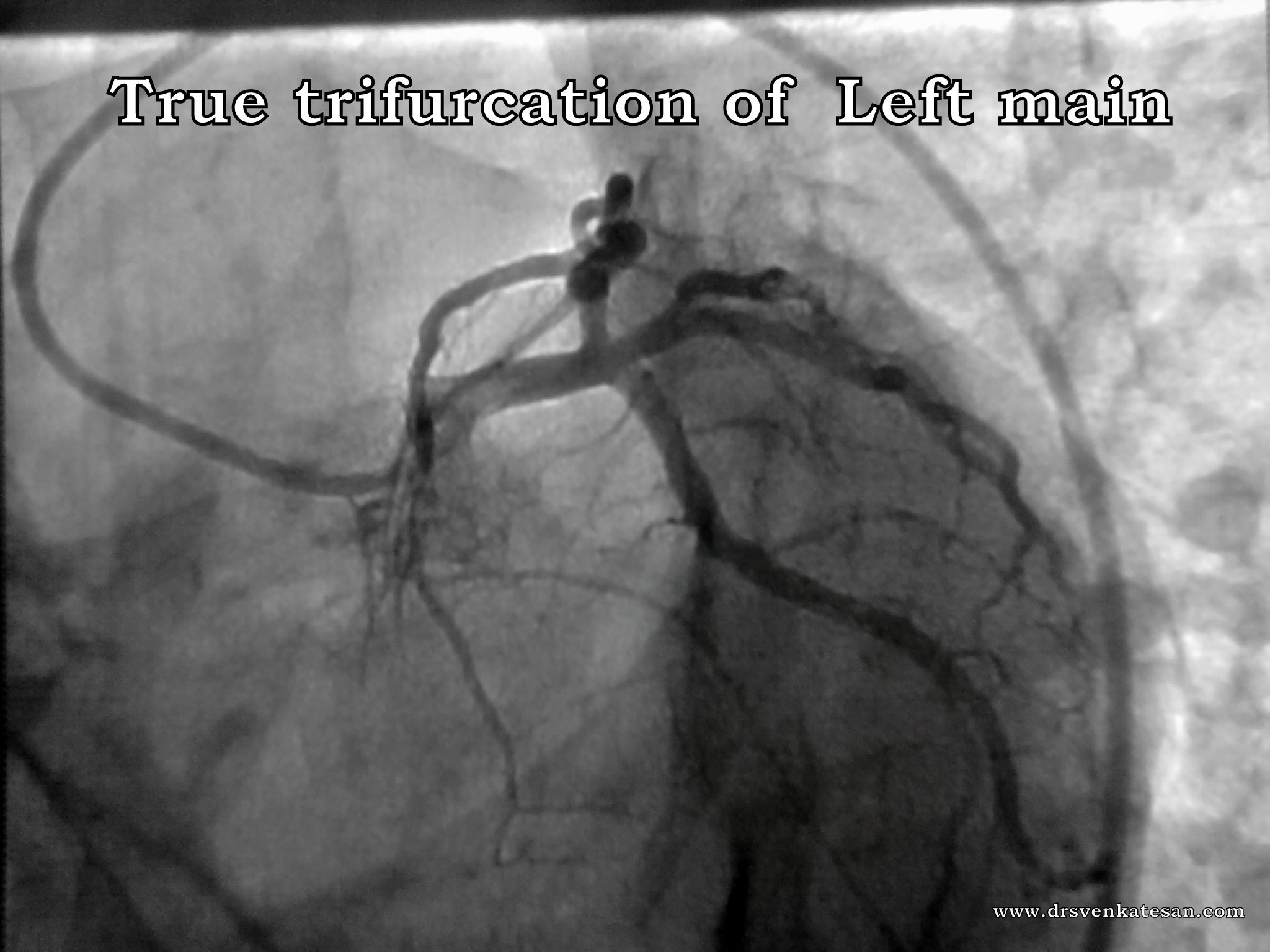
God creates life  with  infinite variation .  The  heart gets  bulk of its blood supply from the left coronary  artery , which divides into two  after a short course.  Bifurcation is the rule . Left main becomes  left circumflex and LAD  in about in 85-90 %.

Note the left main divides into 3 equal caliber vessels.very lucky to have such a branching pattern !Distal left main is unloaded by three large ostia . This makes stasis of blood in left main very unlikely . LAO caudal view


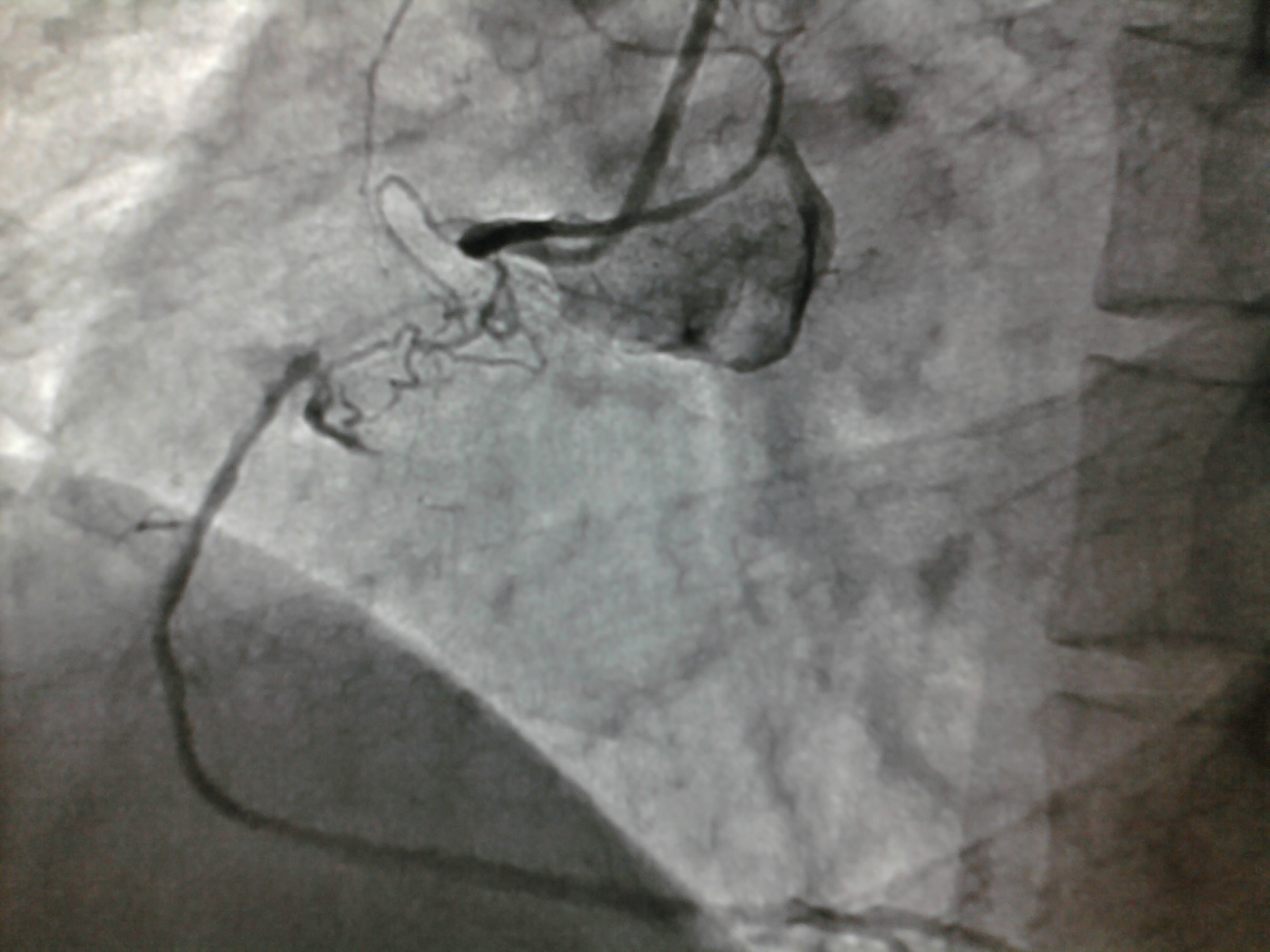
Note : The OMs are small in these people. RAO caudal view

Few men and women are blessed with three branches from LCA . The anatomical and physiological importance of this  branching pattern  is not well analysed in the literature .There  could be  few advantages  of having a trifurcation instead of  bifurcation .

  • Left main  impedence is less in trifurcation . This is due to the fact ,  left main empties into three distinct ostia rather than two.The combined  cross sectional area of these three ostia  confers a hydrodyamic advantage.
  • The importance of  any proximal LAD lesion in these patients , is negated  by  33 % as two other vessels are there to take care the  rest of the heart.
  • A large Ramus usually  supplies a vast area in the angle between LAD and LCX.  This   has a potential  to protect against ventricular  fibrillation during acute occlusion of LAD  by providing  electrical stability .

Disadvantage of trifurcation !

  • It is also a fact , people with a large Ramus may have a trade off by having a diminutive diagonal or OM .
  • A trifurcation with a small calibered  ramus  can often  be a disadvantage , as it is prone for atherosclerosis  since it  restricts  left main flow  by  venturi effect . (The first rule of atherosclerosis states its  prone at branching points)

* A related blog  elsewhere in my site . The explanations  offered above are based on personal observation .

https://drsvenkatesan.wordpress.com/2008/12/16/what-is-clinical-significance-of-ramus-intermedius-coronary-artery/

Read Full Post »

Nothing in this world is black and white. In fact,  most events are in between . The irony is , our brain  always wants to view  things in two distinct entities !

  • Success or failure
  • Beautiful or ugly
  • Good or bad
  • Win or lose,
  • Rich and poor etc . . . etc

So it is no  surprise !  cardiologists  also travel in the same boat !

They classified  the events after thrombolysis   into two dogmatic categories . Successful  thrombolysis or failed thrombolysis   . . .  as if no other event  can occur in between .

Traditionally 50% regression of ST segment is called successful .   What  about 30%  and 40 % ST regression ?

Further , there is an important caveat  in the timing,  as we  traditionally assess ,  90 minutes of thrombolysis .

Consider the following  situation  :

  1. Thrombolysis  is failed at 90 minutes, but  succeeds  at 120/180  minutes ?
  2. Is 50 % ST regression at 180 minutes is as bad  or as good as 25 % regression at 90 minutes ?
  3. How to label a patient who  is extremely comfortable in spite of ECG criteria of failed thrombolysis ?(Surprisingly this situation is fairly common !)

So, without finding answers to some critical questions , we have defined the success  of thrombolysis with  half baked data .

This is exactly , is the reason we  are unable to do a  valid  study on failed thrombolysis, rescue PCI etc .  We know the results of rescue PCI  ,  always  been  contradictory to the general logic !

It is estimated a substantial number of  STEMI patients following   thrombolysis   fall into a category of partially successful thrombolysis implying partial restoration of blood flow and salvage. The correct definition for  successful thrombolysis and reperfusion should be at the myocardial mass level , and  not at the level of coronary artery.The ECG  is the best available indicator.

Implication for having a  poor definition  of  failed thrombolysis

It is not a rare sight to wheel  in , a patient to a cath lab  with label of failed thrombolysis dangling in his neck  who is clinically  stable  (Has a less than required 50%  ST regression , but a definite, favorable trend with a 30 % ST regression  at 90 minutes  )

How many cardiologists will be willing to abort a CAG/PCI  , as a repeat ECG just  before puncturing  in the  cath lab reveals    successful  thrombolysis ? (little  delayed though !)

If only we have better methods to risk stratify patients following thrombolysis , we can avoid

  • Huge costs incurred
  • Expected and unexpected hazards of doing an emergency  intervention in an adequately salvaged STEMI
  • Hundreds of cardiology man hours can be saved  for better purposes .

Final message

Classifying thrombolyis into  success  or  failure  is a  skewed  way of looking  at this important  issue .

It is an irony ,  cardiologists often  triage LV dysfunction , valve disease , cardiac failure  etc  into 4  grades (  minimal  , mild , moderate or severe  ) . It is  still a mystery ,  why thrombolysis  is never graded  like that ,  and it is always considered as  all or none phenomenon !

There is a substantial number of patients  with partially successful ( or shall we call partially failed !) thrombolyis  .This group must be given adequate attention or inattention  . There  is a urgent need for a through review of how we look at  the post thrombolysis status  . It is better to use the newer imaging modalities like PET/MRI more  liberally to identify  exact sub group  of failed thrombolysis who will benefit form revascularisation .

Read Full Post »

It is   surprising  to find  many   similarities between  our heart and the car .Both essentially carry out  mechanical function.  One carries the  life , while the  other beats ,  breaths life !

  • The car is the status symbol  of modern life  , while the heart is a life by itself .
  • The car has a 4 stroke engine  , while the heart has only two strokes – systole and diastole !
  • The car pumps petrol  , the heart does it with blood.
  • The car can afford to take rest at night in your garage   but  , your heart doesn’t.
  • Car  can be replaced  by a fresh one every 5 -10 years your heart can’t be.
  • In India  , it is  mandatory   for  the cars  to be  insured for  about  10 Lakh  rupees , while  the   poor hearts of our country men  are not even insured for a  single pie  !
  • A dent in your  new  Toyota  can give us   sleep less nights for many days .  A bruised and battered heart with tobacco and cholesterol is rarely  bothered about .

When the silent  screams of the heart  are not respected and heard ,   there is no other option left  for  it ,  to register its protest  , except with  a  heart attack   .This  can either be a  SOS call  or  a  call from  Heaven !

Final  message

Remember ,  the   heart breathes  your life ,  your car  doesn’t .Heart is   million times glorious than your car.

It is foolish to compare  the heart with a car . But let us  at least  learn to respect it  . . . like  our car.

Heart service station

  • Authorized heart service centers are few . Insist on genuine spare parts. Good  service engineers are becoming a rare breed.
  • Remember  both defective spare parts   and  dysfunctional service  engineers  can ruin your heart.
  • Do not allow your heart to  be explored and dismantled for flimsy reasons.
  • Never hand over your heart to strangers.
  • Do not-self indulge in 64 slices  of  fancy   shooting  of  your heart . Resist the temptation.
  • Finally do not ever go for unscheduled  free heart  service camps . That is the beginning of  trouble for your heart.

Some hearts  may  servicing alright , but realise , you are the master of the  service station .

If only you respect it , it  rarely requires to be sent to a  garage (cath lab )


Simple life style, adequate activity,   nutritious diet,  peaceful   sleep,  good work ethics ,respect to  fellow citizens  ,good-bye to  anger , helping the poor, a joyous family life , and finally  . . . less  visits to your physician  !  These  make  a  perfect , sure shot  recipe  for  living   100  glorious years !

Read Full Post »

We know,  electrical deaths constitute the bulk of sudden cardiac deaths in MI.  Mechanical deaths due to pump failure, muscle rupture , valve leak , also cause significant deaths   .(Surprisingly many of the mechanical deaths   may also   fulfill  the sudden death criteria !)

Free wall rupture is  invariably a fatal event. Papillary  muscle trunk  rupture  leads to severe LVF and unless intervened sure to result in fatality.

The ones who tear their interventricular septum  are some what blessed ! Here ,  the rupture does not result in instant death as there is  no loss of blood ,   instead , there is an  volume over load of right ventricle  followed by the  left ventricle  after a  few beats. Hypotension is the  rule. Even though this is a major complication there is something about  VSR which makes it unique.

Sudden giving way of IVS has  a decompressing effect on the ailing left ventricle.This many times  bring a  temporary relief to LV and if the patient survives the first few hour he is likely to stabilise  further . In fact , sudden deaths within 24hours after the onset of VSR is an exception.This defect always gives the cardiologists and surgeon some time to plan the management. We need to use this time judiciously.

The natural history is delicate . Five themes are possible

  1. Very unstable Instant death( Fortunately a  rare theme )
  2. Unstable – Deteriorating further
  3. Unstable to Stable * fit for discharge even without surgery
  4. Stable from the onset and  continue to be stable* .
  5. Stable to Unstable (Probably the most common theme )

* Pleasant themes occasionally witnessed !)

Here is 55 year old women came with extensive anterior MI with lower septal rupture.(She belonged to type 3 of the above scheme)

)
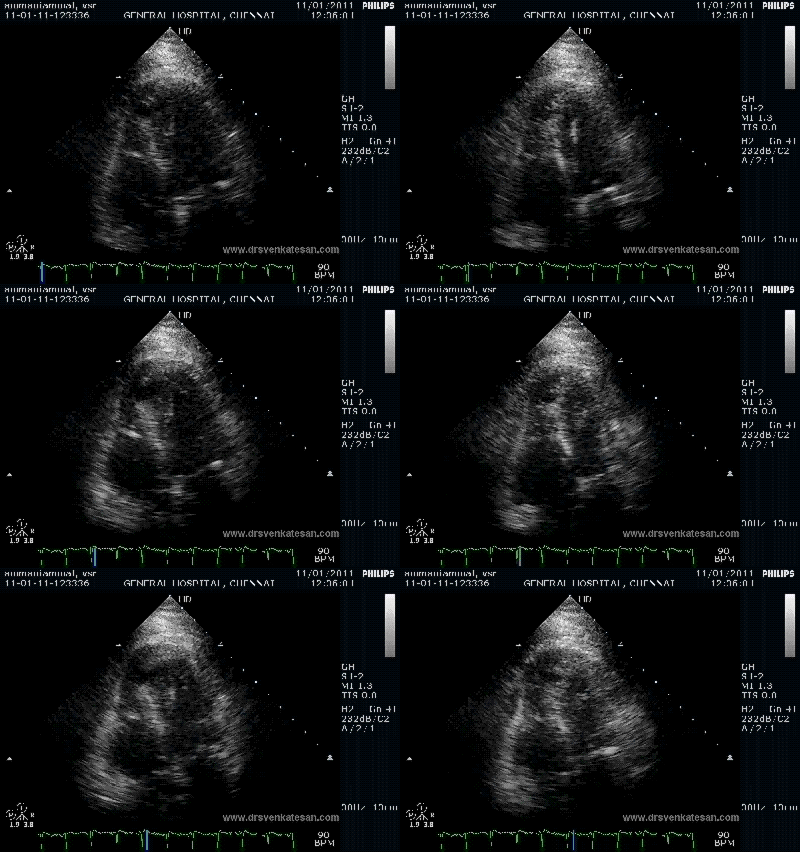
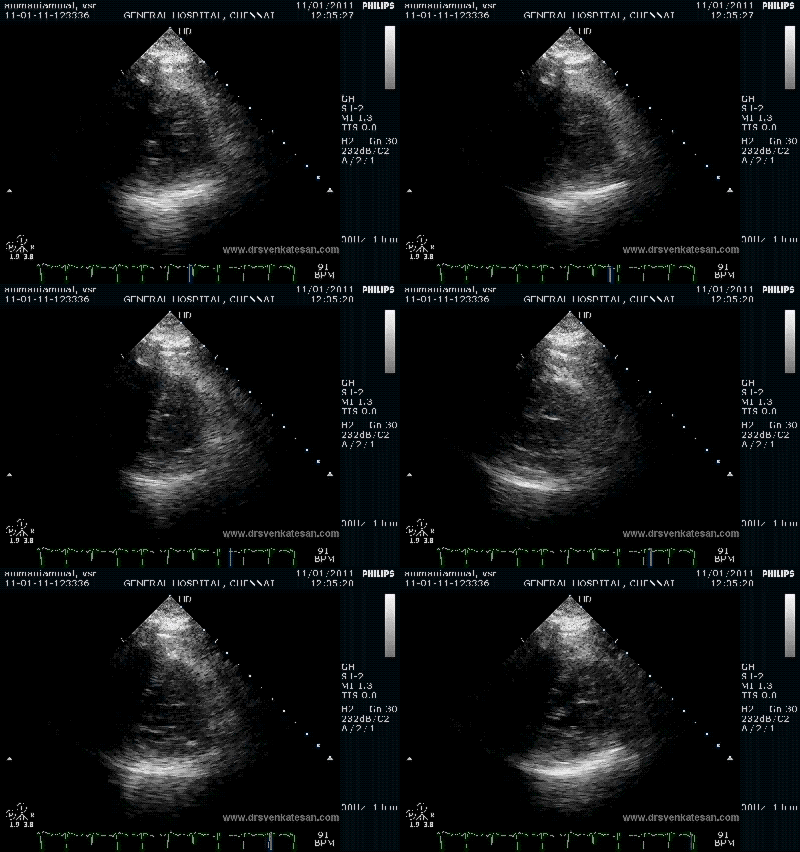
Note the septal rupture is visible even in 2D Echo
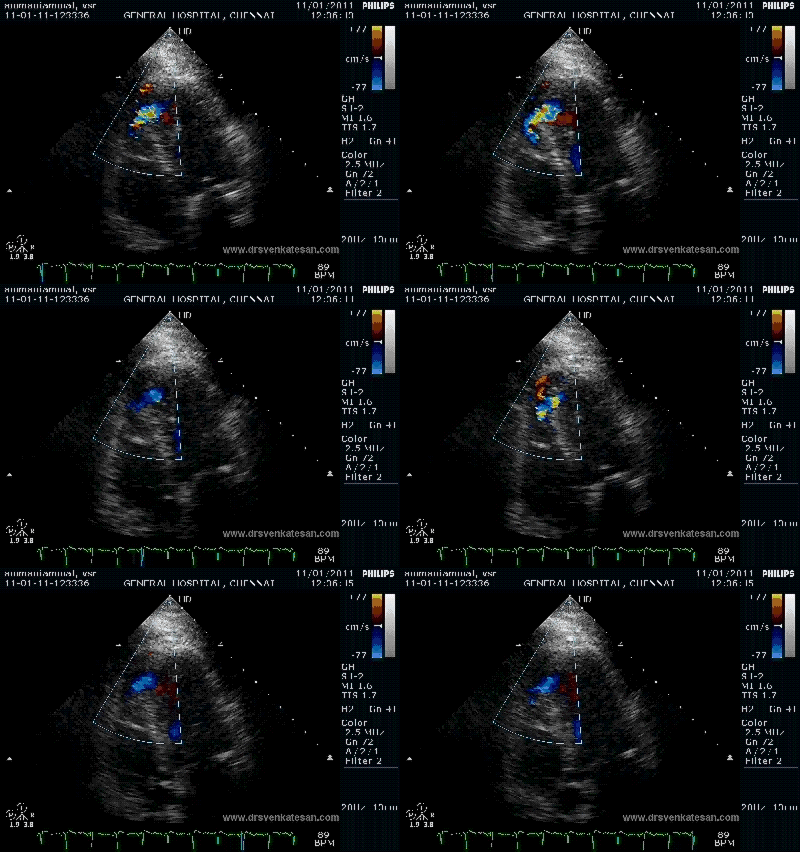
 

Color flow showing significant shunting from LV to RV.This shunt depends upon the LV contractile function, LVEDP and ofcourse the RV pressure
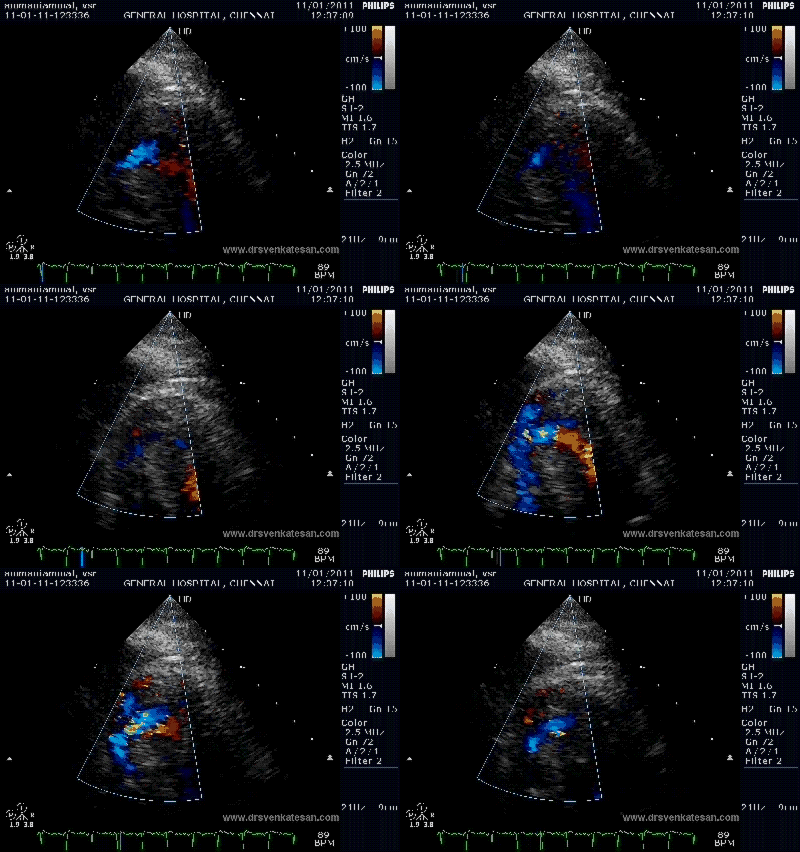
 

If there is severe RV dysfunction or bi ventricular dysfunction flow across the defect is inconspicuous.Brisk left to right shunting may be an indirect marker for good LV systolic function and absence of significant pulmonary hypertension.Both imply a better outcome.

The main determinant  of survival is the  underlying LV dysfunction and associated co morbidity(Renal function ) and complications .

Infero -posterior ruptures tend to be complex and  may have multiple irregular tracks  that makes it difficult to repair.

Investigations

Echo cardiogram is the mainstay .Serial echos should be done to assess the mechanical function and the progress of VSR.Hemodynamic monitoring may be done without injuring the patient .

Medical management

  • Often supportive , but  effective . Dobutamine infusion can maintain a life for few days.
  • Paradoxically , LV dysfunction and elevated LVEDP restricts volume overloading of VSD.
  • Associated MR, Arrhythmias  need to be taken care of .

Surgeons role

  • Very Vital.
  • Experience counts.(Individual as well as  Institutional )

Timing of surgery

Continues to be a controversy . Surgeons love to operate in a stable patient. But they need to realise , surgery is often needed to stabilise  many  patients. . The issue of tissue friability  is blown out of proportion in the literature .When a  life is  is at danger we can not worry about  friable tissues !

The rule of thumb could be

  • Operate as early as possible in unstable patient.
  • Post pone surgery in stable patient as late as possible ( Late here means . . .elective non emergent surgery )

Surgical options

  • Simple VSR closure without  knowing coronary anatomy
  • Simple VSR closure after knowing coronary anatomy
  • VSR closure with CABG ( total revascularization)
  • VSR closure with partial revascularization

In our experience  each of the above , has a role in a given patient depending upon the logistic , financial , social and even  the available expertise. (A good surgeon in bad Institution !)

Is coronary angiogram mandatory  before attempting to close VSR ?

Logically yes. If it is not available  just do not bother .  But, many times , when issue is saving lives , we can not afford to be too scientific , many lives have been saved by not following  such strict  protocols .A simple emergency  thoracotomy and closure of rupture site (Without even touching the LAD ) can be a distinct  and viable option in  a selected few .

Role of cardiologists

Contrary to the popular belief the role of cardiologists is minimal , except  to prepare  the patient and hand over to the surgeon.

Interventional approach to close  a VSR  is currently  be termed as an  adventurous option ! The VSRs  can assume unpredictable shapes  and the  tears can be multiple  in  different planes. The devices , catheters and  other hard ware are not specifically made to tackle these  issues  .An acquired VSR  should never be compared with congenital VSD.

Read Full Post »

Preamble

The much published TRANSFER -AMI study  has few important queries to ponder about.It was supposed to test the role of routine PCI following  thrombolysis. In other words it compared  rescue only strategy with routine strategy.The caveat is , even among  failed thrombolysis, the   rescue strategy has not convincingly proven superior to medical management  (if the time is lapsed ) as much of the damage is done .

In essence , Acute MI is  more about time management than drug or cath lab management

  1. Why the 67 % of  standard therapy cohort underwent PCI. Technically , you are supposed to transfer for rescue only if there is a  failed thrombolysis ?That is the standard approach , if  most of the cases are any way land up in cath lab , then you are trying to compare two similar groups .
  2. Why the rate of   failed thrombolyis with TNK-TPA in both arms not disclosed ?
  3. How can a 92% of study population be in class 1 Killip still considered to be high risk group ?
  4. Why the recurrent ischemia  was very vaguely  defined and still included and clubbed with primary end point along with deaths. If only recurrent ischemia was removed from primary end point . . .this study will straight away land in a regret bin.
  5. Why there were 6 additional deaths at 30 days  in routine early  PCI group ,  What was he cause of death ? Mind you these deaths have happened in a 92 %  Killip class  one cohort . Is it  not important ? The trend looks vitally   significant .We can not afford take refuge under a false  statistical roof .
  6. How many patients died or  developed MI  because of the early PCI in-spite of having  successful thrombolysis.This again could be vital . Complications during intervention  for a failed thrombolysis may be acceptable. While ,complications , when we try to  improve upon the already  successful thrombolysis is simply not acceptable .

Will the investigators share their experience ?

Finally

Why the title of the paper says it is about “Routine angioplasty” and  the conclusion emphasizes  it is indeed   “high risk subsets ofangioplasty” (While the study itself involves a 92 %  least risk Killip class 1 ) .  Why this double dose of confusion ?  (Is it deliberate  ! Which i think is unlikely )

NEJM please take note of this  . . .

All that glitters  are  not natural glitter . . .some are made to glitter !

Read Full Post »

« Newer Posts - Older Posts »