Feeds:
Posts
Comments

One of the greatest physicians of all time,  I have come across , is my professor Dr.T.K.Ganesan from Coimbatore medical college.

dr tkg professor t k ganesan coimbatore medical college

A man who taught  medicine to generations of doctors.During those years  (1980-1990) learning medicine was simple and also not contaminated  with  commerce . Dr TKG made it so lively .He infused passion in the subject.

dr k a sambasivam dr s venkatesan  dr tkg dr t k ganesan coimbatore medical college

Myself and Dr K.A.Sambasivam (Son in law of DrTKG at his residence in Coimbatore )

* Dr K.A .Sambasivam  was my class mate during both my under and post graduation . He is now a senior Interventional cardiologist in GKNM Hospital Coimbatore .

This post will be updated.

During acute  ischemia the most immediate requirement for the heart is

A.Blood

B.Oxygen

C.Glucose

D.High energy ATPs

E.Free fatty acid

Answer : A  will be considered  by most , as  correct answer .  A can provide B to E . But it is also a fact heart can survive without  A.  

Myocardium requires energy first  ! it does not in fact bother about from where it is coming at the time of crises.It may be right if you restore the coronary blood flow all other components (B-E) are made available to the heart .

The heart can survive off  the coronary circulation with only chemical support during cardiac surgery and also a during  heart transplantation  explanted  donor heart survives on a ice box during transit and till it is transplanted into the recipient heart

But ironically we spend much of our energy and efforts in restoring blood flow.One need to spare a thought about the quality of blood also . This is especially important  in the setting of ischmia  where a  metabolic centric approach will add further benefit.

Energy based approach to ischemia : Is it relevent ?

Heart is a fascinating  mechano biological organ  pumping   millions of  gallons of blood  .Fuel for this is self generated  on a continuous basis  from the circulation blood .So  the key to human survival is the coronary blood flow that supplies the fuel and nutrients to the heart. When this key supply line is under threat  during  acute coronary syndrome cardiologist have  the only option of restoring the compromised blood supply by any means . But during chronic ischemia there is  no  urgency. There has always been an option of enriching the  blood with energisers like ATPs,  glucose,  hemoglobin etc .Providing energy support to the failing heart has never captured the imagination of cardiac physicians until recently.Still most are skeptical about  the concept of biochemical ischemia.

Click to download full PPT presentation

Metabolic manipulation of  CAD( Will be available shortly)

Humans have roughly 5 to 6 liters of blood at any given time in their  body  . Out of  this*

50% (2500ml)  is located in the systemic venous compartment.
18% is within the pulmonary circulation participating in the vital oxygenation
12% (500-600ml) is within the cardiac chambers.
8%  is in the arterial tree of  the body.
5%  is  within the  capillaries.
2%  is in the aorta.
* Source : Best & Taylor Physiological basis of  medical practice 1966, 8th edition

What is the implication of this predominantly venous distribution of blood  at rest ?

  • A competent venous tone is essential  for the human beings to maintain the erect posture.
  • Bulk of the cause of syncope in humans is due to peripheral  mechanism like loss of vascular tone and resultant venous pooling.
  • The  concept of venous reservoir is so important in emergency situations like  hypotension  as  simple elevation of legs  is equivalent to  infusing 500 -800 ml of intravenous saline .
  • Similarly during acute left ventricular failure trunk elevation and legs dangling down can reduce the pulmonary congestion very significantly and reduce pulmonary capillary wedge pressure (LVEDP)

 Autonomic dysfunction and venous insufficiency

 Autonomic dysfunction and resultant  orthostatic hypotension is directly related  to venous reservoir dysfunction.Increasing effective circulatory volume by elastic stockings or administration of mineralocorticosteroids like fludrocortisone (.5mg/day ) can be useful in this condition

                             Glucose is the molecule of life   ,burnt every second inside the body at the energy store house called mitochondria. Heart , the most active organ in the body  gets  bulk  of it’s energy supply  from fatty acids,  glucose and a little from keto acids. Under anerobic conditions this energy substrates shifts towards glucose .

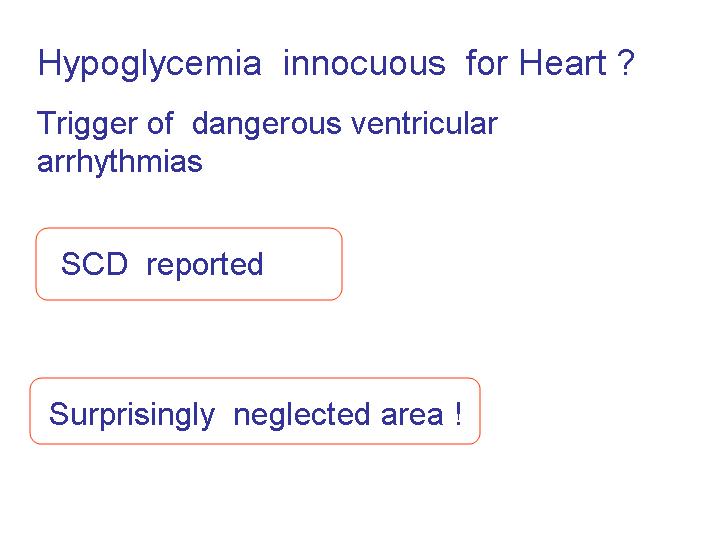
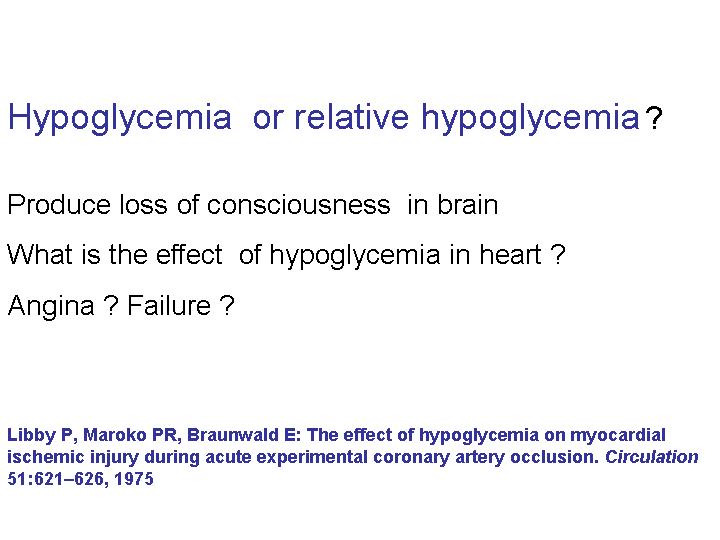
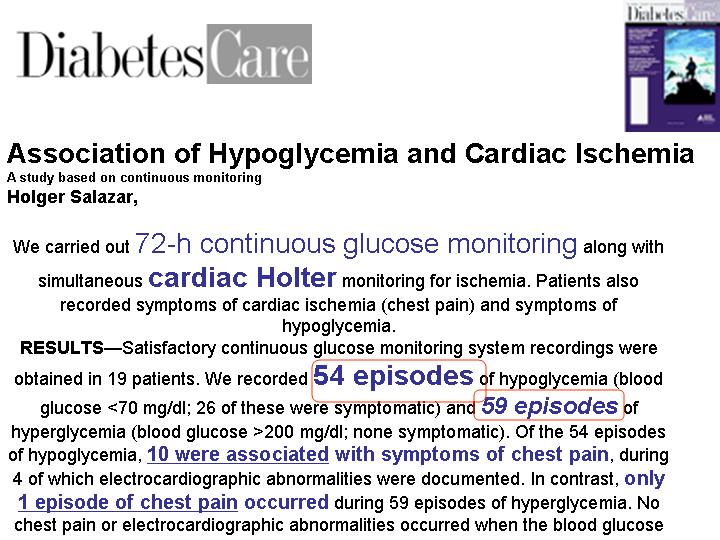
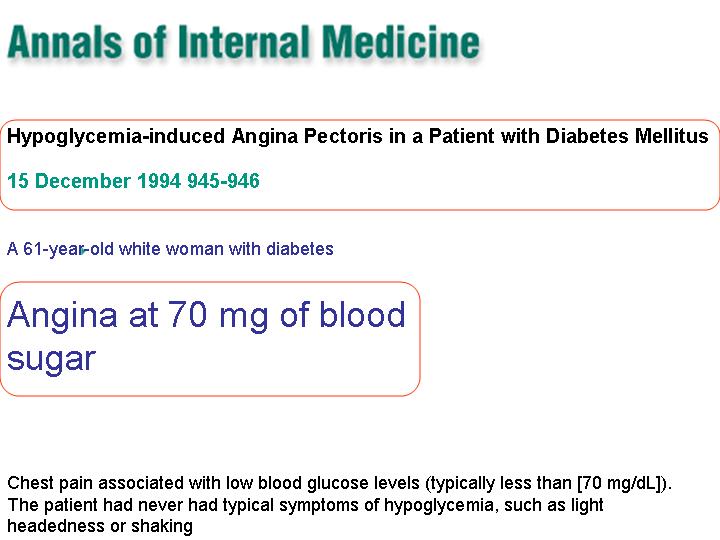
                             We are  rarely inclined to think  that heart  can ever suffer from hypoglycemia ! But hypoglycemia can have distinct direct and indirect effects on heart.  In fact indirect effects due to activation of adrenergic activation is more obvious.An episode of hypoglycemia can precipitate an arrhythmia . Glucose potassium insulin infusion


Final message

Hypoglycemia , can be a trigger of ACS .This aspect is poorly recognised and studied.

               Usually in the the vascular  system both artery and  vein  go together .It is an  irony in pulmonary circualtion  these two never go together .Another paradox is that pulmonary artery carries the most deoxygenated  blood and pulmonary vien carries the purest  form of blood in the entrie body , probably God has kept them widely seperated as  communication between them  seriously affect the physiology.

                                  Even as cardiology community is preoccupied with systemic hypertension & CAD  ,  pulmonary arterial hypertension(PAH) is a much neglected , still  an important clinical cardiac problem encountered . The irony is self evident , there are half a dozen methods to grade systemic hypertension not even a single stadardised grading available for pulmonary arterial hypertension. The WHO  working group defined pulmonary hypertension  few decades ago and was not clinically graded .The only grading available is based on  the pulmonary vascular biopsy changes (Heath Edwards) 

                                   Currently PAH management has gone through revolutionary changes. There is an urgent  need for grading  this entity .This will facilitate to  diagnose , manage and assess the efficacy of the currently available treatment.

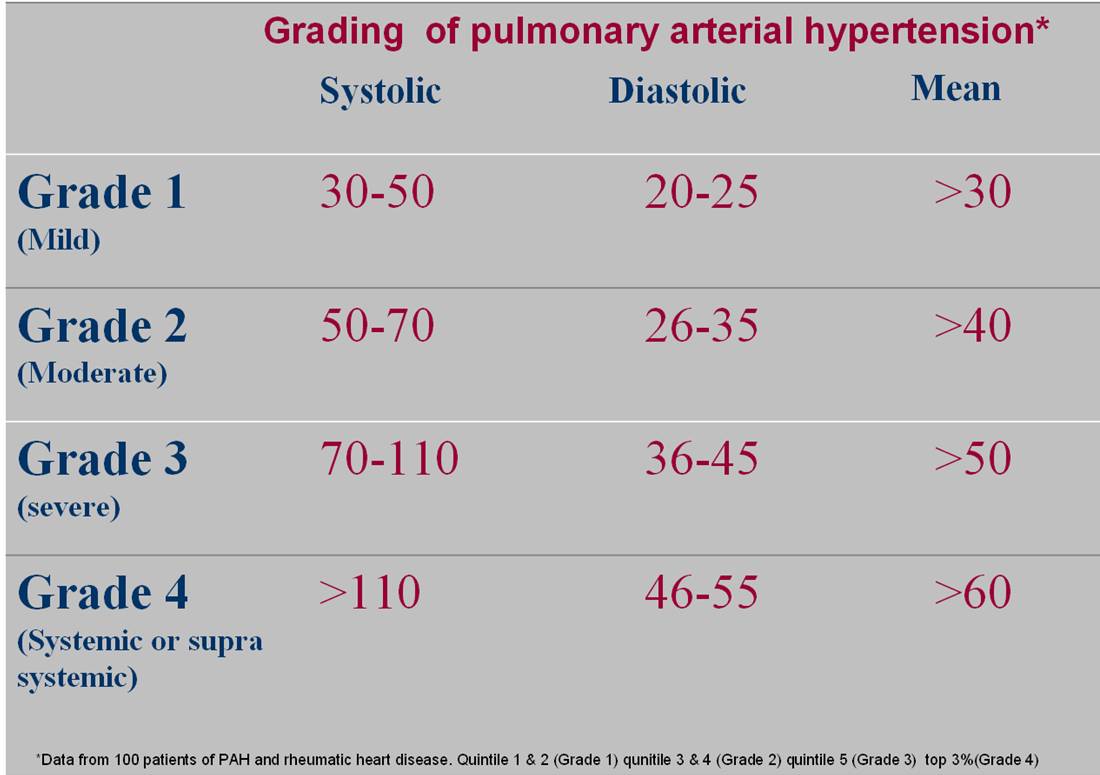
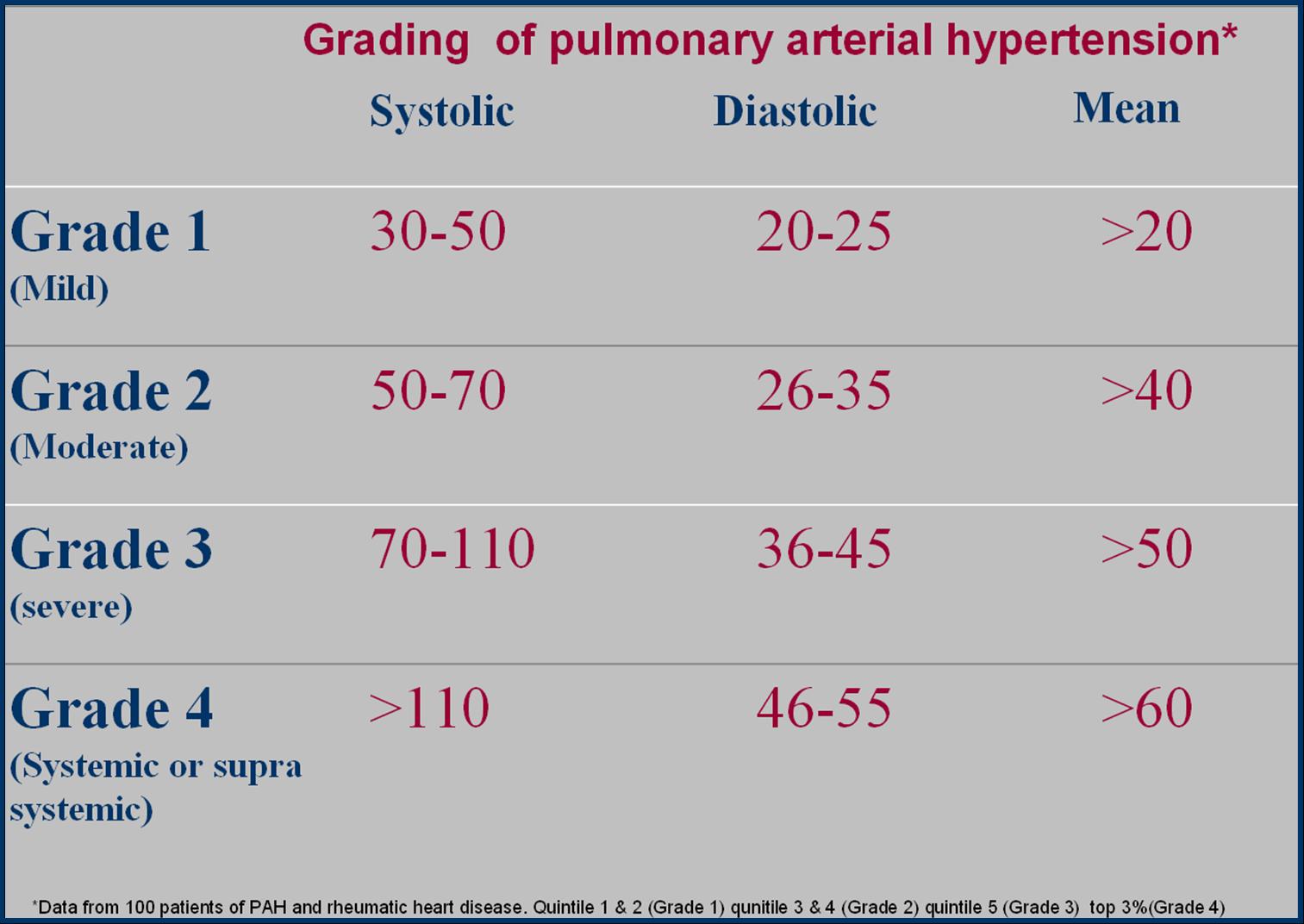
                                Developing countries like ours have a great number of PAH due to rampant rheumatic heart disease.  A simple study was done in  100 patients with PAH .Bulk of the study population had RHD .Few had primary pulmonary  hypertension .Systolic , diastolic, and mean pressure was assessed by doppler echocardiographic analysis of tricuspid regurgitation (TR) and pulmonary regurgitaion(PR) jets. TR jet provided the systolic PA pressure , PR jet provided mean as well as diastolic PA pressure .TR jet was available in all patients. PR jet was available only in 60 patients .Hence the diastolic andmean PA pressure data has been extrapolated in some  and  was plotted in a scatter diagram. Five equal quintiles were divided. Patients in first  and 2nd quintiles were graded 1   and third  and 4th  quintile were  graded 2 ,  5 th  was graded 3 respectively. From this cut off points for  various grades of PAH were identified .The top 3% of patients  with highest PAP were graded as grade 4 and all of them had supra systemic PAH. 

The following grading is suggested for PAH* 

 *This is a preliminary  attempt to grade PAH. This could be applicable mainly in rheumatic heart disese and primary pulmonary hypertension .Further refining of methodology is  required.PAH grading may be little different in congenital left to right shunts.

                        Palpitation is one of the common symptoms for which cardiac patients are referred. Like dyspnea , palpitation can either be a physiological expression of normally beating heart or a  dangerous pathological state of the heart. This makes this symptom unique and warrants careful evaluation.                                                                                                                                                         By definition palpitation  is abnormal  awareness  of ones own heart beat. Heart is a mechanical organ with multiple mobile anatomical structures. There is  constant  blood  flow in multiple directions . Apart from this the heart   has  it’s unique translational, rotational movement . These intrinsic movements combined with proximity to chest wall  generate vibratory  motion  signals .These signals are generally dampened by the encircling pericardial space .The neural signals responsible for  perception  of palpitation is not clear. If the heart hits against the chest wall it is the  somatic nerves from the chest wall that carries the signal. Vibrations generated within the heart chambers, and  and the  valves  are  carried  by the  myocardial and intravascular  sensors.( Autonomic) 

What are causes of palpitation?

       Cardiac

  • All hyperdynamic circulatory states. It may be generated from either  right or left ventricle or both.
  • Regurgitant lesions ( Mainly Mitral and aortic regurgitation)
  • MVPS*
  • Congenital heart disese ( Mainly left to right shunts-ASD/VSD/etc)
  • Apart from this patients  with prosthetic heart valve, and pacemaker patients can feel their heart beats.
  •  Cardiac arrhythmia .Both tachycardia, and bradycardia . Ventricular ectopic beats are the very common cause .( It is often described as missed beat)

* Mitral valve prolapse, a very benign condition, over diagnosed in the last few decades raised considerable anxiety and palpitations for the patients (mainly after the diagnosis ! ).Now the cardiology community has sought to underplay this entity with strict diagnostic criteria.( Thickened mitral leaflet ,presence of MR both must be present to label a patient  as MVPS)

       Non cardiac

  • Physiological
  • Anxiety state
  • Anemia 

What is the relationship between ejection fraction and palpitation?

                                        Generally palpitation indicate a  hyper kinetic state of heart .The commonest cause of palpitation is  anxiety  state .This also happens in hyper dynamic circulations like anemia , fever, thyrotoxicosis, pregnancy etc . In all these situations palpitation indicate increased force of contraction which   generates high dp/dt(Rate of rise of ventricular pressure)  . So  the left ventricularejection fraction is normal or more than normal . So  presence of  palpitation could be an  indirect evidence  of reasonably good LV function.

    “Patients  with dilated cardiomyopathy or CHF rarely feel their heart beat during exertion , instead they have dyspnea  as the LV force of contraction is less”

What is the significance of palpitation that occur during rest ?

                              Palpitation occurring at rest indicate more often a  pathology.It is invariably due to an cardiac arrhytmia  either tachycardia or bradycardia. Intelligent patients can give accurate information about the  regularity of rhythm , any  extra beats or missed beats . Atrial fibrillation, VPDs  could be  diagnosed by history alone in them !

If palpitation  is associated with visible chest pulsation what is the likely diagnosis ?

    If  significant visible pulsation over chest wall  pulsations are seen   in young adults it could simply mean a hyper dynamic circulation and thin chest wall. Pulmonary arterial pulsations is not normally felt in left 2nd inter costal space.If felt one has to rule out shunt lesions like ASD or pulmonary hypertension.
                    “ASD is the commonest cause  of right ventricular  palpitation “  


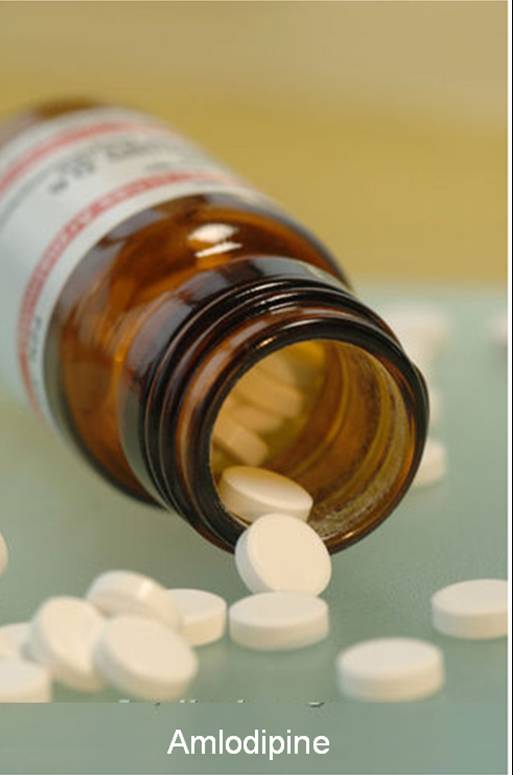
                            Amlodipine , the most popular anti hypertensive drug  used world wide has an very important action on coronary blood flow.When nifedipine was introduced three decades ago it was  known for it’s powerful anti anginal properties. Subsequently  amlodipine was introduced with almost similar action. But over the years, amlodipine was projected primarily as anti hypertensive drug and gradually many of the physicians are made to believe it is a drug that  should be used only if the blood pressure is high.The fear of reflex tachycardia in few was exaggerated.


                              In fact a cross section of  today’s general physicians were queried  about amlodipine  and none of them acknowledged  using this drug as an anti anginal drug. And few of them went to the extent of withdrawing amlodipine if it was used for the purpose of angina relief !

Why amlodipine’s  anti anginal action is in doldrums ?

The single word answer is unfortunate!   Marketing bias ,coupled with  the fact  that mainstream cardiology texts have ignored this aspect.

Final message

                                    Amlodipine , can still be used as a antianginal drug especially  in a patient who has angina with associated bradycardia  , significant LV dysfunction . Some reserve amlodipine and nifedipine exclusively for vasospastic angina where beta blockers alone are theoretically contraindicated .

.

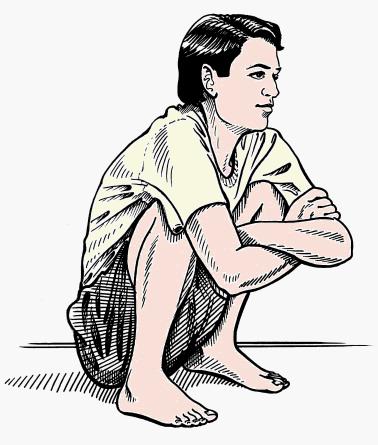
It is a well known fact squatting is a simple compensatory posture adapted by children with cyanotic heart disease during exertion to get relief from breathlessness. The children with tetrology of Fallot and related conditions have baseline hypoxia due to right to left shunting .This gets aggravated during exertion. Squatting promptly relieves this exercise-induced worsening of dyspnea. The oxygen saturation improves immediately after assumption of squatting posture. The exact mechanism by which squatting relives the dyspnea is not clear.

Apart from squat induced po2 raise there is a fall in the concentration of pco2 and raise in blood Ph that pacify the sensitive respiratory centers,thereby bringing down the tachypnea

Hemodynamics of squatting has two phases

  • Immediately ( First 15 seconds) after squatting there is a sudden drop in venous return.
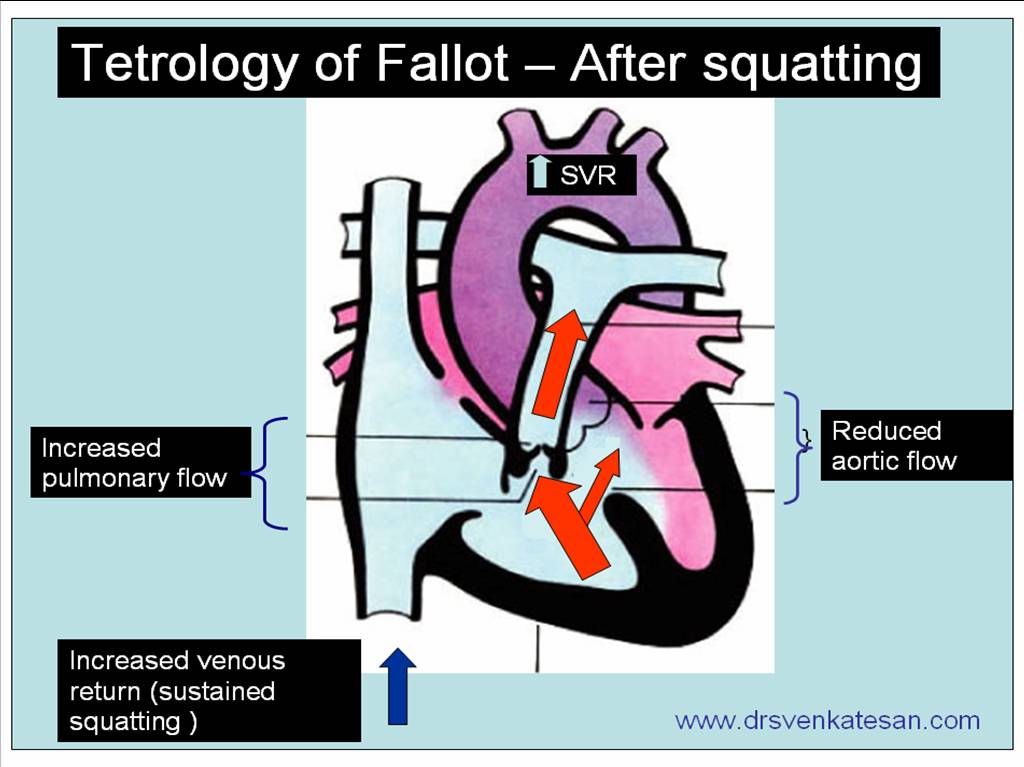
  • Sustained squatting for 1-2 minutes result in steady increase in venous return, raised systemic vascular resistance.

Both these effects help the children with TOF. The initial trapping of highly desaturated blood in the lower extremity gives a quick relief as soon as the child assumes this posture. In the next 15 seconds or so the systemic vascular resistance increases and bring the aortic after load sufficiently high to divert the blood into the pulmonary artery.

The net effect of squatting is there is a transient or sustained (as long as child squats) increase in pulmonary blood flow and this is made possible by the relative reduction of right to left shunt as the aortic and systemic resistance is raised by this posture.

Other explanations

There is one more possible effect of squatting. By, compressing abdomen (Knee chest) cause a mechanical push on the splanchnic blood pool into the aorta which has high o2 saturation. This is thought to provide immediate relief to brain hypoxia and avoid the vicious respiratory/ hemodynamic cycle

What is the clinical inference from squatting in cyanotic heart disease?

Squatting implies there should be a large VSD, associated with a delicate right to left shunting very much dependent on the degree of pulmonary stenosis or ( any RVOT obstruction) and the systemic vascular resistance.

How common is squatting history in pulmonary atresia with VSD ?

It can occur with collaterals are sparse.The mechanism of relief is slightly different.

The likely mechanism of relief with squatting in Pulmonary Atresia, VSD is two fold.

1. The Initial relief is due to trapping of deoxygenated venous blood in squat posture, which is similar to TOF

2.The sustained benefit is due to raised systemic vascular resistance which favors more flow across MAPCAs from Aorta.

The second one has no authentic reference , but its a hemodynamic plausiblity as there is zero RVOT flow in PA with VSD.

What are the other cyanotic heart diseases in which squatting is reported ?

  • Tricuspid atresia
  • Double outlet right ventricle with pulmonary stenosis
  • Any combination of large VSD and RVOT obstruction
  • Rarely in Eisenmenger syndrome*10%)

*Mechanism of squatting episodes in Eisenmenger is tough to explain. But, it does give relief. The most plausible mechanism is the raise in SVR with squatting tilts temporarily a favorable QP/QS as PVR -SVR ratio falls .(Venous return component doesn’t operate here as in squatting of TOF) It should be noted squatting is mainly reported only in VSD Eisenmenger.. ASD/PDA -Eisenmenger is extremely rare or doesn’t occur. This is understandable as Interventricular communication has to be present to shift in QP/QS with a response to a rise in SVR.

Squat equivalents

Assuming a squat position has cultural issues. Grown-up children may avoid these public places. Standing with legs crosse is a common posture. In fact, the mother holding a crying baby in a chest with knees folded promptly prevents a spell . This can be called “squatting by proxy”

*Though squat equivalents do give relief from dyspnea they are given less significance in terms of diagnostic value of TOF

Reference

1.Paul R. Lurie ,Postural effects in tetralogy of Fallot The American Journal of Medicine Volume 15, Issue 3, September 1953, Pages 297-306

2. Warren G. Guntheroth. M.D.Beverly C. Mortan. m.Venous return with knee-chest position and squatting in tetralogy of Fallot American Heart Journal Volume Volume 75, Issue 3, March 1968, Pages 313-318

   Dr. Venkatesan   Sangareddi  

AK 53/1, # 9

Narmada enclave

 7th main road

Anna nagar

Chennai -600 040

Tel:044 26209009


Age &  Date of birth

42 ,               25-5 -1964

Experience

1998–2007                  Madras  medical college                      Madras 

Asst. Professor  Of Cardiology

Work involves  intensive coronary care, invasive and non invasive cardiology.  Has special interest in  clinical research in Acute Coronary Syndromes

Has    publications in  various  Journals.


1997-1998                   Madras  medical college                       Madras           

Asst. Professor  Of Medicine

Worked  in intensive care medicine and  in

 Medical oncology for 6 months


1994–1996                    Madras   medical college                        Madras 

Resident   Cardiologist

Selected to resident programme   toping the state   in the super speciality  exam

Presented  papers in national conferences

Experience gained in invasive and non invasive cardiology


1991–1994                      Govt.  Health  Centre           Karur.       Tamil nadu

Medical Officer   

Worked in internal medicine  department

Family medicine and community health care.

And   socio economic aspects of health care.

Education

1994–1997              Madras  medical college                               Madras           

Doctorate  in cardiology (DM) 


1988-1991              Coimbatore medical college                          Coimbatore


Doctor  of Medicine (MD) Dr.M.G.R  Medical university  , Madras


Secured  three  gold medals for excellence in cardiology.


1987-1988            Coimbatore medical college          Coimbatore  India


Junior resident in  Medicine


1987                     Coimbatore medical college          Coimbatore


House  officer


1982-1986            Coimbatore medical college        Coimbatore


M B., B S.    Bachelor of Medicine and Bachelor of Surgery


                             Madras    University                           Madras     


Interests

Electro physiology, expert systems in cardiology., clinical research  in acute coronary  syndromes, preventive cardiology,  bio ethics, outcome analysis ,  logistics in cardiology and publishing  online journals. 


List Of  publications

Enclosed

Reference

Prof.V.Jaganathan. MD.,DM

Professor  &  Head of  Department

Institute of Cardiology, Madras Medical College  Chennai


Address  for   communication


Spouse


 Dr.Latha  Venkatesan  MD . Gynecologist,

 Sundaram  Medical  Foundation, Chennai  India.

AK 53/1, Flat no A- 9

TAS Narmada enclave

 7th main road

Anna nagar

Chennai -600 040

Tel:        044 6209009

Mobile : 9840059947

E.mail : drvenkatesans@yahoo.co.in>


List of publications by  S.Venkatesan


1.QTc  Interval  in atrial fibrillation.  The Tamilnadu Dr. M.G.R Medical university doctorate thesis 1991


2 .Thrombolysis in hyperacute MI.

 Indian Heart Jr  1999:51: 321


3. Circadian  Response To  Thrombolysis  In Acute Myocardial Infarction Indian Heart Jr  1999:51:686


4. Left Ventricular Mass in Pregnancy Induced Hypertension.

  Indian Heart Jr.  1999:51


5. Dissection of  interventricular septum by unruptured  right  sinus of valsalva    aneurysm  resulting in complete heart block.

Indian Heart Jr  1995 Nov-Dec: 605


6.Angiosarcoma  of leftventricle presenting as hemopericardium and  cardiac tamponade. Indian Heart Jr  1995 Nov-Dec:636


7.Asymtomatic multivessel disease  following  myocardial infarction

 Indian Heart Jr  1999:51: 686


8. Transmitral pulse doppler echo correlates of mitral regurgitation severity Indian Heart Jr  1999:51:636


9. Safety and efficacy of intravenous nicorandil  in unstable angina. Indian Heart  Jr  1999:51:704


10. Efficacy of nicorandil as monotherapy in ischemic heart disease Indian Heart Jr  1999:51:728


11. Left ventricuar function by angiogram in significant LAD disease. Indian Heart Jr  1999:51:687


12. Aortic root dimension in isolated rheumatic mitral stenosis

Journal of association of physicians of India abst: 1998


13. Serum phosphate in acute myocardial infarction

Indian J Physiol  Pharmacol 2000  44(2):225-8


14.Differential  Response  to  right  and  left  coronary  artery  thrombolysis   Indian Heart Jr  2000:52:715


15. Therapeutic  issues  in  Stable Ventricular  tachycardia: A coronary  care  unit  perspective Indian Heart Jr  2000: 52: 808.


16.Current   cardiology  practice: evidence  or  experience  based ?    An  analysis of  ACC/AHA  guidelines. World congress of cardiology   2002 sydney  Oral  presentation.(Published in Journal of American college of cardiology)JACC :2001.39:9 Sup.B 462B


17.Isolated  Diastolic Hypertension .World congress of cardiology  2002 sydney  poster  presentation..

( Published in Journal of American college of cardiology) JACC :2001.39:9 Sup.B 175B


18.Rescue thrombolysis in  acute myocardial infarction

Journal of association of physicians of India abst: 2002


19.Canadian   cardiovascular  society  classification of  angina:

 An  angiographic  correlation. Indian Heart Jr Abstract issue 2001


20.Non invasive management  of high risk unstable angina

Accepted for oral presentation in cardiological society of India annual scientific session Kolkata  Dec2003


21.Non dilated cardiomyopathy

Accepted for oral presentation in cardiological society of India annual scientific session  Kolkata  Dec 2003


22.Safety and efficacy of angiotensin-converting enzyme inhibitors in symptomatic severe aortic stenosis: Symptomatic Cardiac Obstruction-Pilot Study of Enalapril in Aortic Stenosis (SCOPE-AS).
Am Heart J. 2004 Apr;147(4):E19


23.Rheumatic heart disease occurrence, patterns and clinical correlates in children aged less than five years.J Heart Valve Dis. 2004 Jan;13(1):11-4.


24. Estimation of subjective stress in acute myocardial infarction.
J Postgrad Med. 2003 Jul-Sep;49(3):207-10.


25. Serum phosphate in acute myocardial infarction.
Indian J Physiol Pharmacol. 2000 Apr;44(2):225-8.


26. Canadian Cardiovascular Society classification of effort angina: An angiographic correlation.
Coron Artery Dis. 2004 Mar;15(2):111-4.


Coming soon :


List of  top ten  leading famous  cardiologist  in india