December 9, 2008 by dr s venkatesan
This paper was presented in the just concluded 60th Annual scientific sessions of cardiological society of India , Chennai.India
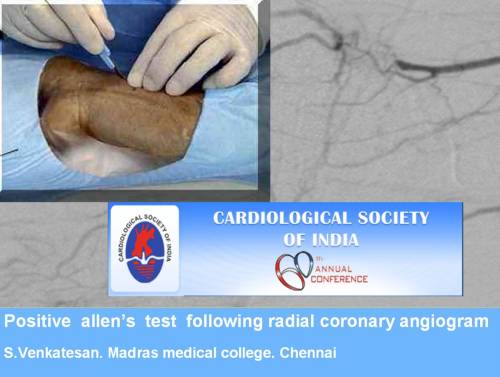
POSITIVE ALLEN’S TEST FOLLOWING RADIAL CORONARY ANGIOGRAM
Venkatesan sangareddi , G.Gnanavelu, R.Alagesan,V.Jaganathan.
Department of cardiology, Madras Medical College, Chennai.
Radial artery has become the major access site for the interventional cardiologist in recent years. Radial approach has provided increased patient comfort and less access site complication. Many of the complications are unique to radial approach mostly due to anomalies of origin, and course while others are hardware related .Unlike femoral arterial access , compromise of blood supply to hand is never considered a threat because of dual blood supply to hand .But the fact is that, it could be sub-clinical and the hand is rarely assessed for vascular insufficiency after a radial procedure.
The aim of the study is to assess the impact of radial procedures on the blood flow to hand . 20 patients who had undergone routine radial coronary angiogram formed the study population. All patients had negative Allen’s test prior to the procedure. The mean procedure time was 25mts (18-45) .Standard hardwares were used. Difficulty in crossing at forearm and subclavian was observed in 4 patients. Extravasation of dye in forearm was observed in two. Allen test was done 24 hours after sheath removal and repeated 48 hours after the procedure . 4 patients showed positive Allen test at 24hrs. One patient regained Allen negativity at 48hours. The incidence of positive Allen test at 24 hours is 20%. The compromised blood flow was correlated with the procedure time, and a difficult catheter course .
We propose, radial procedures especially , when prolonged has a potential to compromise palmar arch flow .This phenomenon is either permanent or transient and may be attributable to enhanced endothelial tone and sheath related injury. Irreversible compromise of blood flow to palmar arch may also occur in radial dominant hands. Further enhanced sympathetic tone can spill over to ulnar artery as well .
It is concluded, interventions through radial route has hitherto unreported adverse effect of “Post procedural positive Allen test” . It implies , radial procedures could convert a dual blood supply pattern of the hand to ulnar dependent uni-modal blood flow in a significant subset of patients. This is important to recognise, as it precludes further radial procedures in the same patient.
Final message
Hand function could be as vital as our heart’s , please handle with care to avoid this complication
Click on the slide to download PPT presentation
Posted in Cardiology -Interventional -PCI, cardiology- coronary care | Tagged acs, allen test, arrow, cath lab, palamar arch, pci, radial coronary angiogram, radialforce.org, ulnar artery | 1 Comment »
November 30, 2008 by dr s venkatesan
The science of medicine has evolved over 2000 years since the stone age days.It has currently reached a glorious era with cutting edge scientifc technology .Today one can map the entire human genetic blue print and intervene in the disease even before they manifest .One can keep dying people alive for years with multi organ transplantation. Modern medicine has taught us how human sufferings can be prevented and life can be prolonged (with or without purpose !)
The term conservative management conveys two different
meanings for medical professionals.
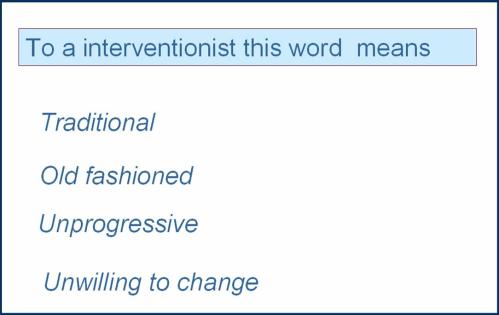
For other group of physicians

Ever since the days of application of leech over the head for treating migraine and a crude knife abdominotomy for emergency exit of babies from pregnant mothers in distress , healer’s mind has always perceived “something has to be done urgently when some body suffers” this sort of reaction is probably inherited and is related to the primitive flight or fight response .
This may be true in some of the emergencies but it is untrue in many of the non emergencies.
Unfortunately , our mind finds it difficult to differentiate between these situations . With constant exposure to dramatic medical breakthroughs , modern day physician is made to believe “Some thing is always better than nothing when illness strikes. Human body is a wonderful machine which has it’s own service station ! in the form autoregulation and the meticulous homeostatic mechanisms. Only if the disease process overwhelms, it needs intervention.( Typical example:In the routine viral fever , you don’t adminster Acyclovir or other antiviral for all of them !)
The problem with early aggressive approach is, it fails to give an oppurtunity for the body’s natural defence forces to respond. Further , we will never ever know how the administered treatment is going to fare vis a viz the natural response.( With due respects to RCTs). While the field of medicine has so much evolved , our thought process, especially the aspect of clinical reasoning has always been lagging behind .It is now considered as inferior or even unscientific treatment if some one follows a conservative approach to a problem even if it provides same outcome of that of an invasive or aggressive approach ( The classical example is PCI for chronic stable angina The COURAGE study).
The other major issue is the hazards of unwarrnted invesitigations , drugs and procedures
Classical example:No one knows how much morbidity or mortality the routine Swan ganz catheter caused when it was rampantly used for over two decades to monitor central venous pressure .It is estimated that in modern medicine there are at least few drugs or devices in each speciality waiting for the same fate as that of the swan ganz catheter.
No body knows when it will be exposed .Our EBM will take it’s own time . . .Till that time humanity need to suffer.
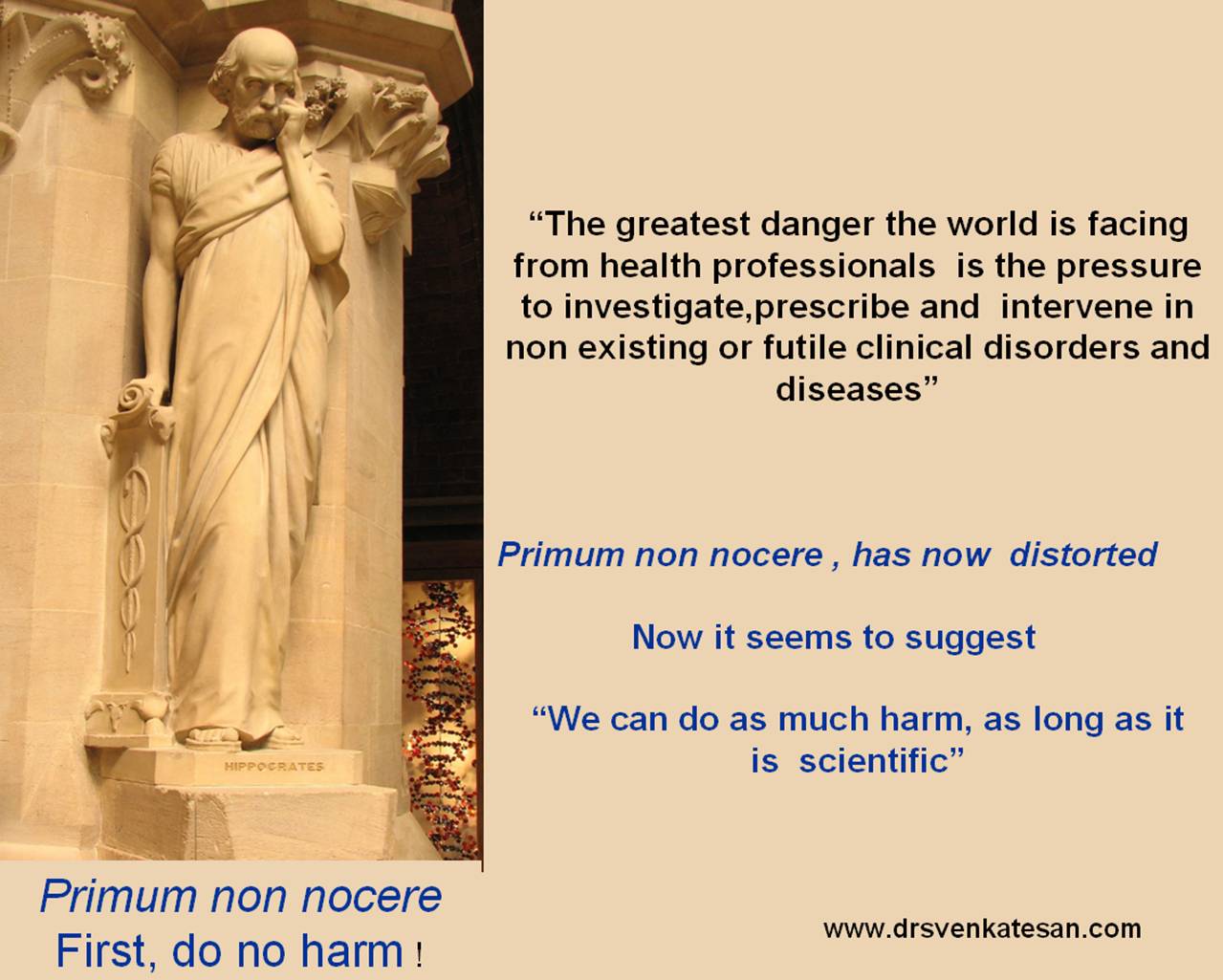
This thinking is not new The concept “First do no harm is over 2000 years old”

Questions in search of answers
Does law of conservation of energy applicable to human body and medicine ?
Can we defy death with modern medicine ?
Final message
- Conservative management is still a great medical concept in many situations and one should not allow it to die by the whims and fancies of the modern scientific forces.
- Whatever you do on the patent’s body do it , only if it is going to helpful for him /her. If you are unsure Whether a given treatment is going to help or not ask this question to an expert .
- The widely prevailing dogma of aggression is always better than non aggression has absolutely no evidence.
- So approach a clinical issue disease by disease , individual by individual.
- Now , in this era high tech medicine , It is lot more tougher to choose a conservative path as the pressure to do more and more looms larger ! It is easier to follow the crowd than a path of your own .
- Always remember it needs a stronger mind to act according to our conscience !
Posted in Cardiology - Clinical, Cardiology -Interventional -PCI, cardiology -Therapeutics, cardiology- coronary care, Infrequently asked questions in cardiology (iFAQs) | Tagged annals of internal medicine, conservative management, davidson, ethics, first do no harm, harrisons, hippocrates, history of medicine, jama, lancet, medicine, nejm, primum non nocere | 3 Comments »
November 14, 2008 by dr s venkatesan
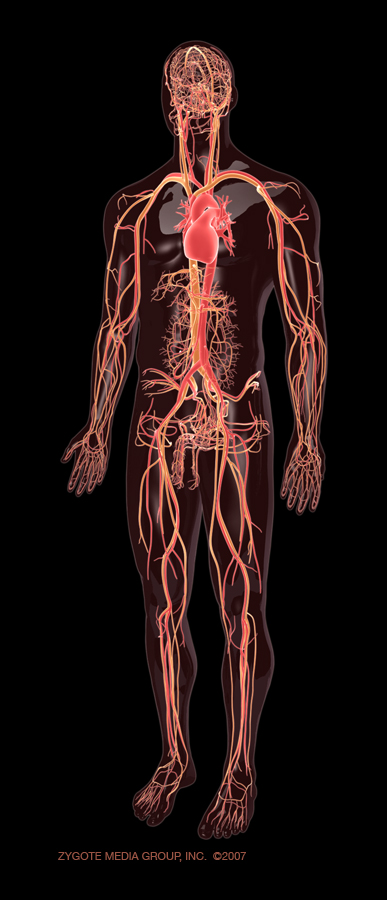 A normally functioning circulatory system is vital for our survival . We have about 6000 ml of blood, circulating all over the body in an approximate time of 15-20 seconds.The pressure at which this blood moves across the body is called the blood pressure . Hypertension or simply , high blood pressure is an undesirable hemodynamic disturbance in human circulatory system.Systemic hypertension is the most common type of hypertension. The blood pressure is primarily dependent on the status of the blood vessel(vascular resistance) and cardiac contractility. This regulation is under many neural and hormonal factors.Further the blood pressure varies depending upon the blood vessel calibre, and the local milieu.There is a progressive drop in blood pressure from major arteries to the small arteries .The pressure drop is maximum across the arterioles to reach the venules .The venous circulation has the lowest pressure, it ends up at right atrium with a mean pressure of 0- 5mmhg.
Importance of regional variation of blood pressure.
It should be realised , each organ has it’s own regulated blood pressure.The brain perfuses by the intracerebral pressure .The lungs decide how much should be the pulmonary arterial pressure.The kidney not only controls it’s own pressure but also has a major regulatory role in systemic pressure by rennin angiotensin system.The examples are numerous, portal system has it’s unique pressure controlling hepatic hemodynamics. The retinal blood vessels regulate intra ocular pressure. While the human circulatory system has a wide variation of blood pressure across the breadth and length of vascular system, it is ironical a single snap shot BP with a brachial cuff is used to define the normality and if it is normal every thing is thought to be hunky dory !
It is widely acknowledged now , aging of humanity is nothing but aging of our vascular system
So we should have new parameters to assess individual organ’s vascular health as well as the currently popular systemic vascular health.The single important factor that determine coronary endothelial damage is the intra coronary pressure.It is never taken into account in any of the cardivascular mortality studies. This is the prime reason for the widely prevalent conflict in the cardiology literature , namely : Controlling systemic blood pressure has poor correlation with cardiovascular outcome. Many of the so called normotensive individuals have serious hemodynamic injury in their coronary arteries.This was made apparent in the ASCOT LLA study , in which patients with near normal blood pressure also benefited from statin therapy , implying endothelial damage could occur at any level of systemic blood pressure.
What is the normal intracoronary pressure ? When do you diagnose intracoonary hypertension?
The normal intracoronary pressure is around 40mmhg . Intra coronary hypertension as a clinical entity is yet to be recognised . There is no defintion available for intracoronary HT , intracerebral hypertension as well.
It’s still a long way to go , for the cardiology and neurology community to assess non invasively intracoronary pressures and intra cerebral arterial pressure to prevent coronary events ant strokes.
Final message
Simple risk prediction using brachial cuff blood pressure is a grossly unscientific method (Sorry, i really mean it ) to assess one’s vascular health.There has been few attempts like vascular endothelial health assessment by fore arm blood flow , central aortic pressure (Instead of brachial cuff pressure) as an index for risk predictment and assessment for hypertension is suggested.
Posted in Cardiology - Clinical, cardiology -Therapeutics, cardiology- coronary care, Infrequently asked questions in cardiology (iFAQs) | Tagged aging, blood pressure, bmj, cardiac output, drsvenkatesan, intra cerbral hypertension, intra coronary hypertension, jacc, jama, kaplan, lancet, nejm, peripheral vascular resistance, renal hypertension, systemic hypertension, venous system | Leave a Comment »
November 11, 2008 by dr s venkatesan
Angina pectoris , classically occur on exertion and gets relieved on rest .This is called typical chronic stable angina as described by Heberden (CSA ) . Unstable angina(UA), the term originally described by Noble O Fowler in early 1970s. ( Also being referred as intermediate coronary syndrome , preinfarction angina etc).The definition for unstable angina has evolved over the years and currently refers to .
1.All new onset angina of any degree* Some include severe angina only ! New onset angina of very mild degree on exertion could be the onset of the first episode of stable angina.
2.Rest angina of more than >30 mts not relieved by taking sublingual nitroglycerine.
3.All Post MI angina
4.Any angina in patients who have been stented by PCI.
How to recognise a patient who is shifting from stable angina to UA ?
UA is to be suspected when a patient develops.
5.More frequent episodes than usual
6.Angina occurring at lesser level of exertion than before
7.Angina radiating to new site ( Example : Chest pain radiating to jaw rather than to the usual left arm or vice versa)
Why the first episode of angina is given a special status and often considered critica ?
Angina is the clinical expression of myocardial ischemia.The course of the first episode of angina , can not be predicted.It could be a the beginning of a chronic disease process, or it could be a progressive coronary occlusion as in unstable angina /NSTMEI , or the onset of even a STEMI.
In contrast a patient with chronic stable angina has a predictable chest pain , at a particular level of exertion, radiation to same site, same character, and the patient knows for sure the pain would promptly dissappear when he takes rest or nitroglycerine tablets.
What is the underlying pathology in UA ?
Generally it is very rare for a stable plaque to produce a serious episode of unstable angina .It requires an unstable plaque* to precipitate an unstable angina !
Unstable plaque refers to any plaque which is eroded, fissured, ruptured or hanging eccentrically , with
an active thrombus.
What is the significance of post PCI angina?
It is an irony, any angina following PCI is to be considered unstable as sudden occlusion of stent is quiet common.This is a paradox of sorts as one would wonder in a patient with CSA who undergoes PCI with stenting of left anterior descending coronary artery (LAD) all his subsequent episodes of angina will be labelled as UA even if a stable angina occur in his other coronary artery.And these patients would go for early invasive approach and potentially inappropriate interventions even if they are at low risk !
Is all angina at rest can be termed as unstable angina ?
No, but many times , rather most of the times cardiologist believe all rest angina to be unstable.
What are the situations where stable angina can occur at rest?
An episode of angina during mental stress, or post prandial* state are very common in patients with CSA. This gets relieved after the stress. Some times patients with CSA during episodes of fever may get angina at rest .These are considered variants of stable angina.
Post prandial angina , may be considered by some as unstable
How often a diagnostic confusion occur between CSA and UA ?
Generally, this issue is rarely addressed in cardiology literature , for the simple reason it is never considered an issue at all !
According to Canadian cardiovascular society grade 4 stable angina is almost similar to unstable angina , as it denotes angina occurs with minimal effort or even at rest. In fact CCSC grade 4 should be termed as UA.
Can ECG be useful to identify stable angina from unstable angina ?
ECG will some times come to our rescue when one is confused between stable and unstable angina even though resting ST depression can occur in both stable and unstable angina . Statistically , if ST depression is noted during an episode of angina it is more likely to be UA rather than CSA. . Apart from ECG , Troponin T or I levels may be elevated in some of the patients with unstable angina. Rarely stable angina can also show elevated troponin.
In patients with systemic hypertension and LVH or cardiomyopathy resting ST depression may not indicate UA
So differentiation between, stable and unstable angina even though appear simple and straight forward, it requires a diligent appraisal of history , physical examination (Aortic stenosis /HCM may cause stable angina) and ECG, enzyme evaluation.
Final message
In any coronary care unit , admissions with initial diagnosis of ACS/UA/NSTEMI , subsequently turn out to be simple stable coronary artery disese . This error happens because the chest pain or ECG changes are aggravated by non cardiac factors like a mental stress or a post operative stress or fever etc.
There could be another school of thought, that is to err on the side of safety, and manage all rest angina as UA .But the hazards of unwarranted therapy might exceed the risks of leaving these patients alone.
In this context ,there is a need for a new definition for unstable angina .
One ideal version could be . . .
- Any angina , of any degree which is caused mainly by the supply side defect (By a acute thrombotic /disruptive plaque occluding the coronary lumen with a imminent danger of myocardial infarction is to termed as real UA.
- All post MI and post PCI angina are unstable angina
- Rest angina which occurs due to increased demand situations need not be labelled as unstable angina for the simple reason there is neither an active plaque nor a fresh thrombus likely in these patients. They rarely develop recurrent angina or MI . The mechanism of angina at rest here is most often due to a tachycardia and resultant increase in MVO2 .(myocardial oxygen consumption) .Currently they are called as secondary unstable angina.In fact , anti thrombotic drugs are misused in these situations as they satisfy the criteria of UA/NSTEMI.
Posted in Cardiology - Clinical, Cardiology -Interventional -PCI, cardiology -Therapeutics, cardiology- coronary care, Infrequently asked questions in cardiology (iFAQs) | Tagged acc.aha, angina grading, angina pectoris, beta blockers, braunwwald, canadian cardiovascualr society classifcation, cardiology, ccsc, chronic stable angina, drsvenkatesan, heberdeen, intermediate coronary syndrome, jacc, jama, lancet, nejm, nstemi, post infarct angina, post pci angina, ptca, rest angina, stable angina, stemi, unstable angina | 1 Comment »
November 6, 2008 by dr s venkatesan
During CABG arterial grafts are always preferred over venous grafts , for the simple reason the grafted vessel has to carry arterial blood and not the venous blood. Saphenous veins are tuned to carry venous blood at low pressure.The mean coronary arterial pressure is around 40mmhg and this will damage the saphenous venous endothelium more quickly. The reocculsion rate at 10 years for venous grafts can reach 60%.

Left internal mammary artery (LIMA) is the most commonly used arterial graft. This is usually anastamosed with LAD. The lumen of LAD & LIMA are more or less equal and they match well in character also !
The other advantage of LIMA graft is , blood tends to flow both during systole and diastole in a smooth fashion.. Since the venous graft which hangs from the root of aorta , the ostium of venous graft lacks the hemodynamic benefits of coronary sinus . (We know the coroanry sinus acts like a reservoir for the smooth release of blood flow into coronary arteries.)
Finally , the most important feature of LIMA is
It is a live graft
LIMA’s proximal origin from subclavian is left intact, so LIMA acts as a live vessel with it’s vasa vasorum intact , which means the endothlium derived relaxing factor (EDRF-Nitric oxide) secretion is not interrupted.This makes the LIMA an excellent graft , self protected against reocclusion.One may call it a drug eluting graft !
What is the patency rate for LIMA ?
LIMA patency rates at 10 years is nearly 90 % .But the graft patency depends on many factors , like diabetes, age, gender, surgical technique ,(Now , beating heart CABG is very popular , where the LIMA patency is said to be slightly lower than conventional CABG) Sequential LIMA grafts, free LIMA graft ( Which loses the advantage of being a live graft) have relatively lower patency rates.
What are the other arteries used in CABG ?
Other arteries that could be used are radial artery, right internal mammary artery, and gastro epiploic artery.The patency rates of all these arteries far less than LIMA .

A surgeon testing LIMA flow before Anastomosing it to LAD.

Image courtesy Dr.Mannoj Aggny .You tube
Posted in cardiac surgery, Infrequently asked questions in cardiology (iFAQs) | Tagged annals of cardio thoracic surgery, beating heart surgery, bmj, bye pass surgery, bypass surgery, cabg, cardaic surgery, cass study, ctsnet, ctsnet.org, edrf, endothelium derived relaxing factor, gastro epiploic artery, graft, jama, lancet, lima, live graft, nejm, nitnitric oxide, opcam, radial artery, saphenous venous graft, triple vessel disaese | Leave a Comment »
November 5, 2008 by dr s venkatesan
Coronary artery by pass graft surgery has become the most common cardiac surgery done world over ever since it was first introduced by Favalaro in 1969.The common indications are, triple vessel disease and left main disease in any of the following situationsE.
Elective CABG(Non emergent)
1.Chronic stable angina
Either emergent or elective
1.Unstable angina
Emergency CABG*
1.Acute myocardial infarction.-Cardiogenic shock
2.Failed thrombolysis
3.Failed primary PCI
4.Complications during routine PCI(Cath lab crashes ! etc)
5.As an associate procedure after a mechanical complication during MI (Septal rupture, Acute MR etc)
*In emergency situations even a single vessel disease would require a CABG
Hybrid CABG
Combining CABG and PCI in the same patient is followed in very few centres .(Example LAD graft and RCA angioplasty)This is done in patients who have co morbid conditions who can not tolerate prolonged surgical times.Further there can be situations one lesion is very ideal for PCI while for other grafting is the only solution.
Controversial CABG
1.CABG as a primary revascularisation in STEMI*
(Rarely done now , almost obsolete , primary PCI has almost replaced it . . . but it is still useful if performed within 6 hours of MI )
2.Incidentally detected CAD* following routine coronary angiogram.
( *CABG for incidentally detected asymptomatic CAD is increasing in many parts of world )
Inappropriate CABG
If it’s triple vessel disese it must be CABG -CASS study (1980s)
Coronary artery surgery study (CASS) still has considerable influence among the cardiology community in the decision making process for CABG , even though it is many decades old .There has been a phenomenal development in both medical as well as interventional techniques since CASS . (Thrombolysis, Statins, ACEI, PCI DES to name a few) .
When CASS study was done many decades ago,it was believed triple vessel disese constitute a homogeneous population and carry the same clinical significance . For example a 90% proximal LAD , 50% RCA and 50% OM technically qualify for a CABG and unfortunately , some of them are subjected to it even in 2008 ! Now we clearly know, it is not the number of diseased vessels that is important, but it’s location, severity , LV function, presence or absence of diabetes . Finally , the presence of revascularisation eligible myocardium must be documented in all post MI patients . (Technically referred to viable & ischemic myocardium ).
Currently , with the PCI & medical management has grown so much, CABG should be reserved only for, critical triple vessel disese , with at least one proximally located lesion (Mostly LAD or Left main ), especially in diabetic individuals.
Posted in cardiac surgery, cardiology -Therapeutics | Tagged annals of cardio thoracic surgery, bari, bmj, by pass, cabg, cass study, chronic stable angina, drsvenkatesan, drug eluting stent, favlaro, graft, jama, lancet, lima, nejm, nstemi, pci, revascularisation, stemi, stent, viable myocardium | Leave a Comment »
November 5, 2008 by dr s venkatesan
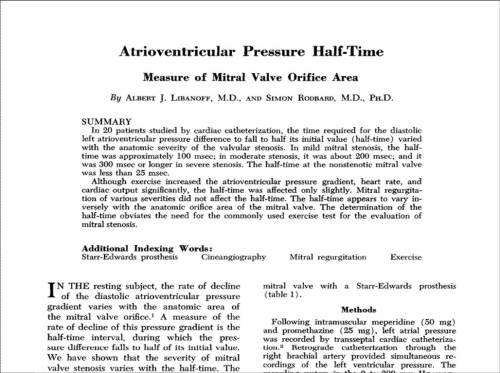
This is a hemodynamic concept paper by Libanoff in 1968 published in circulation.This paper elegantly proved that the rate of fall of pressure across the mitral valve will predict the mitral valve orifice. This key paper formed the foundation on which Liv hatle developed the echocardiographic pressure half time .This pressure half time derived mitral orifice area ( 220/PHT) is key parameter world over for assessing severity of mitral stenosis non invasively .
Click on the link get this article .This article is available free fulltext from circualtion web site
Posted in Uncategorized | Tagged libanoff, liv hatle, mitral stenosis, mitral valve, pressure half time | Leave a Comment »
November 3, 2008 by dr s venkatesan
Is it true , once a patient is labelled as a hypertensive he remains hypertensive life long ? Is it possible to withdraw antihypertensive drugs permanently ?
- Systemic hypertension is the most common clinical entity and it forms the bulk of the physician consultations world over.
- The anti hypertensive drugs are one of the most commonly prescribed medication by the medical professionals .
- It is estimated , the major chunk of revenue to pharma industry is contributed by antihypertensive drugs.
- SHT , is being maintained as a major , global cardiovascular risk factor , by periodically refixing the target blood pressure to lower levels by various committees.
- The terminology of pre hypertension for blood pressure between 120-140 was hugely controversial and some societies refused to accept this entity.
Is there a case for withdrawal of anti hypertensive agents among our patients ?
Yes , in fact there is a strong case for it.
While on the one hand there is a sustained effort ( By whom !) to increase the drug usage , very early in the course of hypertension , there is also a silent progress in our knowledge , regarding withdrawl of anti hypertensive agents in all those undeserving patients .
It is estimated 42% *of the so called hypertensives especially elderly can be successfully weaned of anti hypertensive drugs with out any adverse effect.( Mark R Nelson BMJ. 2002 October 12; 325(7368): 815.)
What are the situations where we can successfully with draw anti hypertensive drugs?
- The most common group of patients are the ones, where the anti hypertensive drugs are started prematurely , with out giving an option for non drug life style approach.These patients and their physicians continue to believe , anti HT drugs are sacred and essential !
- There is another major group of patients who have had a temporary elevation of BP due to a stressful environment.These patients get drugs permanently for a temporary problem . These patients need to be reassessed.
- Some of the elderly patients, with the onset of age related autonomic dysfunction ,these drugs are poorly tolerated and even have disastrous effects .In this population it is desirable , to wean off the anti HT drugs and switched over to life style medication whenever possible.
Final message
Essential or primary hypertension is not a permanent disease, in bulk of our population. It reflects the state of the blood pressure on a day to day basis and is a continuous variable. All patients who have been labelled as hypertensives( Either by us or others) should be constantly reviewed and considered for withdrawal of the drugs if possible.
* Note this rule does not apply in all secondary hypertensions, during emergencies, uncontrolled hyper tension with co existing CAD /diabetes /dyslipidemias etc .
Please refer to these forgotten Landmark articles
Does Withdrawl of Anti hypertensive Medication
Increase the Risk of Cardiovascular Events?
The TONE study

Source: The American Journal of Cardiology, Volume 82, Number 12, 15 December 1998 , pp. 1501-1508(8)
http://www.ncbi.nlm.nih.gov/pubmed/9874055
Conclusion of TONE study
The study shows that antihypertensive medication can be safely withdrawn in older persons without clinical evidence of cardiovascular disease who do not have diastolic pressure > or = 150/90 mm Hg at withdrawal, providing that good BP control can be maintained with nonpharmacologic therapy
Some of the references for successful withdrawl of antihypertenive drugs
1.Nelson, M; Reid, C; Krum, H; McNeil, J. A systematic review of predictors of maintenance of normotension after withdrawal of antihypertensive drugs.
Am J Hypertens. 2001;
14:98–105.
[PubMed]
2.
Wing, LMH; Reid, CM; Ryan, P; Beilin, LJ; Brown, MA; Jennings, GLR, et al. Second Australian nationalbloodpressure study (ANBP2): Australian comparative outcome trial of ACE inhibitor- and diuretic-based treatment of hypertension in the elderly. Clin Exp Pharmacol Physiol. 1997;19:779–791.
3.
Lee, J. Odds ratio or relative risk for cross-sectional data.
Int J Epidemiol. 1994;
723:201–203.
[PubMed]
4.
Lin, D; Wei, L. The robust inference for the Cox proportional hazards model. J Am Stat Assoc. 1989;84:1074–1079.
5.
Veterans Administration Cooperative Study Group on Antihypertensive Drugs. Return of elevated blood pressure after withdrawal of antihypertensive drugs.
Circulation. 1975;
51:1107–1113.
[PubMed]
6.
Medical Research Council Working Party on the Management of Hypertension. Course of blood pressure in mild hypertensives after withdrawal of long term antihypertensive treatment.
BMJ. 1986;
293:988–992.
[PubMed]
7.
Alderman, MH; Davis, TK; Gerber, LM; Robb, M. Antihypertensive drug therapy withdrawalin a general population.
Arch Intern Med. 1986;
146:1309–1311.
[PubMed]
8.
Blaufox, MD; Langford, HG; Oberman, A; Hawkins, CM; Wassertheil-Smoller, S; Cutter, GR. Effect of dietary change on the return of hypertension after withdrawal of prolonged antihypertensive therapy (DISH). J Hypertension. 1984;2(suppl 3):179–181.
9.
Mitchell, A; Haynes, RB; Adsett, CA; Bellissimo, A; Wilczynski, N. The likelihood of remaining normotensive following antihypertensive drug withdrawal.
J Gen Intern Med. 1989;
4:221–225.
[PubMed]
10.
Myers, MG; Reeves, RA; Oh, PI; Joyner, CD. Overtreatment of hypertension in the community?
Am J Hypertens. 1996;
9:419–425.
[PubMed]
11.
Stamler, R; Stamler, J; Grimm, R; Gosch, F; Dyer, R; Berman, R, et al. Trial of control of hypertension by nutritional means: three year results. J Hypertens. 1984;2(suppl 3):167–170.
12.
Takata, Y; Yoshizumi, T; Ito, Y; Ueno, M; Tsukashima, A; Iwase, M, et al. Comparison of withdrawing antihypertensivetherapy between diuretics and angiotensinconverting enzyme inhibitors in essential hypertensives.
Am Heart J. 1992;
124:1574–1580.
[PubMed]
13.
Whelton, PK; Appel, LJ; Espeland, MA; Applegate, WB; Ettinger, WH; Kostis, JB, et al. Sodium reduction and weight loss in the treatment of hypertension in older persons: a randomised controlled trial of nonpharmacological interventions in the elderly (TONE).
JAMA. 1998;
279:839–846.
[PubMed]
14.
Heart Outcomes Prevention Evaluation Study Investigators. Effects of an angiotensin-converting-enzyme inhibitor, ramipril, on death from cardiovascular causes, myocardial infarction, and stroke in high-risk patients.
N Engl J Med. 2000;
342:145–153.
[PubMed]
15.
Howes, L; Krum, H. Withdrawing antihypertensive treatment. Curr Therapeutics. 1988;November:15–20.
16.
Fotherby, MD; Harper, GD; Potter, JF. General practitioners’ management of hypertension in elderly patients.
BMJ. 1992;
305:750–752.
[PubMed]
17.
Jennings, GL; Reid, CM; Sudhir, K; Laufer, E; Korner, PI. Factors influencing the success of withdrawal of antihypertensive drug therapy.
Blood Press Suppl. 1995;
2:99–107.
[PubMed]
Posted in Cardiology - Clinical, Cardiology-Land mark studies, Infrequently asked questions in cardiology (iFAQs) | Tagged allhat, amlogard, ascot, cardiology, hyper tension, jacc, jama, journal of hypertension, lancet, lancet. nejm, nejm, pharma insustry, shep, systemic hypertension, tomh, tone study | Leave a Comment »
November 2, 2008 by dr s venkatesan
Which is the most important factor that determines thrombolysis failure in STEMI ?
- Thrombus load .
- Drug efficiency
- Time delay
- Presence of a mechanical lesion
- Hemodynamic instability
Answer : 3 .(Though all 5 factors operate )
Failed thrmbolysis occur in about 40-50% after streptokinase and slightly less with TPA and TNK-TPA . Delayed arrival and late thrombolysis are most common cause of failed thrombolysis. As the time flies , the myocardium gets damaged and the intra coronary thrombus gets organised .Both these processes make delayed thrombolysis a futile exercise.
Not all STEMI patients have large thrombus burden. There need to be a critical load of thrombus for thrombolytic to be effective
Some may have a major mechanical lesion in the form of plaque fissure, prolapse and it simply blocks the coronary artery mechanically like a boulder on the road . The poor streptokinse or the rich Tenekteplace ! nothing can move this boulder .The only option here is emergency PCI .
How will you know when the patient arrives in ER with STEMI whether his/ her coronary artery is blocked with soft thrombus or hard mechanical boulder ?
It is impossible to know.That’s why primary PCI has a huge advantage. But still thrombolysis is useful as some amount of thrombus will be there in all patients with STEMI.Lysing this will provide at least a trickle of blood flow that will jeep the myocardium viable and enable us to take for early PCI.
Final message
The commonest cause for thrombolytic failure is the time of administration and the degree of underlying mechanical lesion . So it does not make sense to blame streptokinase always !
Posted in Cardiology -Interventional -PCI, cardiology- coronary care, Infrequently asked questions in cardiology (iFAQs) | Tagged bmj, cardiology, coronary, drsvenkatesan, failed thrombolysis, jacc, lancet, nejm, nstemi, stemi, streptokinase, tenekteplace, thrombolysis, tpa | Leave a Comment »
November 2, 2008 by dr s venkatesan
Hypertension is considered a major cardiovascular risk factor.Hypertension can have multiple physiological and pathological effects on heart . The common response to raised arterial pressure is the hypertrophy of the left ventricle ( LVH). This can increase the risk of heart failure in few ( Mainly diastolic failure) It is a leading cause for stroke and less often a coronary event.
What links Hypertension and coronary artery disease

Coronary artery disease is almost synonymous with atherosclerosis. There is no separate entity called hypertensive coronary artery disease. But HT can accelerate the process of atherosclerosis. It is widely understood, hypertension can cause physical endothelial damage and functional impairment of endothelial function.The physical damage ie enothelial disruption , or erosion is a very uncommon phenomenon . So currently there is sufficient clinical experience HT is considered dangerous for coronary artery only if it is with the company of diabetes and hyperlipidemia. (This will seem controversial as it is against the findings of iconic Framingham trial!)
What the medical community refers to hypertension , may not be really so inside for the coronary arteries.
The relationship between brachial cuff blood pressure and the intra coronary pressure has very little linear relationship. So one should recognise it is the intra coronary hypertension that has a immediate impact on the coronary events. Now only , we are beginning to understand the complexities of the relationship between HT and CAD. If we analyse a series of individuals HT per se is not a very serious risk factor for CAD* , but it is a number one risk factor for stroke.
Why HT in isolation often result in stroke , rather than a MI ?
While HT is notoriously common to result intracerebral hemorrhage, the same HT would not cause intramyocardial bleeds . Why ?
What is protecting the myocardium against this complication ?
The exact mechanism is not clear.Acute surges of blood pressure can increase the risk of stroke many times but rarely precipitate a coronary event( But may cause a LVF) . The reasons could be the coronary endothelial shearing stress is less than the cerebral blood vessels.Both cerebral and coronary circulation has auto regulatory mechanism . The coronary auto regulation is more robust in that it does not allow intra coronary pressures to reach critical levels .There is no clinically relevant intra myocardial hemorrhage reported even during malignant hypertension.
*But a high intra coronary pressure can sometimes result in spontaneous coronary dissection and plaque fissure .Lipid mediated injury is vey much facilitated in a high pressure environment.
Has Controlling blood pressure to optimal levels , reduced the overall CAD morbidity and mortality ?
The answer is yes, ( But not an emphatic yes ! ) Some studies had been equivocal. It is very difficult to say , how much benefit is attributable to BP reduction per se and how much is attributable to indirect effect on atherosclerosis prevention.
Hypertension during ACS
High blood pressure during an episode of unstable angina or STEMI can increase the myocardial oxygen demand and worsen the ischemia. It requires optimal control with nitroglycerine ( Preferably ) or beta blocker and ACE inhibitors.Even though HT is commonly associated with ACS, one can not be sure the ACS is preciptated by HT. Many times the sympathetic surge during an ACS keeps the blood pressure high.It is a common experience the blood pressure suddenly dropping to normal or hypotensive levels once the pain and anxiety is controlled.
Hypertension during thrombolysis
High blood pressure is a relative contraindication for thrombolysis.It need to be emphasised here, It is the the fear of stroke that make it contraindicated .The heart can tolerate thrombolytic agents delivered at high BP .In fact logically , hemodynamically and also practically it is obseved , thrombolytic agents administered at relatively high blood pressure (140-160 systolic) has better thrombolysis than a patient who is lysed at 100mmhg.
The coronary pressure head which contain the thrombolytic agent (streptokinase and others ) need to have pressure jet effect on the thrombus.So the mean coronary perfusion pressure becomes a critical determinant of success of thrombolysis.
It is a paradox of sorts , very high blood pressures are a relative contraindication for thrombolysis and at the same time normal pressure patients fare less well to thrombolysis.
Final message
Hypertension continues to be a major cardiovascular risk factor.It has direct and indirect effects on the heart.Generally HT is more of a risk factor for stroke than CAD.A slightly high BP ( Just around the upper limits of normal or just above it ) has a hemodynamic advantage during thrombolysis.(Class C evidence )
Posted in Cardiology -Interventional -PCI, cardiology -Therapeutics, cardiology- coronary care, Infrequently asked questions in cardiology (iFAQs) | Tagged acs, auto regulation, bmj, coronary angiogram, coronary risk factor, failed thrombolysis, hypertension, intra cerbral hemmorhage, intra coronary hypertension, intra coronary pressure, jacc, lancet, left ventricualr hypertrophy, myocardium, nejm, nstemi, stemi, streptokinase, stroke, systemic hypertension. cva, thrombolysis | Leave a Comment »
« Newer Posts - Older Posts »