Feeds:
Posts
Comments

Posts Tagged ‘ptca’

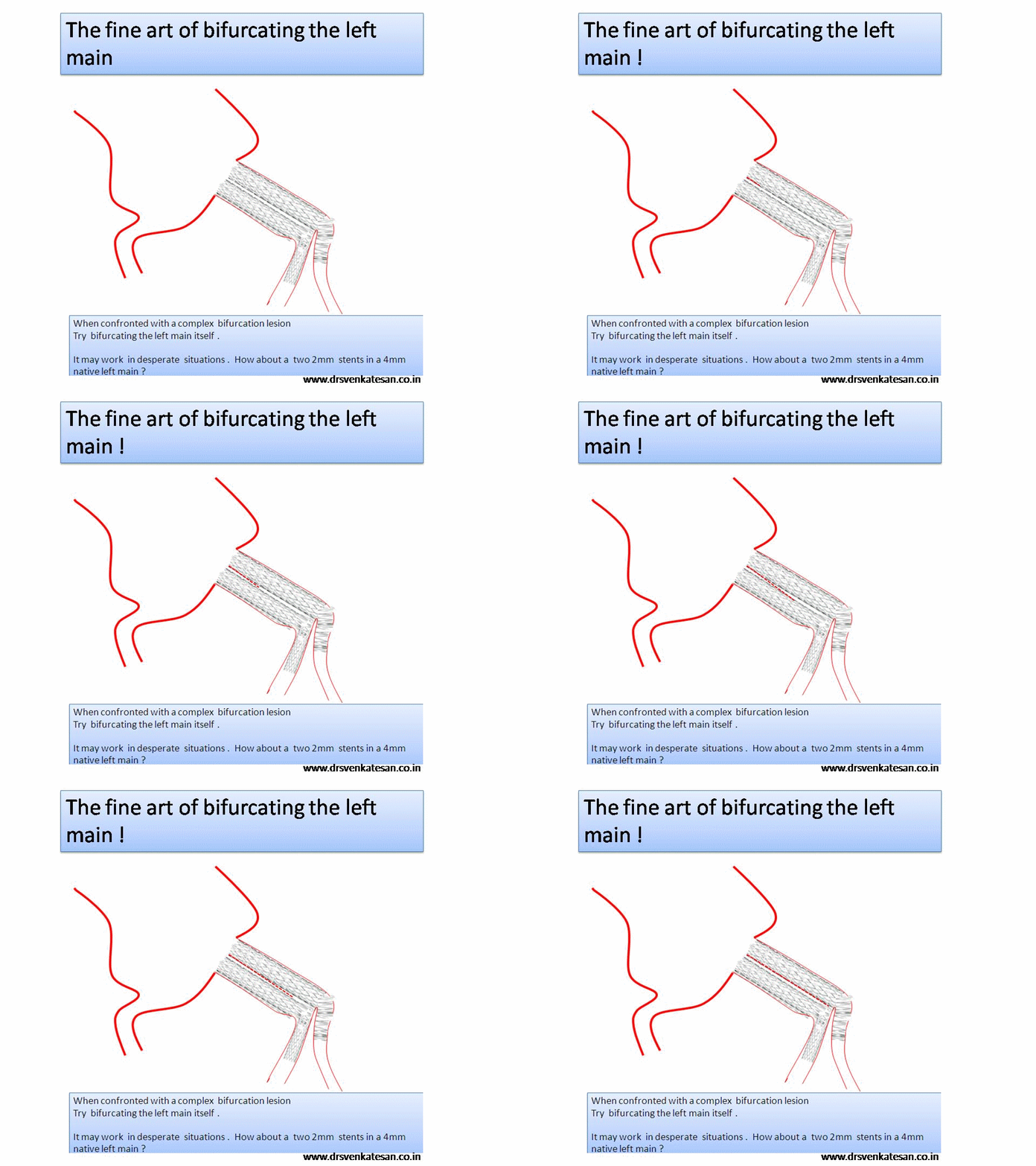
  • It is a complex PCI procedure meant for  high risk  bifurcation /Trifurcation lesions
  • Two stents are simultaneously  deployed.
  • It aims to prevent sudden acute occlusion of one of the major  branches .
  • It is not an easy procedure , and be used only in rare circumstances .
  • Distal left main and ostio proximal LAD/LCX  is a  classical  example.
  • Navigation can be difficult , only well experienced operators should attempt it.

*Is there a ready made two lumen stent available ?

The image is meant for concept purpose only !


It is one of the techniques available to stent unprotected left main

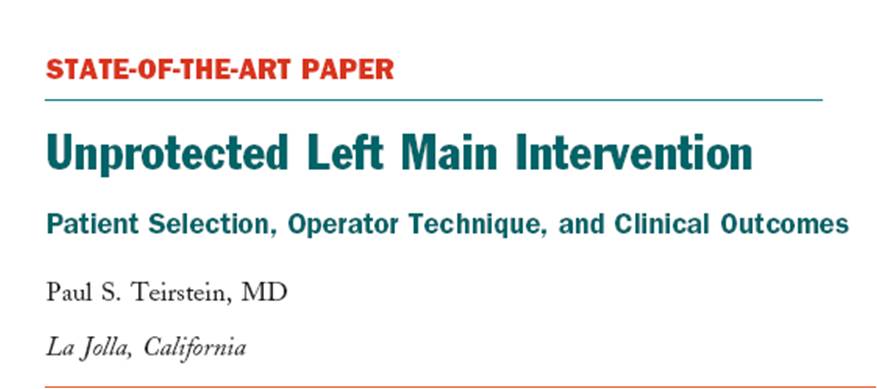
An excellent review  in  ACC intervention journal for unprotected left main .

Click on the Image to reach the article


Read Full Post »

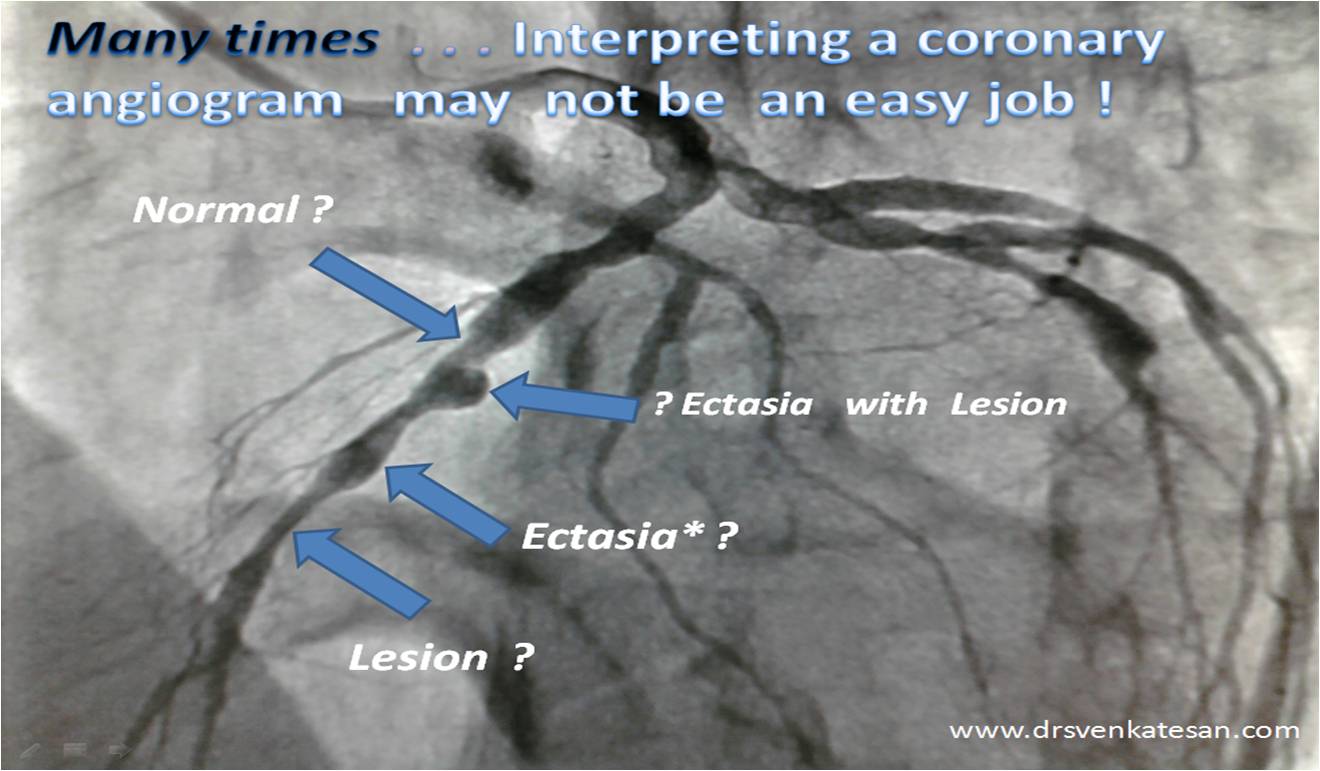
Coronary angiogram is probably the commonest invasive cardiac investigation done  world wide. It should run into millions every year. The procedure once thought dangerous  is now performed in few minutes in day care centers . While doing a  coronary angiogram  has become a minuscule task to most cardiologists, interpreting  it correctly remains a huge task !

Many  of the young cardiologists  get fascinated in   doing a coronary  angiogram and hardly spend enough time and mind in interpreting it.

Most of  us  succumb to the popular occulo  coronary reflex and describe a coronary  artery  lesions as though it is a  number game . It is very rarely we use the quantitative angiography tools available  in the machine. We need to meticulously  analyse   the length , morphology , distal flow, thrombus  , collaterals  etc . (FFR a new avatar tries to do some justice )

Calling   atherosclerois   by numbers alone,   such as  50 %  LAD  and 70 %  diagonal    20 % left main  is a huge  insult    to the deadly  & diffuse  disease process of atherosclerosis .We are paying the penalty for it .This is  the fundamental  flaw in our  reporting , that  makes every coronary intervention redundant.We must first  remember  we are looking at the lumen not the wall of coronary  artery.

Coronary  interventions is not about removing obstructions but  regression of  atherosclerosis  load within the coronary artery , prevent progression of it and ultimately reduced cardiac events and improve  survival. It  is obvious, it can not be achieved by wires and catheters alone . At best they can be adjuncts.One can  easily understand  why medical therapy  scores over wires  as it can take care of the overall disease process.

But still  ,  most* of  the  learned cardiology community  considers medical therapy   to be an adjunct to coronary intervention  , which  is  a  gross ignorance at it’s best !

* This is my perception. If  I am proven wrong ,  I am happy our patients  will be benefited !


Final message

Do not reduce  the importance of coronary angiogram   to a  farce  number game !

Do not get excited  by visualizing your patient’s  coronary artery. It may make you richer by few thousands. Realise , what you are seeing in a CAG is a fraction of coronary  circulation.

It is estimated coronary  circulation we visualize  daily in cath lab as epicardial coronary arteries  is less than  2  % of entire cross section of coronary  circulation.

This means we are 98 % blind ! ( or  2 % wise  !) .Spend  adequate  time and  mind to interpret it correctly  , so that logical and useful  ( non ) interventions can  be done .This only can make you a  true cardiac professional and your patients will respect you.


//

Read Full Post »

Life cycle of PTCA : Let us hope it do not become extinct !

Does PTCA  , a great Innovation for mankind,  is facing a threat of  extinction ?

It seems so . . . the stents  are losing its shine  in most situations. A simple evidence  . . . for that . . . can  be found in answering the following question

What drives the extensive research in biodegradable stents now ?

The simple answer is , we are fed up with the metals inside the coronary  artery. We want to get rid of it !

Too much of knowledge , often blunts our senses . Our track record clearly  reveals this fact. We needed a major study INTERHEART to tell the world   that  ,exercise is good and tobacco is bad for heart  !  Now ,we forgot a  simplest solution for  getting rid of  metal inside the coronary artery ,  which  is  “not to implant  the stent”  at all ! (Instead we do billion dollar research for making  bio – absorbable stents ,  which in the first place may not be required in the majority !

Read the related article . Does POBA has a role now ? in my site

The only situation  , where PCI   may  withstand the test of time could be in ACS (Both in STEMI and high risk NSTEMI !) PCI is cosmetic in most of the chronic coronary syndromes .

Final message

Our fight against human atherosclerosis will have to be , by medical means .PCI at best will  provide  a supportive role in selected patient group. It requires lots of common sense  and   scientific ignorance to achieve this.   Risk reduction ,  prevention , optimal   medical therapy  will have to play a dominant role in the next few decades .  This is something similar to the environmental issues we face in protecting our planet .No amount of green industry  will protect  the earth . It requires better social and  behavioral  ethics  from  mankind   and their  rulers !

Read Full Post »

Cleveland clinic is a leading centre for cardiac care .Major technological breakthrough occurs from this institute than any other place. Thousands of articles come out every year. Some articles , get global attention and make  a huge impact. These are usually related to a new hi- tech modality like CRT devices or percutaneous aortic valve deployment etc ,etc.

                                                Some articles , which are very important  may not get the due  attention . Journal editorial boards often  have a scorecard called impact factor .That is ,   how  a  journal  is  impacting the practice habits of  medical professionals . Ideally we need to have to grade individual   articles with impact factor .Many articles may not have any significant  impact  however good the impact factor of the journal.

Here is an article,  which excellently depicts the principles of management of ACS.  It was published in 2003 JACC,  by Steven Nissen  from Cleveland,  Ohio .It deserves more attention . Every cardiologist , involved in ACS management should read this, especially the interventionist.

Link to article placed her with courtesey of JACC

Read Full Post »

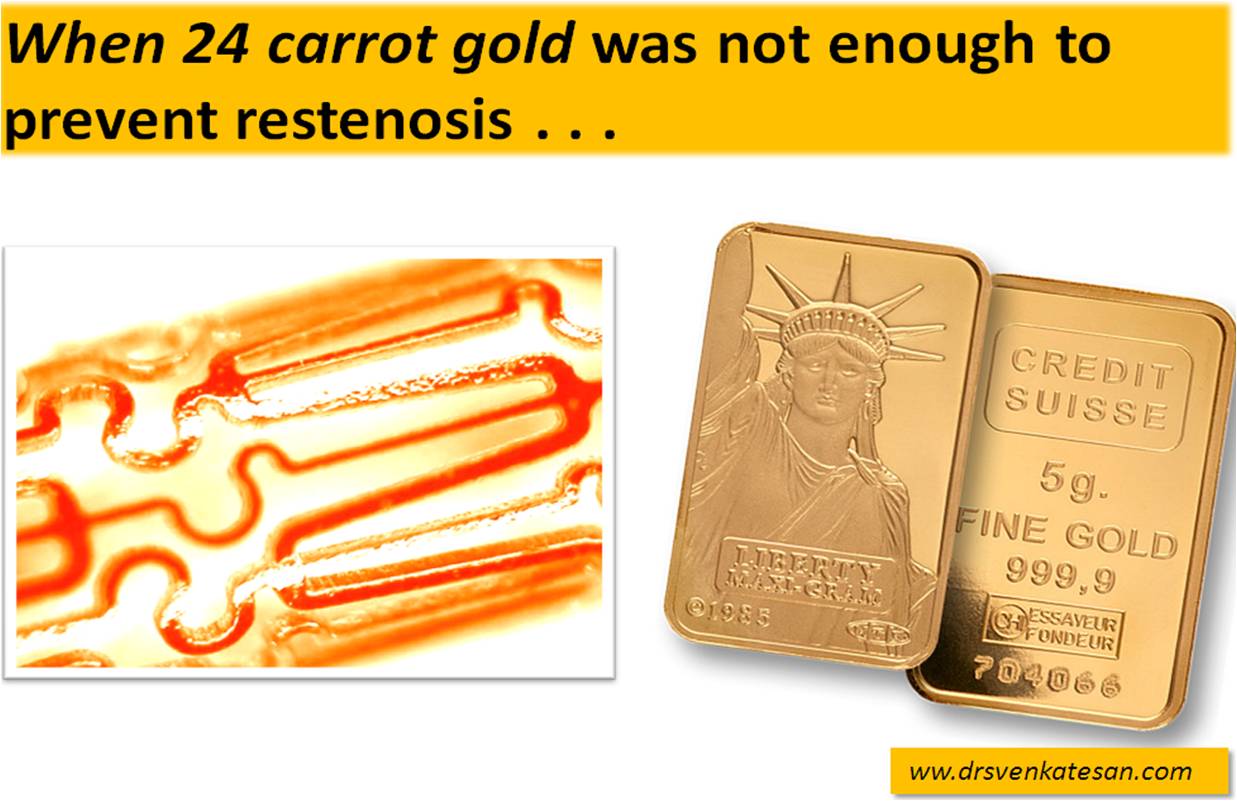
Ever since coronary stents were introduced   metal market is having a  good time within human coronary arteries.The search  for the the elusive , ideal metal is still on   . . .  Nickel , stainless steel  , platinum  etc .

Some body thought , why not gold ?

For long ,  gold is known to be a good bio -compatible metal .

Two Gold stents were tried  .

  • Inflow dynamics  – AG Germany
  • Boston scientific –  NIR stent

Surprisingly , both showed   increased reactivity  with  coronary endothlium . The verdict  was  clear . Gold coated stent  was not good enough.

http://circ.ahajournals.org/cgi/content/abstract/101/21/2478?ijkey=f03f3c40dc4c5b2673d783f91c19f5ea685ed514&keytype2=tf_ipsecsha

Gold allergy

http://onlinelibrary.wiley.com/doi/10.1111/j.0105-1873.2005.00522.x/abstract

Final message

With the advent of DES ,  gold coating of stents lost it’s popularity  .Unless  new innovations happen in gold metallurgy , the  future looks bleak  for this precious metal  , at-least  in  the human coronary arteries.

Read Full Post »

It is a well known fact  ,   CABG and PCI  provides immediate relief  for patients with angina ,  which is refractory to medical therapy. Of course , this happens only if a critical occlusion of  at least one epicardial coronary artery is  opened . It need to be realised ,  angina  due to  microvascular  disease can not be cured by maintaining  epicardial  patency .

While angina  relief is prompt ,  dyspnea is not ! . If we  believe,  opening  up a  coronary artery  in a patient with LV dysfunction will  restore the LV function  ,  it  is grossly mistaken !

Why is it so ?

Angina  relief requires  simple  restoration  of  oxygen supply and correction of local ischemia .  This happens without any issue as the blood  seeps in to the ischemic cells and soothes the ischemic nerve fibres that trigger the pain signals   . While  ,  for LV function to improve , the blood flow has to be converted to mechanical activity in the form of myocyte actin/myosin interaction. For this,   there need to be an intact  cellular contractile mechanism . The myocyte architecture should be appropriate .In post MI ventricles we know there is  zig zag  orientation of myofibrils due to myocyte slippage that interfere with mechanical recruitment . Further , integrity of  extracellular matrix  namely the collagen frame work is also vital . Note ,  angina relief  is not concerned with any of the above .

And now ,  we also realise  dyspnea  in failing ventricles  is vitally  dependent on diastolic function ,  which is also very much  impaired in ischemic DCM .There is little proof for  PCI/CABG  to correct the  molecular   mysteries in  diastolic dysfunction !

Dysfunctional LV means what ? (read the link )

It is a collection of  variety of myocardial tissues . Viz : Fully  necrosed , partially necrosed ,  ischemic viable, non ischemic viable, ischemic non viable, non ischemic non viable , Apart from this patchy necrosis, patchy ischemic, areas are common. Finally , necrosed segments   may  also be perfused normally by  spontaneous reopening of an IRA.

One can imagine the complexity  of events in these segments  once we do the  PCI /CABG . The response  is highly variable and unpredictable. The major concept we  , the physicians  believe or ( to be precise made to believe !) is  the  sanctity  devoted to  the viable myocardium .For  many us ,  it is considered a  holy  exercise  to identify viable myocardium in patients following MI and then revascularise them if  found to have significant viable myocardium (Atleast 20% of infarcted area )

A full 2 decades were lost or (shall  we   say wasted on this futile exercise !) as   we have since  realised most of the cardiologists do not follow this rule .

Now , even a scarred myocardium is revascularised in the hope of recovery .As such , we have reached a stage where  there is no contradiction for not doing a PCI /CABG   with reference to LV dysfunction.

Now every  patient  with post MI  LV dysfunction  is considered to  have  some amount of viable myocardium that is  fit   enough  for revascularization

Are we justified in doing  this ?

Many clinical  trials  have revealed  , the  recovery of LV function  in these segments  has not been consistent at all .

The most surprising discovery is  a viable myocardium need not  be ischemic   .It might get adequate blood supply either  from invisible collaterals or trickle of antegrade flow .  Hence an adequately  perfused myocardial segment can  still be   non contractile . This shatters the myth  that  revascularisation must have a dramatic effect on the recovery of contractility in all viable segments.

The other major finding is  ,  even ischemic   viable   myocardium ( documented by metabolic activities PET etc)  need not regain it’s original contractility  after the ischemia is fully corrected .

*reference for  both the above statements are available from variety of sources including real life experiences .(Type C evidence )

Final message

  • Do a PCI/CABG promptly for patients with refractory angina.
  • Never  advocate PCI/CABG  for  a primary relief of dyspnea .  (Never is a harsh word,  let it be  “use it  with caution ” ! and  the  patient  should be  revealed  the whole facts  about  what we know and what we do not know regarding the complex  hemodyanmic events  in  revascularisation   )

Counter point

If  the above statements are really true ,   How does PCI/CABG   help  relieving  dyspnea  and functional class  what is your answer for thousands of patients  with CAD and ischemic DCM who have greatly benefited from CABG ?

The answer could  be  simple , The revascularization  piggybacks  over the   medical management (which , these patients pursue vigorously)     like  ACEI,  statins, salt restriction, betablockers  , optimal diuretics and tend to hijack the credits from the poor  drugs !

Read a related blog

Revascularisation for ischemic DCM

Read Full Post »
  1. Do 64slice MDCT  in all patients who has  a coronary event and follow it up with catheter based CAG.
  2. Use liberally the new biochemical marker ,  serum  B-naturetic peptide (BNP) to diagnose cardiac failure in lieu of basal auscultation.
  3. Advice  cardiac resynchronisation therapy in all patients  who are in class 4 cardiac failure with a wide qrs complex .
  4. As it is may be considered a  crime to administer empirical  heparin, do ventilation perfusion scan in all cases with suspected pulmonary embolism.
  5. Do serial CPK MB and troponin levels in all patients with well  established  STEMI .
  6. Open up all occluded coronary arteries irrespective  of symptoms and muscle viability.
  7. Consider  ablation of pulmonary veins as an  initial strategy in  patients with recurrent idiopathic AF. If it is not feasible  atleast occlude their left atrial appendage with watch man  device.
  8. Never tell  your patients   the  truths  about the  diet , exercise &  lifestyle modification (That can  cure most of the early hypertension) . Instead encourage the  use of  newest ARBs  or even  try direct renin antoagonists   to treat all those patients in  stage 1 hypertension.
  9. Avoid regular heparin in acute coronary syndromes   as  it  is a disgrace to use it  in today’s world. Replace all prescription of heparin with  enoxaparine  or  still better ,  fondaparinux  whenever  possible.
  10. Finally never discharge  a  heftily  insured patient   until  he completes all the  cardiology investigations  that are available in your hospital  .

Coming soon :  10 more ways to  increase cost of cardiology care . . .beyond common man’s reach

Read Full Post »

cardiologist Is he a person who puts  a   metal coil  coated with a synthetic fungus   in  a   incidentally  detected  block  inside a  small coronary artery and sends the bill to the Insurance company ?

Is he a person in a  cosmopolitan  hospital  who opens up a    chronically   closed  coronary artery , in an asymptomatic patient  and  live telecasts  his achievement trans continentally ?

Is he a person who   checks in by  the early morning flight and  puts multiple wires in  an  aged   patient   with  class 3 heart failure and  make  him walk  20 meters extra at a cost of  1000$ / Meter ?

Is he a person living in   Wall   street  ,   who   looks  for variety of holes In  the heart and trying to occlude  it  with   exotic   devicespci ptca stent

Is he the unknown   physician   who Intervenes in the natural history of Rheumatic heart disease   and arrests   immune mediated   valve damage by giving the  monthly injections  penicillin in remote parts of our country ?

Is he the person   who   Intervenes to prevent young   persons   from  smoking and help maintain  their  coronary endothelium  enriched with nitric oxide  & arrest  the coronary epidemic ?

cardiologist 2

Is he the small town doctor  who  Intervenes  to treat a breathless cardiac failure patient  with  digoxin and frusemide  and  dramatically alleviate the  symptoms and  prolong the  life of our poor country men?

Is she the village health nurse from an inaccessible health  centre  located in a  hilly terrain ,  Intervening  successfully, by   pulling out  live babies  from  severely anemic pregnant  mothers with failing hearts ?

pci ptca cardiologist coronary angiograms

Read Full Post »

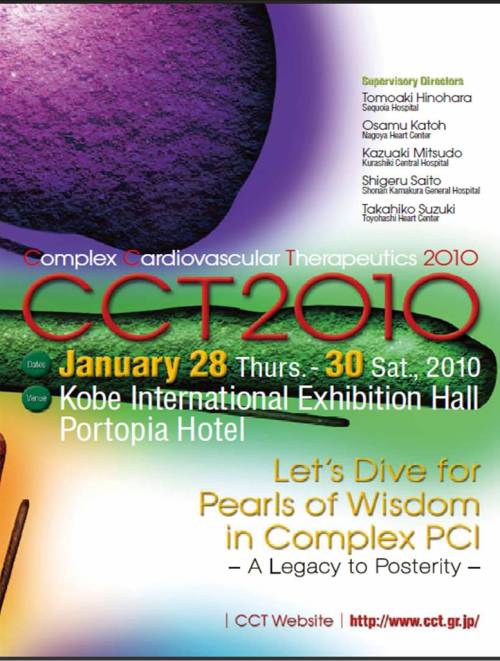
Annual workshops for interventional cardiologists has been  hugely popular events.They have  become the forum for all technological breakthroughs. Some of the popular ones are

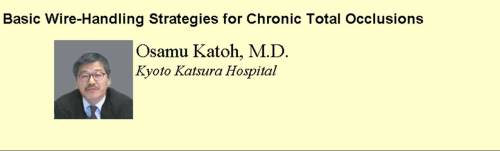
Japanese have gained a unique place in  complex cardiovascular  therapeutics interventions especially in chronic occlusions.

Landmark article for CTO crossing

cto chronic total occlusion  Katoh coronary angiogram

www.cct.gr.jp/2003/wirehand/index.html

www.cct.gr.jp  cto japan

How to reach Japan ?

Click below

CCT2010

Read Full Post »

Total coronary artery occlusion is a common finding in CAD  especially in chronic stable angina. Normal coronary blood flow is 5 % of cardiac output  that amounts to 250-300ml/mt.At an average  heart rate of  70/mt  , each  beat  injects  about 5cc blood into the coronary circulation.This is shared between two coronary arteries.  This means , only few CC (2-3cc) of blood enters  each coronary artery with each cardiac cycle .

When one of coronary artery is totally occluded what happens to the coronary

blood flow ?

A.Total coronary blood flow  can be be  maintained   normal  at rest  as it  forms  only about 5% of cardiac output  (or it is only  slightly reduced )

B. It is believed , the unobstructed coronary artery  could receive the blood meant for the contralateral coronary artery. This  possibly explains the increased coronary artery diameter in the non obstructed artery.

C. It’s nature’s wish ,  that the  contralateral  coronary artery  shall share  50% of  it’s  blood through  collaterals if available.

D.If collaterals are not formed it , the unobstructed coronary  artery  may be over perfused with double the amount  of blood flow.

E. Some times , the collaterals steal  much more than what  the  obstructed coronary artery  deserves and make the feeding coronary artery ischemic. This is many times observed in  total RCA occlusion with well formed  collaterals  from LAD/LCX.

F.The collateral flow  in CTO also depend on whether flow is directed from LAD system to RCA or from RCA -LAD system. The LAD is better placed to assist RCA than vice versa.This is for two reasons.1.LAD blood flow is higher than RCA so it can share it.2.The driving pressure is more  from LAD -RCA , as RCA can receive  blood flow even during diastole .

F.During exertion , the coronary hemodynamics become further complex.The collateral’s are traditionally thought to be less than adequate during times of exercise.But it is more of a perception than solid scientific data.This rule  may be applicable in only certain group of patients. We know CTO patients with very good exercise tolerance who have documented collateral’s.

G.Collaterals can be either  visible or invisible by CAG. The strength of collateral circulation is not in it’s visibility but it’s capacity to dilate and  respond to neuro humoral mediators at times of  demand.  Currently  , there is lot to be desired  regarding  our knowledge about  the physiology  of visible collaterals , no need to  mention about invisible collaterals !

Final message

The above statements  are based  on logics and observations .

Is it not a  irony  in cardiac literature ,  where  thousands of articles  are coming out every month  to tackle  totally occluded coronary artery(CTOs) ,  there is  very little data   regarding the coronary hemodynamics in chronic total occlusion .   How  does a patient with CTO can manage a active life with only one functioning  coronary artery ?

Read Full Post »

« Newer Posts - Older Posts »